New Bills Want to Regulate, Restrict E-bike Riding

Assemblymember Tasha Boerner (D-Encinitas) has introduced a bill that would require that all e-bike riders are at least twelve years of age, and require every e-bike rider to have either a driver’s license or a waiver and state-issued ID with them.
E-bike safety is certainly important. Asm. Boener has been working on developing safety training – more on that below – but the idea of requiring licenses for riding a bike introduces a range of problems. There is racial profiling, for one – the people most likely to be pulled over for potential violations of this law are youth of color. Then there’s the whole problem with making the police deal with what is fundamentally a safety issue in the first place. And as the California Bicycle Coalition has pointed out:
“The bicycle is an efficient and essential tool to fight climate change, and e-bikes make bicycling accessible to a wider range of people. E-bike licensing requirements are unlikely to measurably reduce the prevalence of crashes (see below for why), but they will reduce ridership just as California needs to employ every strategy to mitigate the climate crisis.”
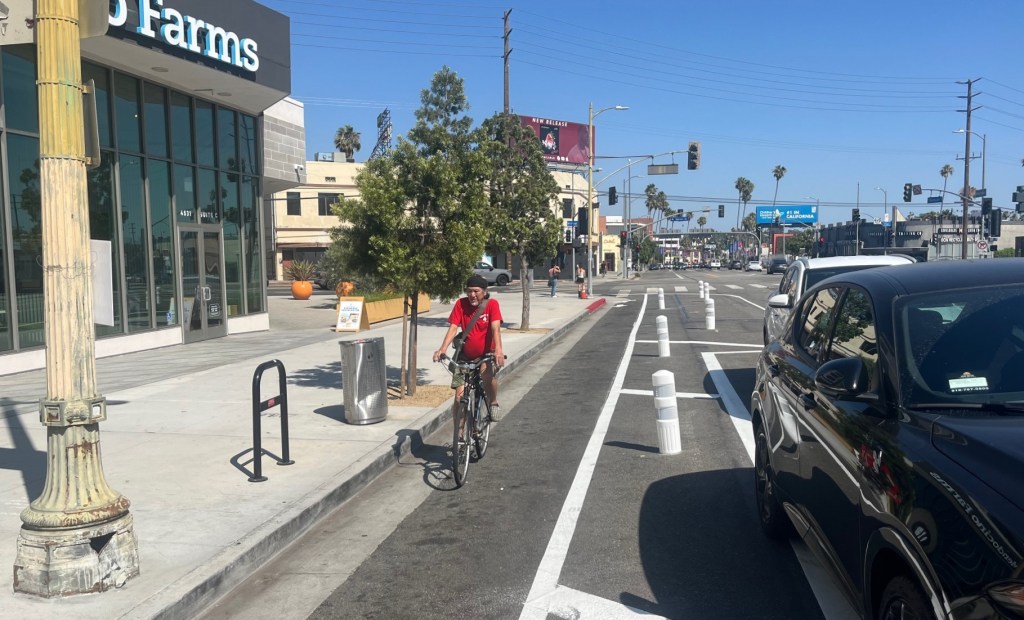
Electric bikes can be easier – and faster – than “acoustic” bikes. This brings both benefits and hazards, particularly to inexperienced riders. But the solution is better information and training, not more policing.
Some schools and local advocacy groups offer training in bike handling and bike safety, but these programs are not offered in anywhere near a large enough volume for the demand. Even the courses that used to pass for comprehensive “traffic safety” classes for California youth – the “driver education” classes that used to be required for graduation – are no longer offered or required as part of the high school curriculum in most places. And it’s entirely possible to get a driver’s license in California without having taken any training, as long as you’re at least 18 and can pass the test.
Thus the training requirements for legally driving a car – by any standards a potentially much more deadly activity than riding even a fast e-bike – are pretty low. Asm. Boerner’s bill, A.B. 2234, would require any adult rider to either have a driver’s license, or to complete the CHP’s online safety course (developed in response to a previous bill by Boerner), earn a waiver, and carry it and a state-issued identification card when riding an e-bike – any e-bike, not just the faster ones.
What is the real and present danger associated with ebikes? Cars, and people who drive cars.
California divides e-bikes into categories based on whether a rider needs to pedal, and on how fast they can go. A Class 1 e-bike has a motor that can provide assistance to a rider using pedals, but won’t help past 20 mph. Class 2 e-bikes can be used without pedals, but the motor won’t take the bike faster than 20 mph. Class 3 e-bikes can only provide assistance when the rider is pedaling, and can only go as fast as 28 mph.
Anyone under sixteen is already prohibited from riding a Class 3 e-bike under current law.
This bill is a second try by Assemblymember Boerner, whose similar bill last year, A.B. 530, died in committee. It’s also related to another bill she has introduced, A.B. 2259, which calls for the DMV to develop a bicycle safety handbook with information about e-bikes. That one is also a second version of a bill, A.B. 1188, that also died in committee.
No sign of whether Asm. Boerner will re-introduce her stop sign bill, but the deadline for new bills is not until this Friday, February 16.
Boerner is not the only legislator looking to regulate e-bike riders. Damon Connolly (D-Marin) has introduced A.B. 1778 (also a second try on a dead bill). This one would prohibit anyone younger than 16 from operating a Class 2 e-bike (one that can only go up to 20 mph, without having to use pedals).
Meanwhile, a bill from Assemblymember Dave Min that passed last year, A.B. 381, requires a study to “examine, identify, and analyze available information regarding… data on injuries, crashes, emergency room visits, and deaths related to bicycles and electric bicycles and best practices for policy to promote safe use of electric bicycles.”
That study might bring the answers these bills are seeking.
Streetsblog has migrated to a new comment system. New commenters can register directly in the comments section of any article. Returning commenters: your previous comments and display name have been preserved, but you'll need to reclaim your account by clicking "Forgot your password?" on the sign-in form, entering your email, and following the verification link to set a new password — this is required because passwords could not be carried over during the migration. For questions, contact tips@streetsblog.org.