StreetSmart 14.1 – What to look for from the 2026 Legislature

Episode 14.1 of the Streetsmart Podcast focuses on the active transportation and transit legislation moving—or stalling—in Sacramento.
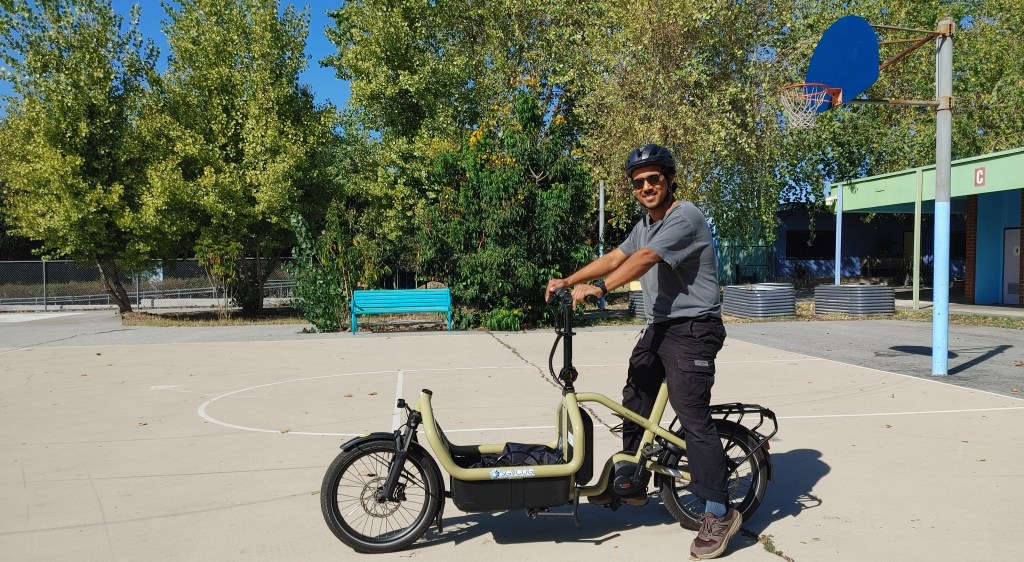
One main focus of this year’s bike/walk safety legislative energy is on regulating e-bikes, including efforts to distinguish legal e-bikes from high-speed electric motorcycles. CalBike’s Jared Sanchez, reviews three pieces of legislation. One deals with licensing. Another works to clarify what is and isn’t an e-bike. The third would allow municipalities to create separate speed limits for different vehicles. You can read Streetsblog’s coverage of e-bike legislation here, here, and here.
Also joining the conversation were Eli Lipmen with Move California and Adriana Rizzo with Californians for Electric Rail.
Lipmen advocated expanding automated bus-lane enforcement to include bike lanes, creating a statewide transit stop registry to improve data consistency.
Rizzo expressed frustration over delayed state reports that have stalled broader transit reform proposals. While a few promising bills are advancing, larger structural fixes—especially around transit governance and project delivery—may have to wait.
A lovingly edited transcript of our discussion can be found below.
And last, catch up on old episodes or subscribe: Streetsblog CAL, Apple, Spotify, Libsyn.
Damien Newton:
As mentioned in our pre-show, I’m here with Adriana, Eli, and Jared. In the first half of our podcast, we’re going to talk about legislation that is moving—or not moving—in Sacramento that will have larger impacts. We discussed a lot of this offline before we hit record. Jared wanted to talk about some of the e-bike and e-moto bills we’ve been covering at Streetsblog. I’ll link to those stories, including CalBike’s action alert, which I think is still live on one of them. Jared, why don’t you briefly describe what those pieces of legislation are and how CalBike feels about them?
Jared Sanchez:
A lot of the political energy around biking and walking in Sacramento—at least in the legislative space—is going toward e-bikes, and not much else, unfortunately.
We’re co-sponsoring SB 1167 alongside PeopleForBikes, Streets For All, and Streets Are For Everyone, authored by Senator Blakespear. The bill is trying to better distinguish what e-bikes are legally and what other devices are—devices that are really illegal and being operated on our streets. These are often called “e-motos,” often go beyond 30 miles per hour, and skirt registration or insurance requirements.
The bill aims to better define what is legal on our roads and tackle the e-moto issue—making sure these devices aren’t masquerading as e-bikes. It goes after manufacturers and sellers by requiring stronger disclosure documents at the point of purchase and adjusts the vehicle code to better classify these out-of-class devices into appropriate motor vehicle categories, such as mopeds or motor-driven cycles. That would require them to be licensed, registered with the DMV, and insured—just like any other motor vehicle.
This bill does other smaller things as well, but we’re co-sponsoring it because we see it as the best response to what we’re seeing on the roads.
Many other bills focus on new limitations or prohibitions on legal e-bikes, and we don’t agree that’s the right approach. To solve the underlying issue—illegal devices—we need clearer definitions.
One of the other important bills is AB 1942. It would require Class 2 and Class 3 e-bikes to have a license plate affixed.
Damien Newton:
Can you briefly explain what Class 2 and Class 3 e-bikes are?
Jared Sanchez:
A Class 2 e-bike can go up to 20 miles per hour and allows throttle use—you can pedal, but you can also reach top speed using just the throttle. A Class 3 e-bike can go up to 28 miles per hour. The throttle works up to 20 mph, but beyond that it must be pedal-assisted. Riders must be 16 or older and wear a helmet to ride a Class 3.
This bill focuses on the faster devices. Bike East Bay and others, including us, are concerned about licensing. Bicycle licensing hasn’t gained support in California, and there hasn’t been much interest from the DMV in creating such a program. We were surprised by the bill and hope to work with the author to amend it.
Another bill we’re watching would require additional written descriptions of e-bike classes, add speedometers to all e-bikes, update lighting systems, and—most concerning to us—create new speed requirements for sidewalks and Class IV bike lanes. It would give local agencies authority to set speed limits from 15 to 20 mph on bike trails and lanes.
Many cities already have discretion to do this. We see this as overreach and a distraction from the real issues—illegal e-motos and traffic violence caused by cars. We don’t need more enforcement targeting people riding legal e-bikes.
Unfortunately, there hasn’t been strong legislative energy this year around funding active transportation, addressing traffic violence, or expanding the Active Transportation Program. Most energy has gone toward e-bikes.
Damien Newton:
There still seems to be confusion—partly because of marketing—about what is an e-bike and what is essentially a small electric motorcycle marketed as an e-bike. Clarifying that could solve a lot of issues.
Jared Sanchez:
Exactly. That’s why we’re co-sponsoring SB 1167. The Mineta Transportation Institute released a study recommending better distinctions between legal e-bikes and illegal electric motorcycles. Many of the other bills we’re seeing weren’t part of those recommendations.
Eli Lipmen:
Last year, a pilot program allowed cities like San Francisco and Los Angeles to use bus-mounted cameras to enforce parking violations in transit-only lanes. It’s been successful—Los Angeles generated about $16 million in ten months.
The new bill would make the program permanent and extend it. It would also add stopping or parking in a bike lane as a violation. Surprisingly, that’s not clearly defined as a stopping violation under state law right now. This bill would fix that.
We’re also supporting legislation that would ease regulatory burdens in coastal zones, making it easier to build bike paths and improve transit without lengthy Coastal Commission processes.
And there’s a transit stop registry bill that would create a statewide unique identifier for every transit stop. It’s wonky, but important. Right now, data is inconsistent across agencies and mapping apps. This bill would standardize it and improve the rider experience.
Adriana Rizzo:
Last year, advocates engaged heavily in the SB 125 Task Force, which was supposed to deliver recommendations to transform transit. The final report came out late—around New Year’s—leaving little time to draft legislation.
One recommendation was to grow state capacity for transit design and engineering. Studies show in-house staff can be much cheaper than consultants. California has thousands of employees working on highways, but very few focused on rail and transit.
We also explored utility permit streamlining, since delays and cost overruns are often driven by utility coordination. But we weren’t able to secure authors before the deadline.
Another delayed study involves governance reform for the LOSSAN corridor—the Los Angeles to San Diego rail corridor. The report was due in February and hasn’t been released. That makes it difficult to pursue reforms this year, even as we prepare for the Olympics.
Damien Newton:
So in short, some targeted legislation is moving, but broader structural reforms may have to wait—possibly for a new governor and a new legislative session.
Streetsblog has migrated to a new comment system. New commenters can register directly in the comments section of any article. Returning commenters: your previous comments and display name have been preserved, but you'll need to reclaim your account by clicking "Forgot your password?" on the sign-in form, entering your email, and following the verification link to set a new password — this is required because passwords could not be carried over during the migration. For questions, contact tips@streetsblog.org.