“Stop Super Speeders Act” Takes Aim at California’s Most Dangerous Drivers

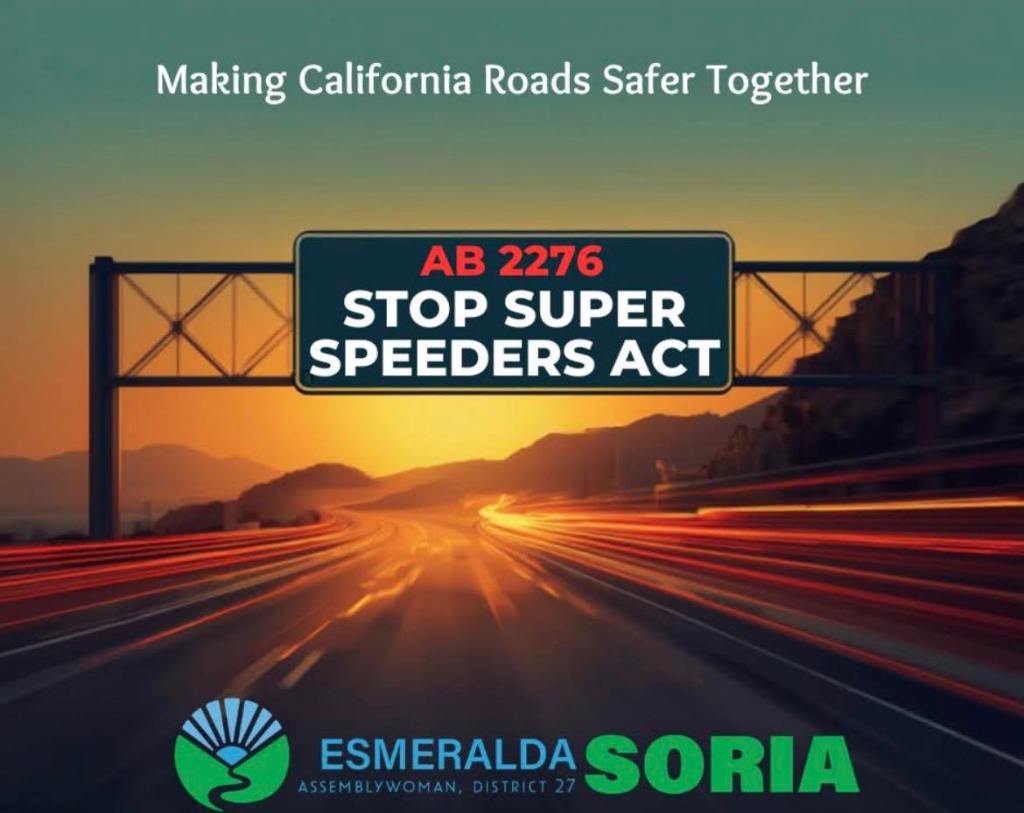
Assemblymember Esmeralda Soria (D-Merced) introduced legislation this week aimed at curbing deadly high-speed driving by targeting the drivers most likely to cause catastrophic crashes. Assembly Bill 2276, The Stop Super Speeders Act would create a statewide pilot program requiring reckless and excessive speed offenders to install active intelligent speed assistance (ISA) devices in their vehicles as a condition of regaining driving privileges.
“Speed kills, and too often our current penalties aren’t enough to stop the deadly behavior that shatters families and devastates communities,” Soria said in a statement announcing the bill.
The legislation would authorize courts to order the installation of ISA devices for drivers convicted of particularly egregious speeding offenses — including reckless driving or traveling at extreme speeds — and would tailor the duration of that requirement based on the severity and frequency of offenses but still leave some discretion for the judges delivering the sentences.
What the Bill Would Do
Active ISA technology uses GPS, digital maps or similar tools to determine posted speed limits in real time and actively prevent vehicles from exceeding them, rather than merely warning drivers. Under Soria’s proposal, drivers convicted of serious speeding offenses would be required to install the devices for a set period, with courts determining terms based on judicial discretion and offense history. The bill also includes provisions to protect low-income drivers through income-based fees for device costs and installation.
Advocates Welcome the Move
Safety advocates say the bill could represent a meaningful shift in how California holds the most dangerous drivers accountable. “For too long, traditional penalties — fines, points, suspensions — haven’t stopped the worst offenders from putting lives at risk,” said Joe Martinez, a Families for Safe Streets member and parent advocate who has been working alongside Soria to build support for the measure. “This bill gives our courts a tool to actually slow down drivers who repeatedly refuse to obey the law.”
Families for Safe Streets, a national road safety advocacy organization made up of crash survivors and families who have lost loved ones in traffic violence, has championed ISA technology as a life-saving measure. The group notes that a small group of drivers whose repeated, extreme speeding contributes disproportionately to traffic deaths — and that ISA could physically prevent dangerous speeds before crashes occur. The legislation is also backed by Street Racing Kills.
A National Trend? Comparing State Efforts
California is not alone in experimenting with speed-limiting technology for high-risk drivers. Other states have already begun incorporating ISA or similar measures into law:
- Virginia passed pioneering legislation that, beginning in July 2026, allows judges to require speed-limiting devices for drivers convicted of excessive speeding or reckless driving as an alternative to license suspension.
- Washington State enacted a law requiring certain habitual speeders seeking to reinstate driving privileges after a suspension to install ISA devices in their cars, with enforcement scheduled to begin in the late 2020s.
- The District of Columbia established an ISA program in 2024 that mandates device use for drivers with certain speeding-related suspensions.
Legislators in Connecticut are evaluating ISA’s feasibility. Similar bills have been introduced in Wisconsin, Pennsylvania, New Hampshire and Hawaii, reflecting a broader interest in technology-driven tools to combat repeat dangerous driving.
Is This the Year the Legislature Makes Safety Top Priority
Soria’s legislation lands in a legislature already grappling with how to hold the most dangerous drivers accountable. Earlier this month, a bipartisan team of Assemblymembers unveiled a package of DUI and traffic safety bills aimed at strengthening California’s penalties for intoxicated driving, closing loopholes that let offenders avoid meaningful consequences, and expanding tools like ignition interlock devices that keep impaired drivers off the road.
Assemblymember Cottie Petrie-Norris and her colleagues stressed that “there is no cost too high to bear in terms of doing everything we can to keep our community safe,” as Assembly Transportation Committee Chair Nick Schultz put it at a February press event on the broader legislative push.
AB 2276 has been referred to policy committees, where its supporters hope it will begin the legislative process this spring. If it advances, California could join a growing cohort of states leveraging technology to slow the worst offenders before tragedy strikes.
Streetsblog has migrated to a new comment system. New commenters can register directly in the comments section of any article. Returning commenters: your previous comments and display name have been preserved, but you'll need to reclaim your account by clicking "Forgot your password?" on the sign-in form, entering your email, and following the verification link to set a new password — this is required because passwords could not be carried over during the migration. For questions, contact tips@streetsblog.org.