California Bill Aims to Modernize Coastal Development Rules in Urban Transit-Rich Cities

California lawmakers are advancing a bill that could reframe how housing, transportation, and infrastructure projects are approved in urbanized coastal communities, seeking to balance environmental protections with the state’s urgent housing and climate goals.
Assembly Bill 1740 (AB 1740) — introduced by Assemblymember Rick Chavez Zbur (D-West Hollywood/Santa Monica) — would allow qualifying cities to bypass individual California Coastal Commission approvals for certain housing and transportation projects if they meet specific urban, multimodal criteria.
What AB 1740 Would Do
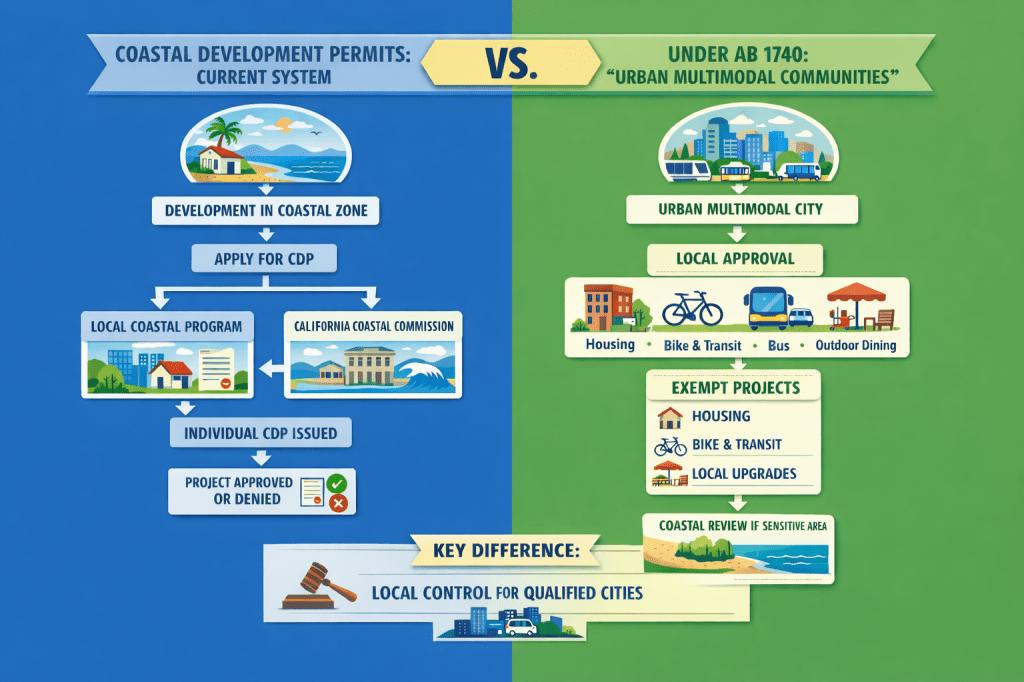
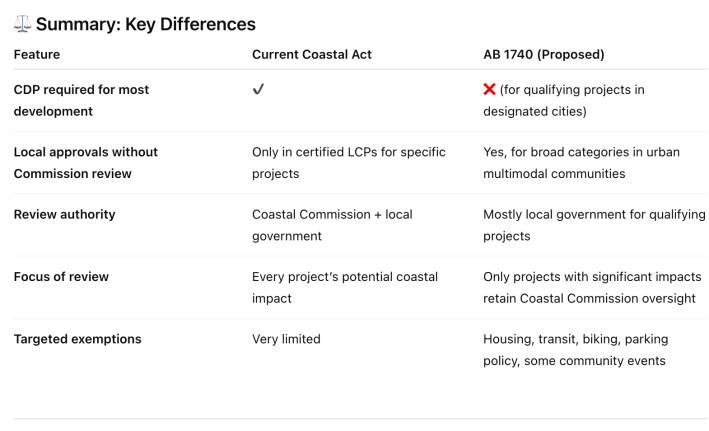
Under current law, most development or land alteration in California’s coastal zone requires a Coastal Development Permit from the California Coastal Commission or local governments with certified programs. AB 1740 would create a new designation — “urban multimodal community” — for cities that have all of the following:
- At least one high-quality transit corridor or transit priority area,
- Adopted plans targeting greenhouse gas reductions and improved road safety, and
- Existing bicycle infrastructure like Class I, II, or IV bike facilities (paths, lanes, or protected lanes respectively).
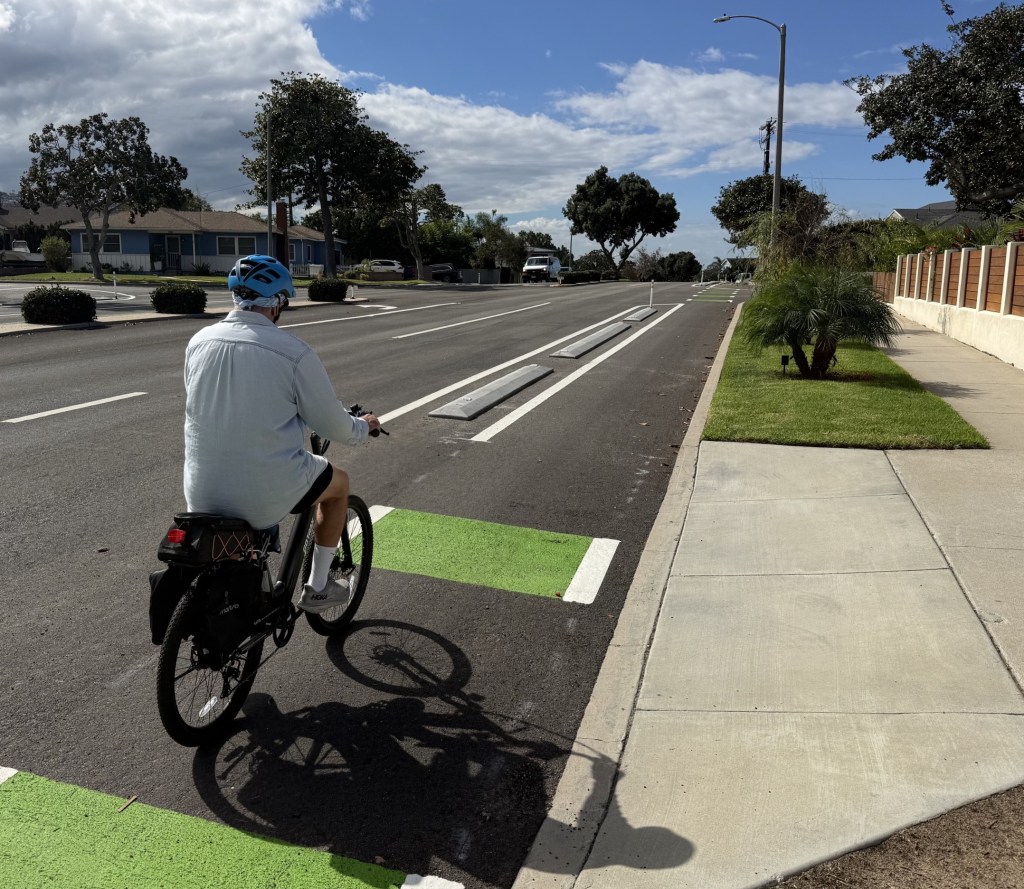
Cities that qualify could approve multifamily housing, interior renovations, bicycle facilities, and other transportation improvements locally without seeking individual permits from the Coastal Commission. The bill would also exempt the installation of bike lanes along state highway rights-of-way, provided existing public coastal access is not eliminated.
The intent is to modernize how the Coastal Act functions in densely developed, transit-rich communities — advancing state housing goals while still preserving the commission’s authority over projects posing real threats to sensitive coastal environments.
Not coincidently, the city of Santa Monica happens to meet all of these requirements. The Santa Monica Daily Press describes the legislation as possibly “turning the tide on coastal development.”
Supporters Say It Streamlines Without Sacrificing Protection
In a statement, Zbur emphasized the need to bring California’s coastal permitting regime closer to the realities of modern urban life:
“The California Coastal Act is one of our state’s most important environmental laws, and is critical to protecting coastal access and our treasured coastal resources. However, in urbanized communities with robust public transit, current Coastal Commission standards must be modernized to achieve the important goals of the Coastal Act.”
Zbur’s office described AB 1740 as an effort to allow cities that have already built out robust multimodal infrastructure to move faster on housing and climate-focused projects, especially as the state prepares for major events including the 2026 World Cup and the 2028 Olympics.
Advocates highlight that mixed-income housing projects located in areas zoned for multifamily use would automatically qualify for local approval if they meet deed-restriction requirements for affordability and other criteria.
Michael Schneider, founder and CEO of the nonprofit Streets For All — a co-sponsor of the bill — echoed this sentiment:
“For far too long, common sense improvements like bike lanes, sidewalks, bus lanes, or outdoor dining have been held back by the Coastal Commission’s strict interpretation of coastal access, meaning exclusively driving to the beach. This bill modernizes that approach and returns local control to cities that have spent the time and resources to build out multimodal infrastructure, and wish to expand upon it.”
Critics and Cautions
Not all stakeholders are uniformly supportive. Some environmental and public access advocates have historically pushed back against efforts to limit coastal review authority, warning that relaxed permitting risks incremental erosion of protections first established in the 1976 Coastal Act.
The bill would preserve the Coastal Commission’s review for projects that could adversely affect sensitive habitats, wetlands, dunes, or areas within 300 feet of beaches.
Why It Matters Now
California’s coastal zones face intersecting pressures: an ongoing housing shortage, climate change-driven sea level rise, and state policies aimed at reducing greenhouse gas emissions. Urban coastal cities — particularly those with established transit networks and active transportation investments — argue that legacy permitting frameworks were designed for growth patterns from decades ago and now inadvertently slow progress on critical housing and climate initiatives.
AB 1740 encapsulates this evolving tension, proposing a new path for agile local planning within the broader coastal protection framework. Whether the bill will survive committee hearings and become law remains to be seen as the legislative session progresses.
Streetsblog has migrated to a new comment system. New commenters can register directly in the comments section of any article. Returning commenters: your previous comments and display name have been preserved, but you'll need to reclaim your account by clicking "Forgot your password?" on the sign-in form, entering your email, and following the verification link to set a new password — this is required because passwords could not be carried over during the migration. For questions, contact tips@streetsblog.org.