To Recruit Transit Workers, More Than Higher Pay Is Needed

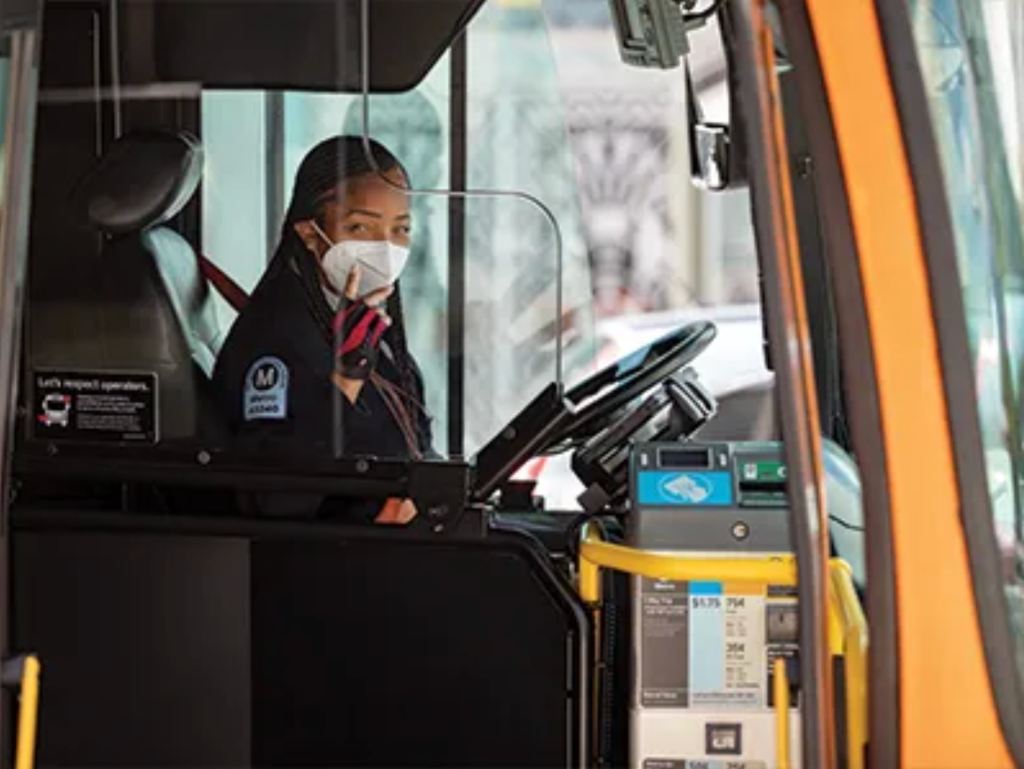
Labor shortages continue threatening public transit systems, and a new report adds another layer to the conversation.
“Transit, Belabored: Issues and Futures for California’s Frontline Transit Workforce,” from UCLA’s Institute for Transportation Studies, takes a hard look at twenty California agencies, and interviews workers at ten of them, to get a clearer sense of causes of ongoing labor shortages at transit agencies.
Other studies – notably this one from the Transit Center – have highlighted the growing transit labor shortage, and made recommendations for needed changes.
This report’s authors, Jacob Wasserman, Allie Padgett, and Keenan Ky-An Do, conclude that, while better pay is important, it is not enough by itself to attract and retain a labor force in the face of myriad other challenges. Although the pandemic shutdowns exacerbated them, those challenges are not new.
For years, transit operators have faced what the report’s authors call “a culture of exhaustion, burnout, and physical injuries” due to a whole constellation of issues: understaffing, unpredictable and complicated scheduling practices, overtime requirements, long commutes, and too-short, sometimes rare breaks.
Split shifts, for example, which have long been used as a way to adapt to the need for more service – and therefore drivers – during commute hours than in the middle of the day, were criticized by union leaders and bus operators “as examples of over-optimizing schedules at the cost of worker welfare, especially among newer workers.” Because of how seniority works, newer, less experienced, and lower-paid drivers are often the ones left to cover the more stressful shifts and routes, injecting a greater level of risk to health and safety.
While higher pay and bonuses in response to labor shortages have been welcome, “raises may not prove enough to alleviate [labor] shortages, given rising costs of living, competition from other sectors, and years of prior wage stagnation,” write the authors. “As our interviewees discussed, operators in California especially face long commutes and difficulty living affordably close to work. Moreover, our interviews reveal a myriad of non-monetary problems as well.”
“Hard working conditions on transit push people away and out, even [though] pay and benefits in transit may be better,” they write.
Housing affordability is a systemic issue, but transit agencies could help. Changing split shifts, shortening work hours, and reducing required overtime would be a relief to workers who commute from far away because they can’t afford housing nearby. There are other ways as well. For example, the Santa Clara VTA used to allow its employees to spend some weeknights in RVs in their parking lots. Far from a panacea, the program nevertheless allowed employees to be better rested. A better plan would be for transit agencies, who are beginning to plan and build transit-oriented development on some of their agency-owned properties, to set aside units for their workers.
The report touches on the history and politics behind the divide between operations vs capital funding. Basically, it is much easier for transit agencies to get capital funding, especially from federal but also state and local sources, than funding to pay for operations, which has been seen as a black hole that would eat up everything. Governments and agencies should see it from a different perspective, write the authors.
“A fully staffed workforce, with less turnover and more job satisfaction, will allow agencies to better deploy and expand transit service, to the ultimate benefit of the mobility of the state’s travelers, particularly those who rely on transit,” they write.
“Before the pandemic, demands for transit worker raises were sometimes characterized in zero-sum or even hostile terms, with contract concessions from a fixed agency budget framed as necessitating service cuts. But the pandemic, the worker shortage it deepened, changes for transit workers it engendered, and federal stimulus support it occasioned have together demonstrated that better working conditions and pay leads to better service, and the opposite. A high-road attitude towards transit treats effective spending on labor as an investment rather than a cost.”
The authors conclude with a list of systemic changes that need to be made to improve the jobs of transit operators. These include streamlining hiring practices and providing more training opportunities, reducing split shifts and finding ways to compensate workers for time when they are not driving, and even providing and maintaining clean, functioning bathrooms and giving workers the time to use them. Allowing bus drivers to just drive the bus, and not requiring them to enforce fares, as well as providing faster and easier means of reporting threats and security issues are also key.
See the report for more details, and look at the Transit Center’s work on the same topic as well.
Streetsblog has migrated to a new comment system. New commenters can register directly in the comments section of any article. Returning commenters: your previous comments and display name have been preserved, but you'll need to reclaim your account by clicking "Forgot your password?" on the sign-in form, entering your email, and following the verification link to set a new password — this is required because passwords could not be carried over during the migration. For questions, contact tips@streetsblog.org.