Advocates Demand Global Leaders Increase Bike Mode Share

It’s a COP-out.
Sustainable transportation advocates are urging world leaders at COP26 to commit to set and stick to new benchmarks to increase cycling mode share around the globe — because if they don’t, there is “no conceivable way” for them to meet the summit’s climate goals.
In an open letter to the government leaders at the United Nations’ Climate Change Conference in Glasgow, Scotland, a coalition of 80 organizations warned that strong benchmarks to rapidly boost two-wheeled transportation were being overlooked in the international dialogue about how to achieve the goals of the Paris Accord.
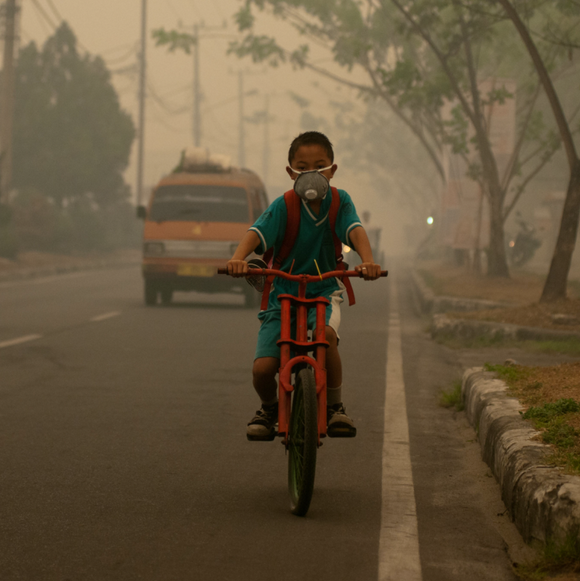
And those oversights will spell environmental disaster, advocates say. Countless studies have shown that even the most rapid possible vehicle electrification schemes won’t be not enough on their own to reverse planet-destroying trends in the transportation sector, which are responsible for 24 percent of global carbon emissions from fuel combustion and an estimated seven million worldwide deaths from pollution-related health conditions every year.
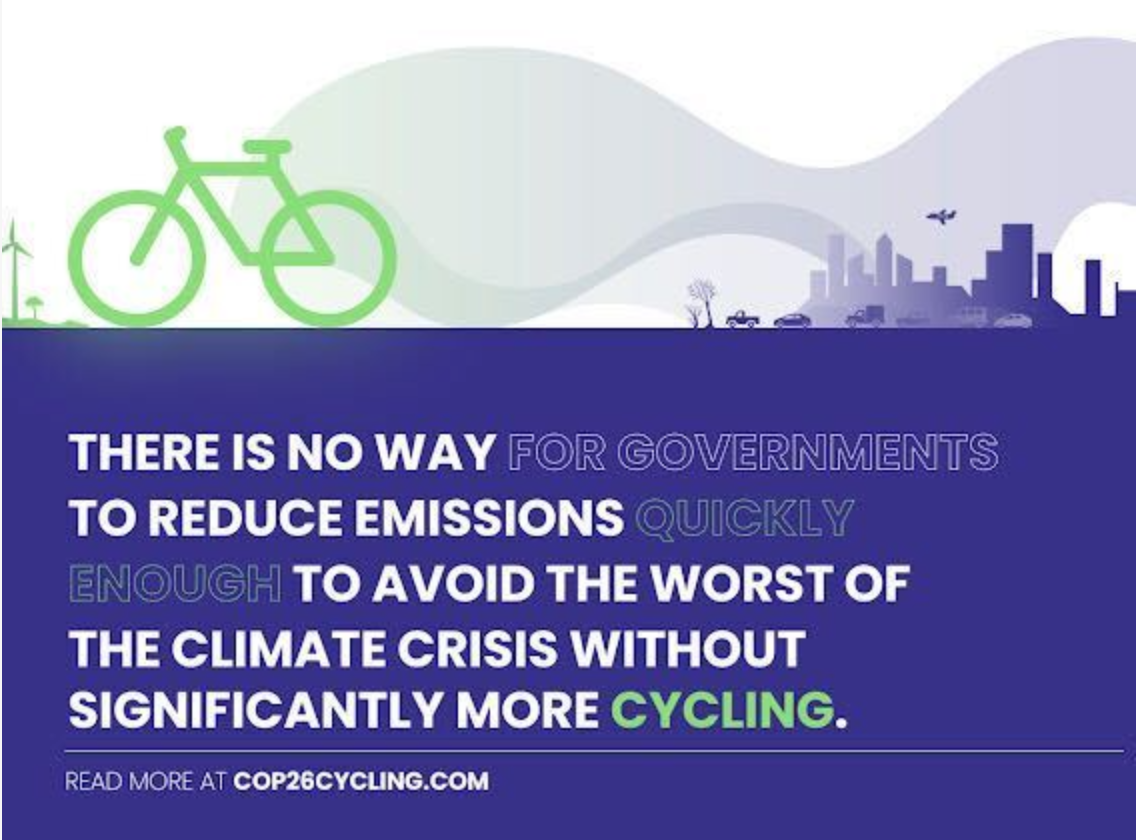
Or, to put it more bluntly: “There is no conceivable way for governments to reduce CO? emissions quickly enough to avoid the worst of the climate crisis without significantly more cycling,” the authors of the letter wrote.
Despite how clear the science is on the importance of getting people out of cars, the letter’s signatories say mode shift hasn’t been a major focus of the COP26 agenda — or a major component of most attending governments’ climate strategies, either.
“We knew the focus was going to be on electrifying the existing automotive fleet across the world,” said Noa Banayan, director of federal affairs for People for Bikes, one of the few U.S.-based organizations to sign on to the letter. “But we also know that’s just not enough to meet the Biden administration’s goals for emissions reduction, much less addressing issues like congestion, traffic safety, health, and equity around the world. The bike is an existing solution to all those problems, and the infrastructure we need to support it costs pennies on the dollar compared to what it will cost to replace every internal combustion engine on the road with an EV, which doesn’t address most of those things.
“But no one’s talking about it,” Banayan added.
That’s a baffling omission, considering the trillions of dollars that global governments pour into nascent technology that promises to someday deliver the emissions-cutting impact that safe, equitable bike infrastructure could provide right now. Even worse, policymakers tend to underestimate how little citizens’ travel behavior would really need to change.
The EPA estimates that if Americans felt safe and comfortable replacing just half of their car trips under one mile with a bike ride, it would immediately save two million metric tons of CO2 emissions every year, which is similar to taking 400,000 gas-powered cars off the road. For longer trips, switching from a car to a bike saves 93 grams of CO2 per mile — the rough equivalent of fully charging more than 11 smartphones.
“We’re not asking people to give up their cars completely,” Banayan adds. “But we are asking world leaders to commit to investments that make it easier to replace those short car trips that are causing the bulk of our transportation-related emissions. … Because if we don’t, you’re looking at a decades-long strategy. We don’t have that kind of time.
Banyan says that advocates can help by sending the letter to their representatives and urging them to adopt their own state and local benchmarks to shift more trips out of cars and onto bikes — and to back those commitments up with real infrastructure, investments, and incentives. But she and her co-signatories stress that unless the U.N. starts systematically tracking those efforts the way they do other climate indicators, they’ll only be a piecemeal approach, when they could be a powerful catalyst for change.
“Our world is on fire,” the signatories wrote. “We must urgently leverage the solutions that cycling offers by radically scaling up its use. What we need now is for governments to politically and financially commit to more, safer and integrated cycling that is equitable for everyone living in our countries, cities and regions. … Cycling is one of the best solutions we already have to ensure our planet is habitable for all generations to come.”
Streetsblog has migrated to a new comment system. New commenters can register directly in the comments section of any article. Returning commenters: your previous comments and display name have been preserved, but you'll need to reclaim your account by clicking "Forgot your password?" on the sign-in form, entering your email, and following the verification link to set a new password — this is required because passwords could not be carried over during the migration. For questions, contact tips@streetsblog.org.
More from Streetsblog California


California Needs More Ways to Fund Transit, Not Fewer. Streetsblog Urges You to Vote No on 43


Op-Ed: Latest Arguello Tragedy Demands Action by Mayor, Other City Leaders
After More Than a Decade, Inland Rail Trail Finally Reaches Central Vista
After more than a decade of planning and delays, a new 1.1-mile segment brings the Inland Rail Trail into central Vista, creating more than 12 continuous miles of traffic-separated trail from Escondido.
The post After More Than a Decade, Inland Rail Trail Finally Reaches Central Vista appeared first on Streetsblog San Diego.