Working on a Project That Can Reduce Greenhouse Gases? Mark Your Calendar

California Air Resources Board is about to launch a series of webinars tailored to potential applicants for cap-and-trade funding.
California’s cap-and-trade system, which was created as a “market-based” mechanism to incentivize industries to reach and exceed a cap on emissions, brings in money, and the state reinvests the funds into a broad range of programs aimed at lowering emissions in other ways.
These California Climate Investments programs are also aimed at strengthening the economy, creating jobs, improving public health and the environment, building housing, and encouraging sustainable living, with a specific focus on communities that historically have suffered the brunt of climate change and pollution. They fund all kinds of projects, including affordable housing, renewable energy, public transportation, zero-emission vehicles, environmental restoration, more sustainable agriculture, and waste management. At least 35 percent of these investments are made in disadvantaged communities and low-income communities and households.
California Climate Investments funds can be applied for by individuals, land conservancies, nonprofits, farmers, local governments, businesses, transit agencies, and tribal governments. The California Air Resources Board is about to launch a series of webinars tailored to different potential applicants to explain what funding can be used for and how and when to apply. The plan is to include stories and tips from previous successful grant applicants.
The first webinar, on November 5, will discuss programs available to land conservancies. Nonprofit organizations will get their day on November 18, and staff at local governments should mark their calendars for December 9.
Future webinars, to be scheduled in the new year, will be tailored to tribal governments, transit agencies, farmers, and businesses.
The purpose of the webinars is to inform these various groups about current and upcoming funding opportunities as well as to provide a platform to hear advice, obtain resources, and ask questions in real time. CARB also hopes these webinars will encourage applications from attendees that have either previously faced barriers in applying, or are thinking about applying for the first time.
To date, more than $11 billion dollars have been appropriated by the legislature to various state agencies that are implementing greenhouse gas emission reduction programs and projects. Among the many programs that get funding are Community Air Protection, Low Carbon Transportation, Affordable Housing and Sustainable Communities, Sustainable Agricultural Lands Conservation, Woodsmoke Reduction, Low-income Weatherization, Alternative Renewable Fuels, Safe Drinking Water, Low Carbon Economy Workforce Development, and Urban Greening.
A complete list of California Climate Change Investment programs can be found here.
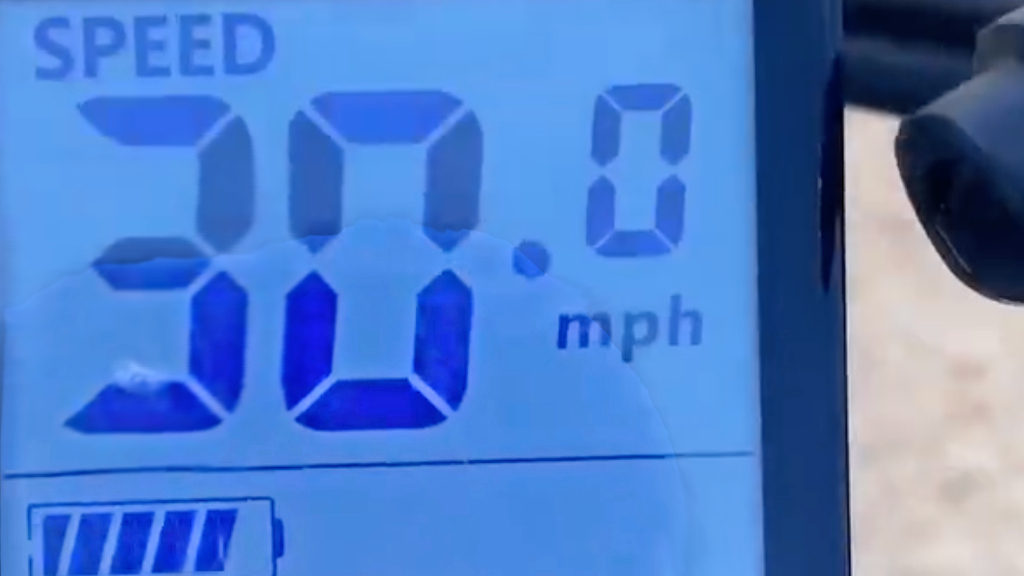
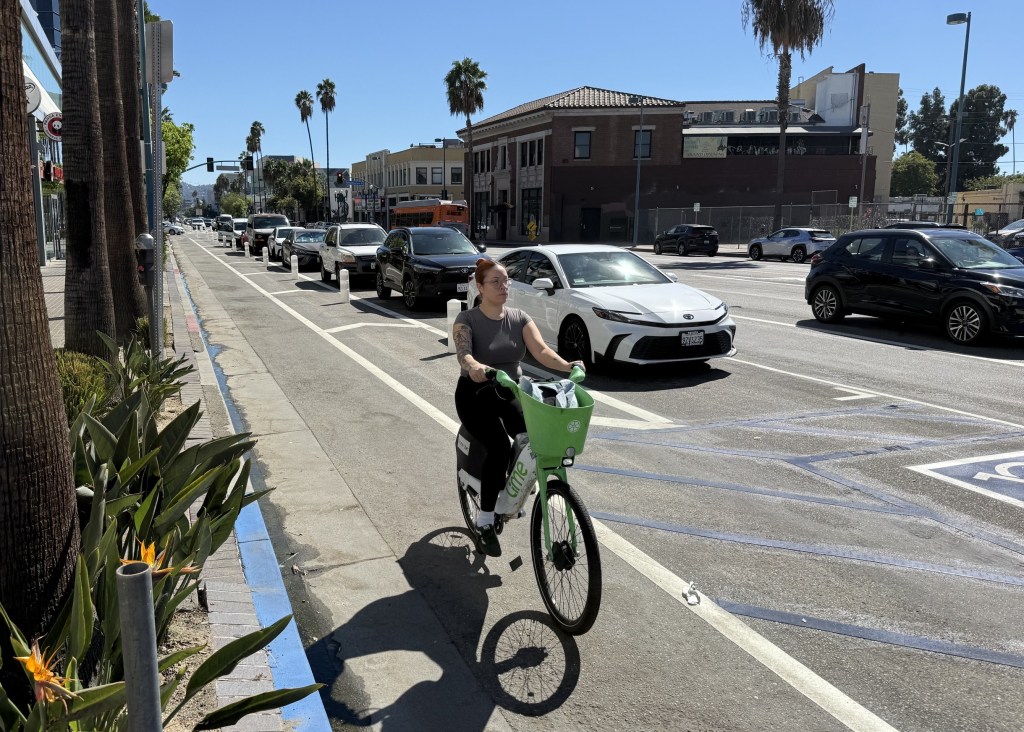
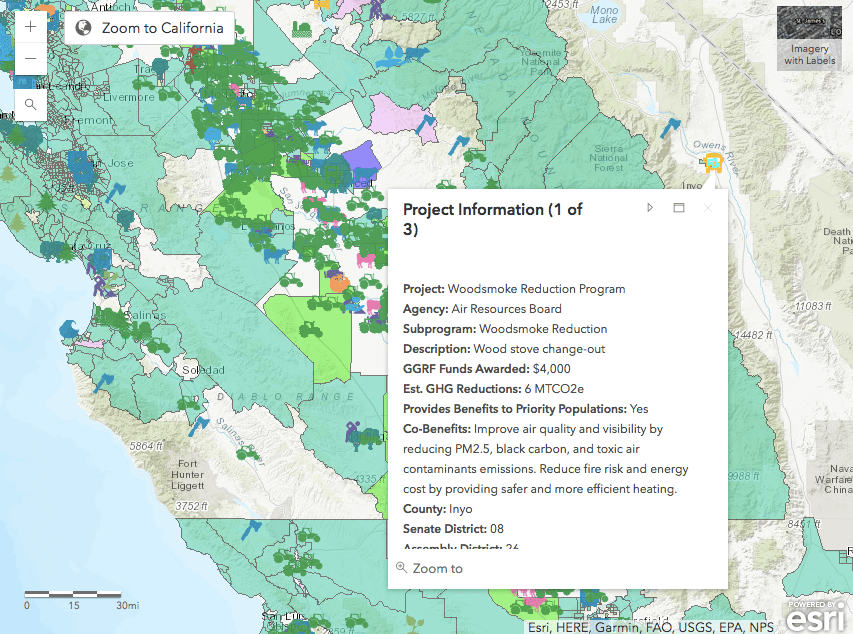
In addition, a clickable map of all the projects funded to date by the cap-and-trade program can be found here. A few excerpts are featured in the images above.
More information about the webinars, including how to register, can be found here.
Streetsblog has migrated to a new comment system. New commenters can register directly in the comments section of any article. Returning commenters: your previous comments and display name have been preserved, but you'll need to reclaim your account by clicking "Forgot your password?" on the sign-in form, entering your email, and following the verification link to set a new password — this is required because passwords could not be carried over during the migration. For questions, contact tips@streetsblog.org.