America Hasn’t Seen a Spike in Traffic Deaths This Bad in 50 Years

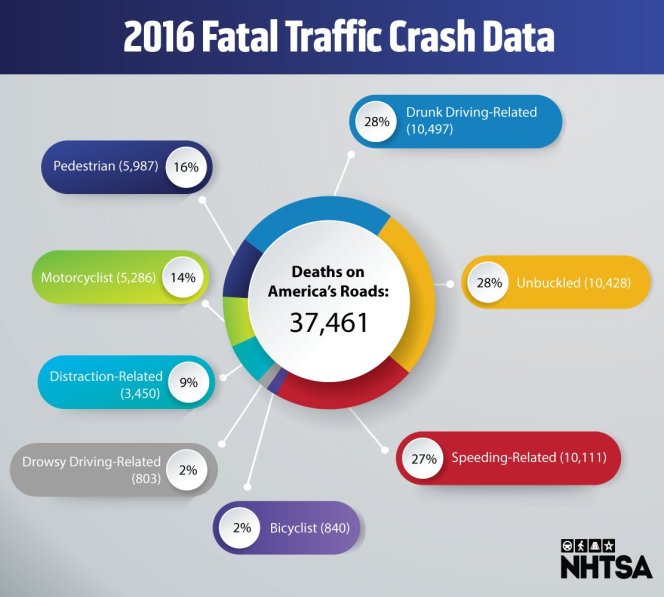
In 2016, 37,461 people were killed in motor vehicle crashes, according to official statistics recently released by U.S. DOT — a 5 percent increase over the previous year.
Coming on top of the 9 percent increase in 2015, that adds up to the worst two-year swing in traffic deaths in more than 50 years. Not since the early 1960s has the country seen such a spike. Safety is even getting worse according to federal officials’ preferred metric — deaths per mile driven rose 2.6 percent.
People walking or biking account for a rising share of total traffic deaths. Last year drivers killed nearly 6,000 pedestrians — an increase of 9 percent. The number of people killed while cycling rose slightly to 580 — still the highest toll since 1991.
Even before the current increase in the traffic fatality rate, America was falling far behind its international peers on street safety. But despite the preventable loss of tens of thousands of lives, the federal agencies that put out this update did not make any appeal for policy changes to turn this trend around.
The National Highway Traffic Safety Administration released the above graphic on Twitter. It provides a rough breakdown of the primary factors causing fatal crashes (but not for pedestrian and cyclist fatalities), but these statistics are of limited value. As Boston University professor Ital Verdi has written, focusing entirely on driver error glosses over systemic causes like dangerous street design and car-centric transportation systems.
Earlier this year, the National Transportation Safety Board made a breakthrough on this front with a major new report calling on state and local governments to reduce the prevalence of lethal speeding. That kind of message is completely absent from U.S. DOT’s by-the-numbers data release last week.
There is no call to action accompanying this news about the staggering death toll on America’s streets. No reflection on the country’s conventional traffic safety policies and how they have failed. There’s barely even an acknowledgment that things are getting worse.
If anything good can come out of this awful news, it’s a heightened awareness that our streets and transportation networks need to change. Federal transportation officials aren’t getting that basic message out.

Streetsblog has migrated to a new comment system. New commenters can register directly in the comments section of any article. Returning commenters: your previous comments and display name have been preserved, but you'll need to reclaim your account by clicking "Forgot your password?" on the sign-in form, entering your email, and following the verification link to set a new password — this is required because passwords could not be carried over during the migration. For questions, contact tips@streetsblog.org.