What If State DOTs Listened to Cities Before Starting Urban Projects?

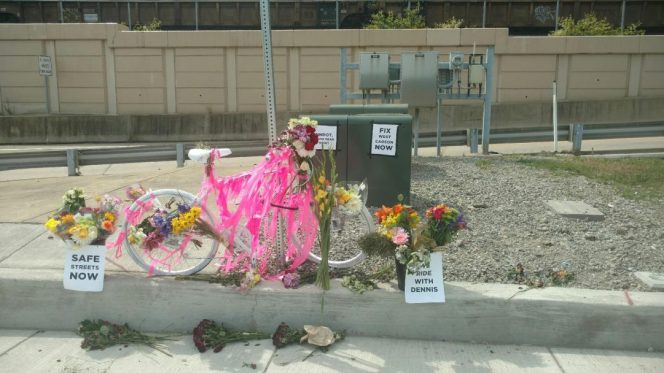
It’s not uncommon for bitter disputes to develop when state DOTs come into urban neighborhoods and start making changes to state-controlled streets. In Pittsburgh, for instance, locals who wanted better walking and biking conditions on wide, dangerous West Carson Street were disappointed with Pennsylvania DOT’s reconstruction project, which left in place a car-centric design. Nine days after construction wrapped up, a motorist on West Carson struck and killed cyclist Dennis Flanagan.
Rather than just muscle everything through, PennDOT has proposed a new process to incorporate local ideas before engineering and design work gets started. Jim Saksa at Plan Philly reports on the initiative, called PennDOT Connects:
PennDOT Secretary Leslie Richards is a planner, in the professional sense of the word.
That slightly unusual fact — most of her predecessors had traffic engineering backgrounds — helps explain her excitement for the agency’s latest initiative, PennDOT Connects.
The idea is pretty simple. Before PennDOT starts engineering for a new bridge or to rehabilitate an old highway, the agency will talk to local planners about ways the project might fit into the community’s long-range plans.
Or, as Richards put it with a laugh, local collaboration “is going to happen before anything has happened before.”
Previously, PennDOT engineers would wait to engage local stakeholders until the middle of preliminary engineering stages. Delaying that long to ask a local planning board or township manager if a planned improvement fit their vision for the area led to complications, said Richards.
In addition, Richards argued that the initiative’s “primary benefit” would be delivering “an asset that the community truly feels is an asset and really fits in the fabric of a neighborhood.”
Richards cautioned that this process was aimed at improving state-locality collaboration, not necessarily delivering on every special feature a community might want added to a highway project. Having these conversations earlier would allow for the potential inclusion of more locally-desired elements, and enable discussions about how PennDOT could engineer projects to at least not impede such aspects.
More recommended reading today: The Natural Resources Defense Council looks at the growing YIMBY movement, while Lisa Schweitzer critiques the opposition message to Measure S in Los Angeles, which would constrict new housing development, as overly simplistic. And Seattle Bike Blog explains how the city nearly eliminated injury crashes on one of its most dangerous streets.

Streetsblog has migrated to a new comment system. New commenters can register directly in the comments section of any article. Returning commenters: your previous comments and display name have been preserved, but you'll need to reclaim your account by clicking "Forgot your password?" on the sign-in form, entering your email, and following the verification link to set a new password — this is required because passwords could not be carried over during the migration. For questions, contact tips@streetsblog.org.