CA Closes Door on Getting Feds to Live Up to High-Speed Rail Promises. Opens Arms to Private Investors.

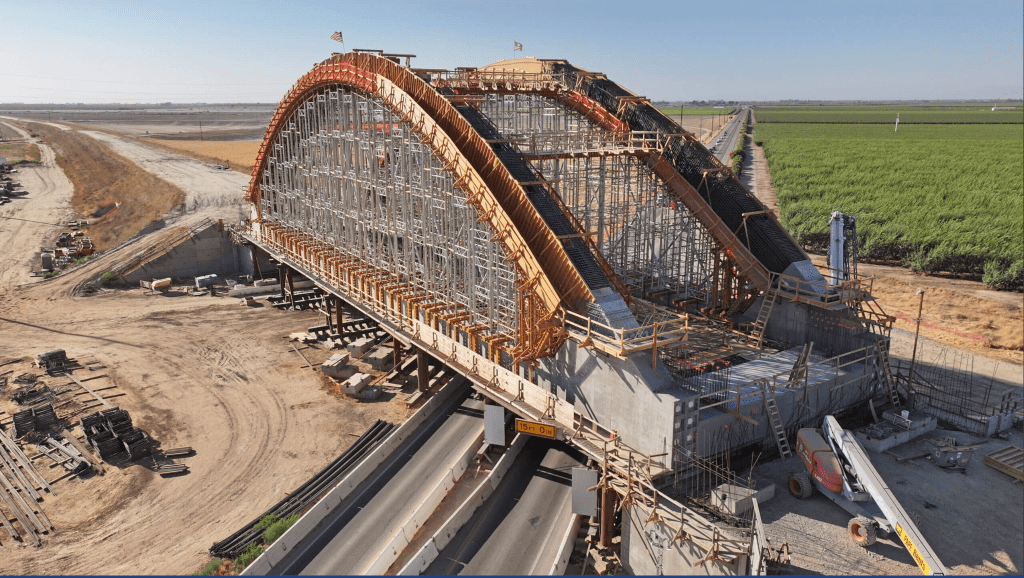
Two major developments over the winter break underscored a shift Streetsblog has been tracking for months: California High-Speed Rail is being forced to rethink its future as the Trump administration escalates its attacks on the project.
First, the California High-Speed Rail Authority (CAHSRA) formally opened the door to private investment to help finish and operate the nation’s first true high-speed rail system. Then came the news that California is walking away from its lawsuit challenging the administration’s decision to claw back billions in federal rail grants—despite early signs the state might prevail in court.
Private Capital Steps In
As federal officials continue to disparage the project, private investors may become its unlikely lifeline. On December 19, CAHSRA released a request for proposals inviting private firms to partner with the state, building on roughly $1 billion a year in guaranteed state funding.
Authority CEO Ian Choudri said interest from the private sector “is strong and continues to grow,” arguing that partnerships could help deliver the system “faster, smarter, and more economically.” Construction today is concentrated in the Central Valley – between Merced and Bakersfield. But Choudri has made clear that new financing could accelerate work elsewhere. Environmental clearance is already complete for extensions north to the Bay Area and south to Los Angeles.
To move beyond the Central Valley, however, the authority will need a change in state law to shift construction priorities—another reminder that politics, not engineering, remains one of the project’s biggest obstacles.
Reports indicate as many as 30 potential investors have expressed interest, with talks focused on long-term arrangements covering financing, operations, and maintenance. The pivot reflects a broader reality: after federal funding was pulled, California was left scrambling to assemble a funding plan that can carry the project to completion.
Walking Away From Washington
The private-investment push comes as California formally abandons its legal fight with Washington. Shortly after returning to office, the Trump administration moved to revoke federal grants awarded under prior administrations. California sued in July, arguing the move was illegal. But in late December, the state dropped the case.
In announcing the decision, state officials said the federal government had shown itself to be “not a reliable, constructive, or trustworthy partner” on high-speed rail.
Gov. Gavin Newsom was less diplomatic, calling the cuts “petty, political retribution … not the facts on the ground.”
Federal requirements have at times slowed the project, driving up costs and delays without delivering clear benefits, while limiting innovation and dragging out construction. Without the Trump administration’s involvement, the Authority says it will have greater flexibility to adopt proven global best practices that have been successfully used by modern high-speed rail systems around the world…which could also make it easier to attract private investment.
Taken together, the two developments signal a turning point: if California’s high-speed rail future is going to be built, it will likely happen with less federal help—and under a very different financial model than originally envisioned.
Streetsblog has migrated to a new comment system. New commenters can register directly in the comments section of any article. Returning commenters: your previous comments and display name have been preserved, but you'll need to reclaim your account by clicking "Forgot your password?" on the sign-in form, entering your email, and following the verification link to set a new password — this is required because passwords could not be carried over during the migration. For questions, contact tips@streetsblog.org.