In case you missed it last week, Streetsblog California will be posting links to our short videos every Friday so any reader who doesn’t have a TikTok account or visit YouTube regularly can see what we have been working on. While the embeds below go to TikTok, you can view our work at short video channels at TikTok, Instagram, Facebook Reels, and YouTube Shorts.
We released four videos this week, two following up on videos from last week, one following up on a Santa Monica Next story, and one previewing today’s committee vote on SB79.
On Monday, we released our most popular video to date heralding Santa Monica’s Wonderful Bike Lane Paving Machine’s return to build some protected bike lanes by the Bergamot light rail station.
Santa Monica’s Wonderful Bike Lane Paving Machine is coming back. Is your city moving slow on making protected bike lanes? Show them this video. More: https://santamonicanext.org/2025/08/the-wonderful-bike-lane-paving-machine-is-coming-for-bergamot/ #santamonica#bikelanes#streetsblog#StreetsblogCalifornia
On Tuesday, it was another look at California High-Speed Rail as the state claims it can have service running by 2032 in the Central Valley and connect to the Bay by 2038.
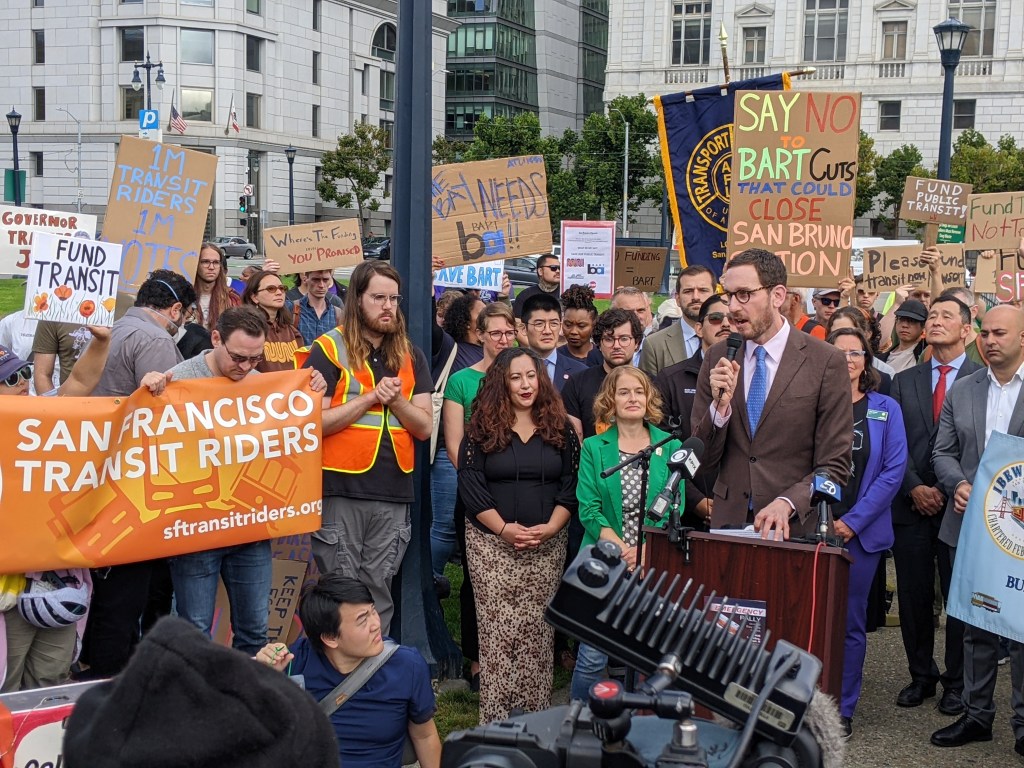
San Francisco State Senator Scott Wiener has been trying to upzone near transit sites for years. His Senate Bill 79, legislation that does just that, has already cleared the Senate and is heading to a key vote at the Assembly Appropriations Committee this Friday. SB 79 would do a couple of things: upzone near major transit stops, allow transit agencies to create their own zoning on land they own, and create an automatic approval process for projects within a half-mile of major transit stops if they meet local zoning and affordable housing rules. The legislation is supported by the YIMBY movement, the state democratic party, and a coalition of progressive groups. Opposition comes from the City of Los Angeles and most other cities, with some exceptions and community-based organizations. Some of the concerns, including that the legislation could produce less affordable housing in cities that have certain development requirements, are more serious than others. While the legislation has been controversial, it’s doubtful it would be coming to a vote at the Assembly Appropriations Committee unless passage was all but assured. The chair of the committee is Buffy Wicks, an ally of Wiener’s on many issues, and a co-sponsor of the legislation. Links to more coverage of SB70 at Streetsblog can be found below: Politics Heat Up Around SB79 – Dems Support, Los Angeles Opposes, August 25 https://cal.streetsblog.org/2025/08/25/politics-heat-up-around-sb79-dems-support-los-angeles-opposes Wiener’s Legislation to Upzone Near Transit Clears the Senate (Barely), June 5 https://cal.streetsblog.org/2025/06/05/wieners-legislation-to-upzone-near-transit-barely-clears-the-senate Wiener’s Controversial Legislation to Upzone Near Transit Keeps Moving with One Major Change, May 12 https://cal.streetsblog.org/2025/05/12/wieners-controversial-legislation-to-upzone-near-transit-keeps-moving-with-one-major-change Wiener Introduces Legislation to Increase Housing Density Near Transit, March 17 https://cal.streetsblog.org/2025/03/17/wiener-introduces-legislation-to-increase-housing-density-near-transit #streetsblog streetsblogcalifornia #scottwiener#sb79
And yesterday we followed up on last week’s video about efforts to push back on a ludicrous anti-bike grand jury report in the Central Valley. The city council quickly and unanimously rejected the report’s findings…except for one that hilariously accused world-renowned bicycle and pedestrian safety planning group Alta Planning and Design of being “biased towards bicycles.”
San Francisco State Senator Scott Wiener has been trying to upzone near transit sites for years. His Senate Bill 79, legislation that does just that, has already cleared the Senate and is heading to a key vote at the Assembly Appropriations Committee this Friday. SB 79 would do a couple of things: upzone near major transit stops, allow transit agencies to create their own zoning on land they own, and create an automatic approval process for projects within a half-mile of major transit stops if they meet local zoning and affordable housing rules. The legislation is supported by the YIMBY movement, the state democratic party, and a coalition of progressive groups. Opposition comes from the City of Los Angeles and most other cities, with some exceptions and community-based organizations. Some of the concerns, including that the legislation could produce less affordable housing in cities that have certain development requirements, are more serious than others. While the legislation has been controversial, it’s doubtful it would be coming to a vote at the Assembly Appropriations Committee unless passage was all but assured. The chair of the committee is Buffy Wicks, an ally of Wiener’s on many issues, and a co-sponsor of the legislation. Links to more coverage of SB70 at Streetsblog can be found below: Politics Heat Up Around SB79 – Dems Support, Los Angeles Opposes, August 25 https://cal.streetsblog.org/2025/08/25/politics-heat-up-around-sb79-dems-support-los-angeles-opposes Wiener’s Legislation to Upzone Near Transit Clears the Senate (Barely), June 5 https://cal.streetsblog.org/2025/06/05/wieners-legislation-to-upzone-near-transit-barely-clears-the-senate Wiener’s Controversial Legislation to Upzone Near Transit Keeps Moving with One Major Change, May 12 https://cal.streetsblog.org/2025/05/12/wieners-controversial-legislation-to-upzone-near-transit-keeps-moving-with-one-major-change Wiener Introduces Legislation to Increase Housing Density Near Transit, March 17 https://cal.streetsblog.org/2025/03/17/wiener-introduces-legislation-to-increase-housing-density-near-transit #streetsblog streetsblogcalifornia #scottwiener#sb79
Ok, the election dominates the headlines again. But for those just wanting the transportation news, at least I ran out of patriotic images of Ms. Marvel.
California’s DMV is responsible for managing some of the biggest risks on the state’s roads, but researchers say a culture of secrecy and obstruction makes it nearly impossible for the public to access basic information about dangerous drivers and disabled parking placard fraud.