After Federal and State Partners’ Criticism, Metro Shifts Stance on 710 Freeway Widening

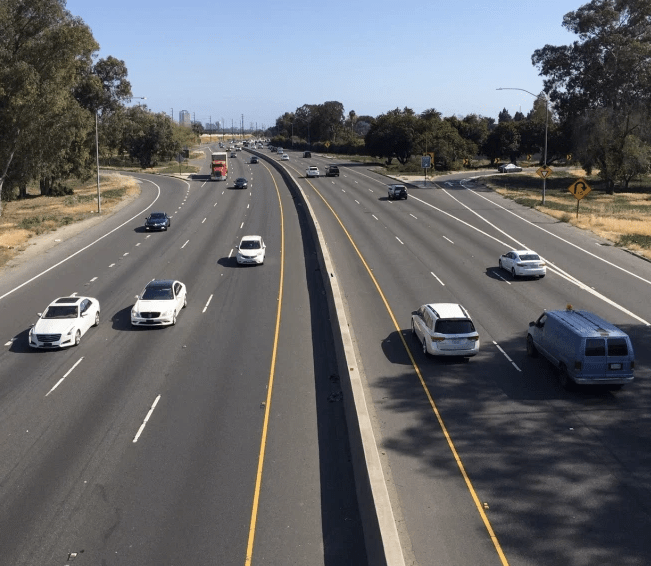
In a statement released today, Metro CEO Phil Washington changed his agency’s stance on its proposed $6 billion 710 Freeway widening project. After the federal Environmental Protection Agency and the head of Caltrans came out against the project, Washington committed Metro to bringing stakeholders together to reimagine the principles of the 710 project.
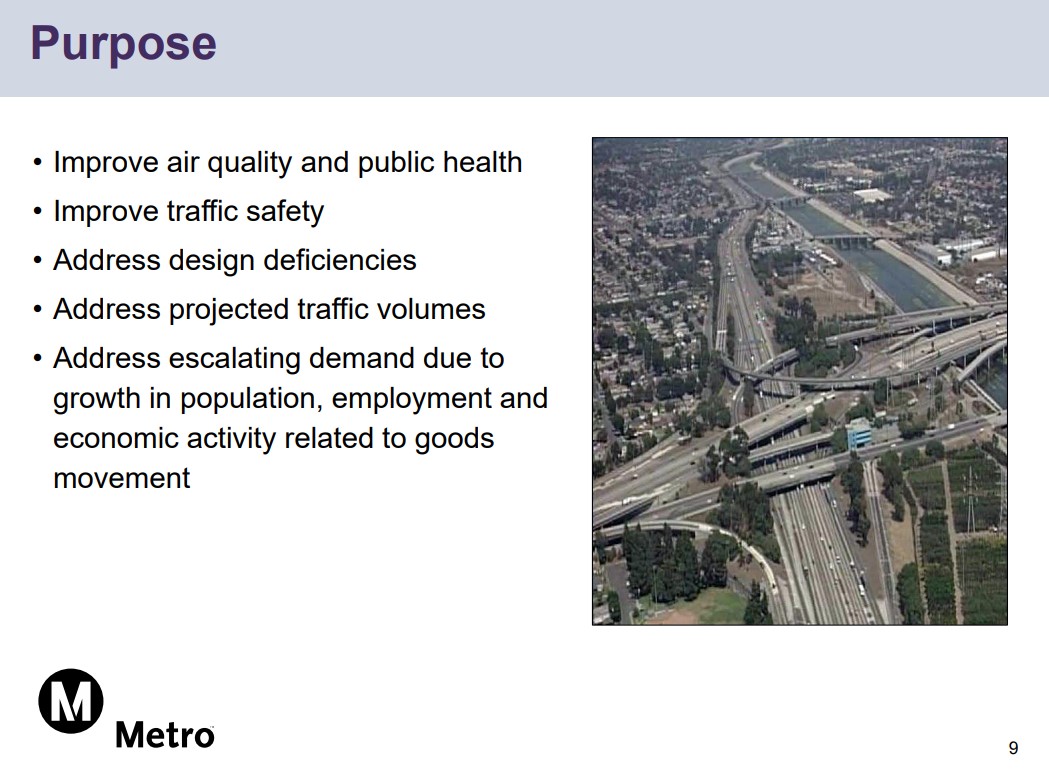
Metro has long asserted that adding two more general purpose lanes to the 710 will “improve air quality and public health,” while at the same time asserting that Metro doesn’t need to quantify the project’s air quality impacts. The current version of the project would also displace more than a hundred homes and businesses along the corridor.
For the past several years, Metro and Caltrans had pressed to exempt the 710 project from mandatory Clean Air Act studies, called hot spot conformity analyses. Metro had insisted that, based on a somewhat loosely defined Clean Truck Program tacked on to the project, expanding the 710 would clean the air, so the expansion was not a “Project of Air Quality Concern.”
If Metro were to do the full conformity analysis, and the project could not show that it somehow results in cleaner air, then the Clean Air Act would prohibit Metro from expanding the freeway.
Today, Washington acknowledged “the oftentimes disruptive harms created by major highway construction” and the need to “address issues like congestion and air quality and how investments are made.” Below is Washington’s full statement, emailed by Metro communications in response to Streetsblog’s request for an update on the agency’s position on the 710:
Metro hopes to bring all stakeholders together, in an open minded fashion, to explore and create a set of principles that address the oftentimes disruptive harms created by major highway construction in both this region and in this country. We want to reframe the conversation to set a clear path where established principles that are agreed to by all stakeholders, including communities along the corridors, are reimagined to address issues like congestion and air quality and how highway investments are made.
The statement is less committal than it could be, but the planned reimagining (long urged by community groups) nonetheless appears to represent a significant shift from Metro’s earlier headlong push to just widen the freeway.
That push for 710 freeway expansion is seen in documents recently obtained by Streetsblog:
- A September 18, 2019 letter from Caltrans and Metro to EPA, responding to EPA’s request for a written commitment to implementing the Clean Truck Program, stated that “Caltrans and Metro do not believe a written commitment… is required or appropriate” and even that a written commitment “could have the contrary effect of increasing emissions.” But Metro and Caltrans also claimed that, because there would be a Clean Truck Program, “this project qualifies as Not a Project of Air Quality Concern.”
- An October 29, 2019, Caltrans/Metro letter restated nearly identical assertions.
- A March 3, 2020, EPA response stated, “We do not have enough information for EPA to determine whether or not the [truck] program would effectively reduce the increase in diesel vehicles and thus result in the project not needing a hot-spot analysis. Therefore, we are unable to concur that the I-710 corridor transportation project is not a project of air quality concern…”
- In a June 4, 2020, document, including a 141-page description of the Clean Truck Program, Metro responded to EPA questions, asserting that aspects of the truck program “demonstrate that the Project was Not a Project of Air Quality Concern.”
- In a July 27, 2020, document Metro further responded to truck program questions, making long-winded comments that commit Metro to little or nothing. For example, where EPA asked for specific percentages of zero-emission (“ZE” as opposed to near-zero “NZE”) trucks, Metro stated: “The I-710 Clean Truck Program will seek to deliver as many ZE/NZE trucks to the I-710 Corridor as soon as feasible” and “a fixed percentage of ZE trucks (or any percentage of ZE trucks) is not necessary for the Program.” Metro then concluded that “increasing the number of ZE trucks in the I-710 Corridor will continue to remain an important goal.”
- On November 20, 2020, EPA senior leadership met with Caltrans, Metro, and the Federal Highway Administration and shared the details of concerns, which were later outlined in their March 2021 letter. That letter stated that a “hot-spot analysis is necessary” and further critiqued the proposed truck program.
- On January 19, 2021, Metro hosted a community update meeting (video, presentation) for the 710 project. Metro Highway Program Deputy Executive Officer Ernesto Chavez stated (starting minute 23) that the truck program would “essentially offset any new potential emissions – diesel emissions – in the corridor” and that “because it is a new approach… it takes a lot for federal agencies to agree.” “There’s no opposition to the [truck] program itself, it’s just assurances and commitments that moving forward this is going to work the way it’s intended to work,” Chavez continued. “We’re going to do whatever it takes to get that approved.” Chavez anticipated that Caltrans would approve the project’s environmental documents for release this Spring – and that the Metro board would approve the environmental studies this Fall.
Tomorrow, the Metro board Finance Committee is scheduled to discuss and vote on Metro’s FY22 budget, which is expected to be approved by the full board next week. The proposed FY22 budget still includes $15.3 million for this 710 Freeway project and “early action items” (on top of the more than $140 million that Metro has already spent on it.) Even after Metro’s federal and state partners have pulled away from the project, Metro continues to propose spending millions on it.
Streetsblog has migrated to a new comment system. New commenters can register directly in the comments section of any article. Returning commenters: your previous comments and display name have been preserved, but you'll need to reclaim your account by clicking "Forgot your password?" on the sign-in form, entering your email, and following the verification link to set a new password — this is required because passwords could not be carried over during the migration. For questions, contact tips@streetsblog.org.