Bill to Streamline Transit, Bike, Pedestrian Projects Sails Through to the Governor

Note: GJEL Accident Attorneys regularly sponsors coverage on Streetsblog San Francisco and Streetsblog California. Unless noted in the story, GJEL Accident Attorneys is not consulted for the content or editorial direction of the sponsored content.
Today, on the last day of a crazy busy legislative session, a bill from Senator Scott Wiener that aims at making planning and building clean, sustainable transportation projects passed its final vote in the Senate and is headed to the governor for his signature.
Governor Newsom has until the end of September to sign or veto it.
S.B. 288 basically acknowledges that certain kinds of transportation projects – that help make transit more reliable and faster, for example – do not cause negative environmental impacts. The bill would exempt certain transportation projects from having to undergo a time-consuming, expensive process just to prove this, when on the face of it their ultimate effect would be to lower emissions.
“S.B. 288 will jump start and speed up sustainable transportation projects like light rail and bus lanes, safe streets infrastructure like protected bike lanes and pedestrian safety projects, and EV charging stations for buses,” wrote Senator Wiener in a statement. “It will do that by adding these projects to the list of CEQA statutory exemptions to accelerate most of California’s sustainable transportation projects and make their approval and construction processes more streamlined and cost-effective. It is also an economic recovery bill that would make it easier to build important infrastructure projects and create jobs.”
The bill’s provisions would only be in effect for a few years, until 2023, which imposes a pretty strict deadline. Most such projects take a very long time to plan, so this bill may be most useful to projects that are already in the works, or already embarking on the long California Environmental Quality Act analysis process.
Gwen Litvak, of the Bay Area Council, one of the bill’s sponsors, called S.B. 288 a “no-cost stimulus” bill, saying “there are projects ready to go, and a need to get these projects going.”
“We need to be able to move safely outside,” she said, “and we need to get more people biking and make sure that bus service is more dependable, more reliable, and faster.”
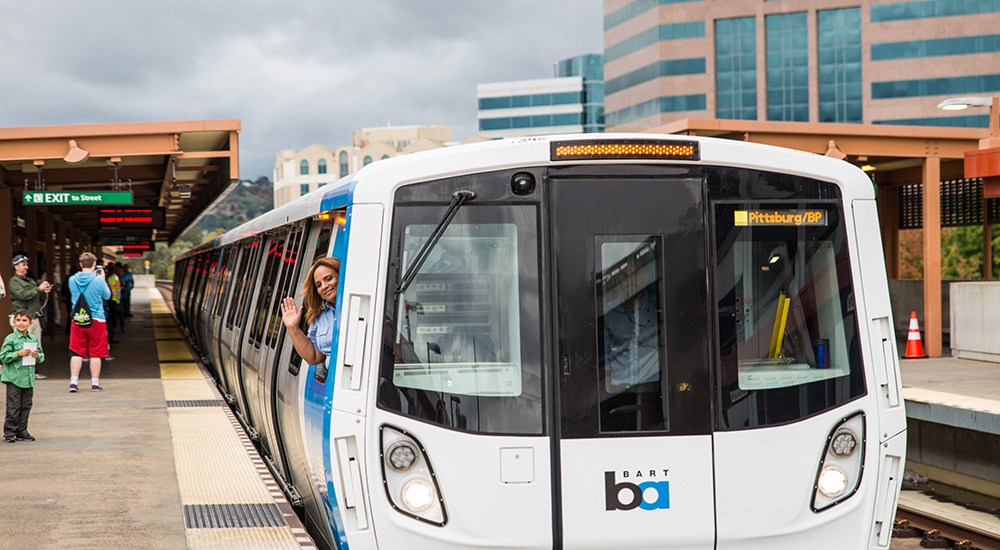
S.B. 288’s CEQA exemptions would apply to pedestrian and bicycle facilities like lanes and sidewalks, customer information and wayfinding projects (for transit riders, bicyclists, or pedestrians), and transit prioritization projects. They would also apply to converting existing highway lanes to bus-only lanes, creating bus rapid transit and light rail projects including stations, and zero-emission charging infrastructure.
Also: projects that reduce minimum parking requirements, which have been shown to encourage driving, would be exempt.
To earn the exemption, projects have to be in urbanized areas, within existing rights of way, and cannot include any increase in capacity for cars. And they cannot involve demolishing any affordable housing units.
The bill would extend a similar existing exemption for bicycle plans until 2030, and exempt those plans from having to mitigate impacts they have on car traffic.
An early version of the bill – which is relative, since it was only introduced in June – included an exemption for converting highway lanes to be used for carpool or toll lanes. That was removed at the suggestion of the Assembly Natural Resources Committee, and it was a necessary deletion. Now the bill focuses solely on transit, bike, and pedestrian projects, giving no exemption for car travel.
It’s a tiny beginning towards balancing the scales.
Streetsblog has migrated to a new comment system. New commenters can register directly in the comments section of any article. Returning commenters: your previous comments and display name have been preserved, but you'll need to reclaim your account by clicking "Forgot your password?" on the sign-in form, entering your email, and following the verification link to set a new password — this is required because passwords could not be carried over during the migration. For questions, contact tips@streetsblog.org.