Best Bike Friendly Cities? Look to the Northwest

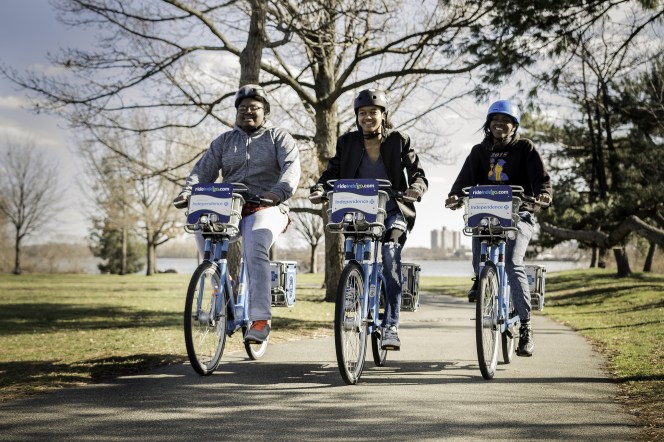
If you want to live and bike safely in a city head to the Northwest. And definitely get out of Tucson.
The top three “most bikeable places” in America this year are Boulder, Colo.; Fort Collins, Colo.; and Eugene, Ore., according to the bicycle advocacy group PeopleForBikes — which also reported that six of the top 24 bike-friendly municipalities are in those two states as well.
With a population hovering over 100,000 and a reputation as the healthiest town in America, Boulder topped PeopleForBikes’ ratings with a total of 3.7 out of five stars across five categories. That’s an improvement from last year when it placed third with 3.4 stars behind Fort Collins, and Wassau, Wisc.
The Colorado college town impressed PeopleForBikes’ data geeks thanks to its more than 300 miles of bike lanes (4.1 stars), high numbers of bike commuters and recreational riders (3.2 stars), and a safety score that nearly doubled from the previous year (3 stars in 2019 compared with 1.8 stars in 2018) thanks to fewer injuries and fatalities reported involving collisions with speeding vehicles.
Fort Collins slipped to second place with 3.6 stars, although the city earned higher marks for increasing the numbers of women and people of color riding regularly, PeopleForBikes found.
To compile the data, PeopleForBikes crunched Census figures, analysis from the National Highway Traffic Safety Administration’s Fatality Analysis Reporting System, plus the group’s own analysis of city planning information, maps, and surveys from community members in cities.
“We focused this year’s efforts on engaging more cities to improve accuracy of ratings,” PeopleForBikes director of research Jennifer Boldry said in a statement. “Better accuracy provides a more valuable tool that helps cities benchmark, set goals and measure progress.”
The list changes year to year to account for traffic injury rates, ridership figures and public investment in creating bike lanes and other infrastructure.
Eugene, for instance, jumped into the top 10 and was in a three-way tie for third place with the borough of Manhattan in New York City, and Arlington, Va., another high-ranked newcomer, with 3.4 stars. They were followed by Portland, Ore.; the Brooklyn section of New York City; and Lawrence, Kan., in a three-way tie for sixth place with 3.3 stars. Minneapolis and Madison, the Wisconsin capital, tied for 10th with 3.2 stars.
Meanwhile Wassau plummeted from third place last year to 29th while Tucson dropped from fifth to 32nd. Both cities had 2.9 stars and were penalized for low “acceleration” scores or how quickly a city improves its infrastructure and gets people riding.
“Providing annual ratings helps cities make quick, cost-effective progress toward building a network where people of all ages,” said PeopleForBikes President Tim Blumenthal.
Streetsblog has migrated to a new comment system. New commenters can register directly in the comments section of any article. Returning commenters: your previous comments and display name have been preserved, but you'll need to reclaim your account by clicking "Forgot your password?" on the sign-in form, entering your email, and following the verification link to set a new password — this is required because passwords could not be carried over during the migration. For questions, contact tips@streetsblog.org.