Anatomy of a Debacle: Uber and Shimano Threw Lyft-Owned Bike-Share Under the Bus

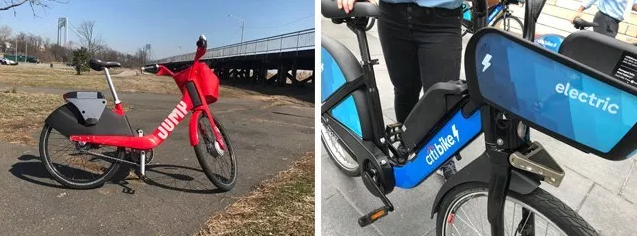
Does Macy’s tell Gimbels?
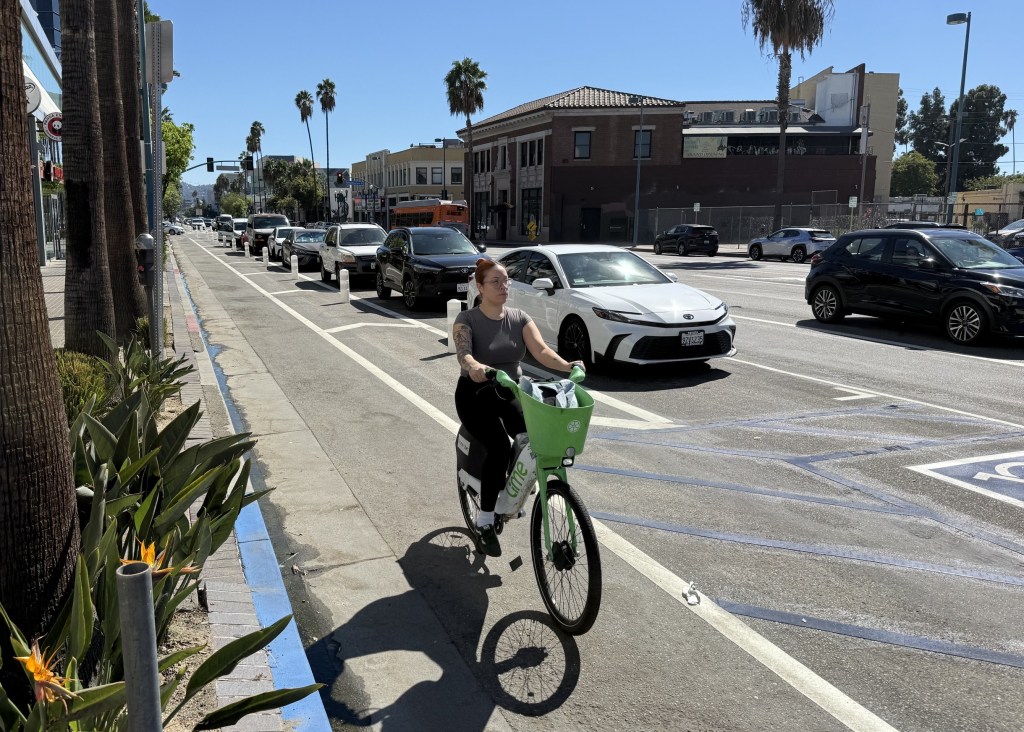
In the days since officials hastily pulled all their e-bikes from New York, San Francisco, and Washington, D.C., the Lyft-owned company has been under fire for not fixing the brake problem that has caused an unspecified number of crashes.
But a clearer picture of Brake-gate is emerging — and Lyft increasingly looks like a patsy (albeit an extremely rich patsy) to its bitter rival Uber, which claims it fixed the very same brake problem on its Jump bicycles last year but opted not to tell anyone.
And in the middle of the fight is Shimano, the Japanese bike brake company, which told Streetsblog that Lyft only has itself to blame for its crisis.
That’s a lot to unpack, so let’s go over what we know:
On Sunday, Lyft announced that it would ground its entire fleet of popular e-bikes in the three aforementioned cities “out of an abundance of caution” after some riders reported problems with the front brakes. Soon after, however, Uber revealed that it experienced the same problem with its Shimano front end, but had solved the problem by installing a “power modulator to the braking system,” according to spokesman Josh Gold.
The company added that the repairs were in place before Uber deployed hundreds of Jump bikes in Staten Island and The Bronx in 2018. But if that’s true, it means the company remained silent about the danger of its competitors’ bikes — which used the same Shimano BR-C6000-F front end — even as reports started coming in that people were being injured.
Uber’s silence raises issues of corporate ethics — though it also raises issues of governmental oversight. Lyft, after all, has a monopoly in New York City that mostly freezes out Uber’s Jump system. Lyft’s monopoly gives Uber little incentive to help its competitor maintain its lock over bike share in the nation’s most profitable market, as well as DC and the San Francisco Bay area.
Enter Shimano. On Tuesday, the bike parts company issued a stunning statement to Streetsblog that threw Lyft entirely under the bus:
Shimano provides specification requirements for bicycle manufacturers to refer to when designing bicycles. When designed and assembled to these specifications the brakes perform to global standards. With regards to this specific case, based on the information we have, this is not a Shimano brake issue as the specification requires the use of a power modulator for this brake. It appears this specification was not followed by manufacturers of some of the bicycles in question.
The statement added that Shimano makes a hub that includes a built-in modulator — but neither Lyft nor Uber used that particular hub. Uber fixed the problem. Lyft did not. It is likely that Lyft didn’t know that Uber had made the fix. Streetsblog asked Shimano if it told Lyft about Uber’s workaround — but Shimano wouldn’t comment.
New York City officials have been in the dark.
“It appears the Department of Transportation was not made aware of any complications with the JUMP bicycles,” spokesman Scott Gastel. “We reached out to the company [on Tuesday] to get more details on the measures they took to address the issue and any related timeline.”
So what have we learned? Mostly what we already know: corporate interests frequently diverge from the public interest:
- Uber fixed its brake problem, but didn’t tell anyone, risking the lives of riders of its competitors’ bikes.
- Lyft didn’t fix the brake problem in a timely fashion, and people were injured. But the company did remove all its bikes to prevent more injuries. Then again, the company has a monopoly on service in the city, and now its customers do not have access to popular e-bikes for what could be weeks.
- Shimano doesn’t seem to care about its products unless companies commit to buying their products exclusively.
- The Department of Transportation probably should do a better job of overseeing the safety of bike-share equipment.
Stay tuned.

Read More:
Streetsblog has migrated to a new comment system. New commenters can register directly in the comments section of any article. Returning commenters: your previous comments and display name have been preserved, but you'll need to reclaim your account by clicking "Forgot your password?" on the sign-in form, entering your email, and following the verification link to set a new password — this is required because passwords could not be carried over during the migration. For questions, contact tips@streetsblog.org.