Hit-and-Run Deaths Are Skyrocketing, and Pedestrians and Cyclists Bear the Brunt

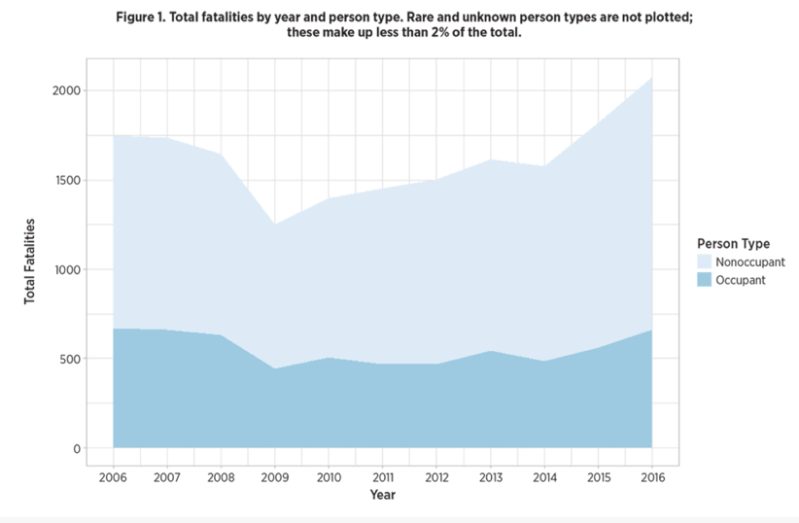
Traffic safety in the U.S. is heading in the wrong direction. Overall traffic fatalities are on the rise, pedestrian deaths are up about 25 percent over the last four years, and increasingly, drivers are striking people and leaving them for dead, according to a new study from the AAA Foundation.
The 2,049 hit-and-run deaths nationwide in 2016 were the most since record-keeping began. And nearly two-thirds of the victims were walking or biking.
Proving that there’s no traffic violence trend the national press won’t blame on pedestrians and cyclists, the Wall Street Journal covered the report as a warning to bike in bright colors and avoid texting while walking. But if the AAA report is indicative of anything, it’s an increasing level of lawlessness on the part of drivers.
Since 2009, hit-and-run fatalities are up 60 percent, the report finds, rising faster than overall traffic deaths. Hit-and-runs now account for a greater share of all traffic fatalities than at any time in the past 12 years. Only about half of hit-and-run drivers who kill are later identified.
The authors aren’t sure why fatal hit-and-runs are rising, but as with the general upward trend in traffic deaths, they suspect distracted driving is a factor.
Previous research has shown that hit-and-run drivers tend to have histories of drunk driving and license suspensions, and flee the scene to avoid steeper penalties.
In some states, fear of deportation may play a role. A recent study found that hit-and-runs declined in California after the state allowed undocumented immigrants to hold driver’s licenses.
Overall, the AAA report is more evidence that America’s traffic safety paradigm is failing. Decades of institutional safety practices that treat superficial symptoms while overlooking the central role of car-centric street design and planning have left the U.S. with a traffic fatality rate far higher than peer nations. Life is cheap on American streets.

Streetsblog has migrated to a new comment system. New commenters can register directly in the comments section of any article. Returning commenters: your previous comments and display name have been preserved, but you'll need to reclaim your account by clicking "Forgot your password?" on the sign-in form, entering your email, and following the verification link to set a new password — this is required because passwords could not be carried over during the migration. For questions, contact tips@streetsblog.org.