L.A. Transportation Committee Approves Speed Limit Changes, Electric Bus Goal
At this afternoon’s meeting, the Los Angeles City Council Transportation Committee approved noteworthy items related to speed limits and electric buses.
Speed Limit Increases – Needed but Stupid, Illogical, and Just Wrong
In setting speed limits, the city must follow a state-mandated process that Transportation Committee Chair Councilmember Mike Bonin described as “stupid, illogical, and just wrong.” Nonetheless, Bonin expressed his support for speed limit changes as necessary for a “fraction of protection” against dangerous speeding lawbreakers on L.A. streets.
Due to California “speed trap” law, the city must periodically measure and update speeds, with new speed limits based on how fast most drivers are already going. All three councilmembers present, Bonin, Nury Martinez, and Paul Koretz agreed with LADOT and LAPD representatives that it should be a city priority to change the state law to favor safer speeds, but that is another story.
In order to enable LAPD to ticket speeding drivers, LADOT has conducted extensive speed studies and proposed 94 miles of speed limit increases and 52 miles of speed limit decreases.
Last week, the city’s Board of Transportation Commissioners lacked a quorum when it considered a series of proposed speed limit increases and decreases. The commission nonetheless passed the proposal along without recommendation to this week’s Transportation Committee meeting.
Councilmember Martinez urged LADOT and LAPD to make sure that they inform communities about the changes, especially urging them to get the word out to school principals.
Councilmember Koretz requested that two streets in his westside district be removed from the proposal: Overland Avenue and Olympic Boulevard. With speed increases on Olympic in both Bonin’s and Koretz’ districts, there was discussion on where to split the stretch. This was settled to be at Sepulveda Boulevard. Though LADOT urged keeping the same speed limit for the full stretch where street geometry remains the same, and the City Attorney representative advised that this would create a “dangerous situation” as the posted speed limit would be unenforceable on Olympic in Koretz’ district, Koretz persisted.
The committee unanimously approved the speed limit changes, with Koretz’ two questionable removals. The speed limit changes proposal will next go to the full council. If approved there, LAPD and LADOT expect to post new signage and begin enforcement by early 2018.
An All-Electric L.A. City Bus Fleet by 2030
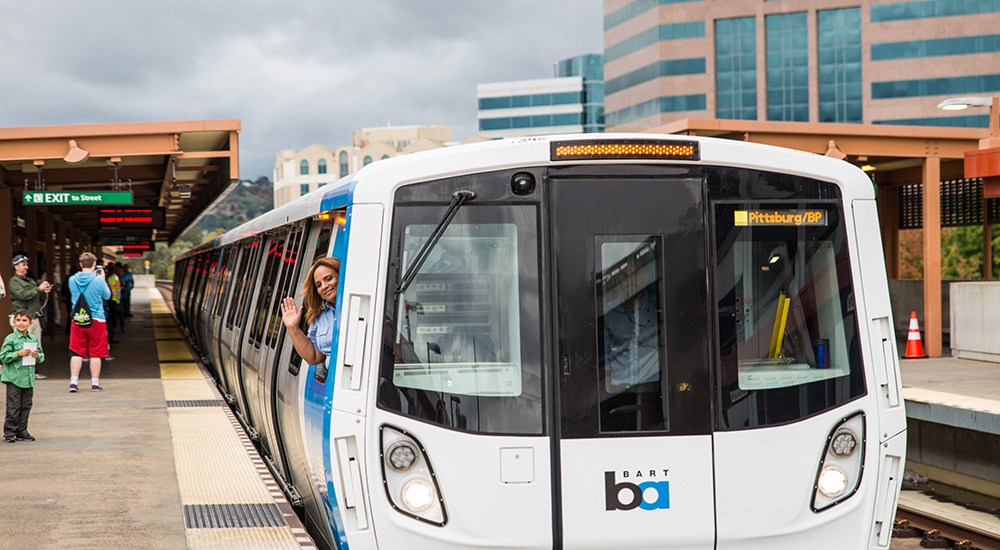
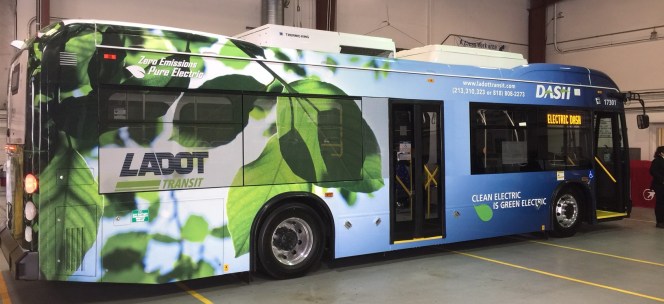
The Transportation Committee approved a motion (17-0739) by Councilmembers Bonin and José Huizar that establishes a goal for LADOT “to transition to a 100 percent zero emission bus fleet by 2030 or earlier.” Though Metro (which committed to transitioning to all-electric buses by 2030) operates most of the buses in the city of L.A., LADOT operates DASH and Commuter Express service. Earlier this year, the city introduced four electric DASH shuttles serving downtown L.A. The Bonin-Huizar motion directs LADOT to report back with a plan for how it will make the transition.
Numerous speakers from environmental groups allied as the L.A. County Electric Bus Coalition testified to the environmental benefits of the proposal. Several suggested that the city electrify early to show leadership for the 2028 Olympic Games.
The motion was approved unanimously by Transportation Committee, though with several amendments:
- Martinez questioned possible adverse impacts in the generation of energy and the disposal of batteries, stating that these activities had long burdened communities of color, including Sun Valley which she represents. She proposed a friendly amendment that the motion that the Department of Water and Power be included in the city’s electrification work, and that the report back be heard by both Transportation Committee and Energy and Environment Committee, which she chairs.
- Bonin added provisions for local procurement, implementation to prioritize service in disadvantaged communities, and to ensure electrical power prioritized renewable energy.
- Koretz enthusiastically urged electrification as a key way to combat dire climate change. His friendly amendment was to direct LADOT to report on the feasibility of transitioning to electric buses by 2025. Koretz also proposed that LADOT essentially immediately phase-out procurement of natural gas buses. That proposal was not accepted as part of the motion, but would be a separate report back.
The electric bus motion will now go to the full council for a vote.
Streetsblog has migrated to a new comment system. New commenters can register directly in the comments section of any article. Returning commenters: your previous comments and display name have been preserved, but you'll need to reclaim your account by clicking "Forgot your password?" on the sign-in form, entering your email, and following the verification link to set a new password — this is required because passwords could not be carried over during the migration. For questions, contact tips@streetsblog.org.