What Will It Take for Sacramento to Make Walking Safer in Poor Neighborhoods?

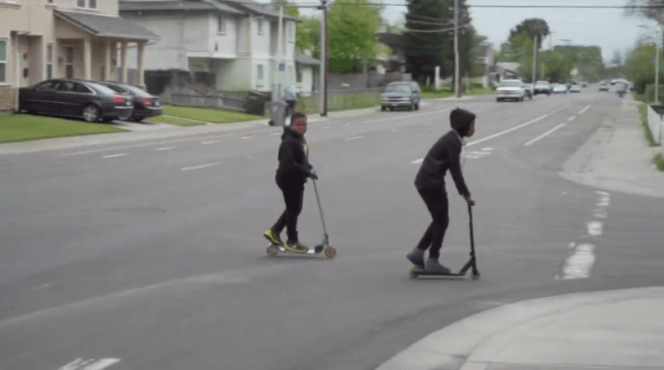
Police and city planners in Sacramento have come under scrutiny in the weeks since police were caught on tape assaulting Nandi Cain, Jr., a black man, during a jaywalking stop. Cain, who was legally using an unmarked crosswalk, has since filed a civil rights lawsuit against the city. Now, reporters are looking into why there are so few marked crosswalks in one of Sacramento’s poorest areas.
“Driving around town looking for crosswalks was easier in some neighborhoods than others,” reports KXTV’s Anne Di Grazia. Speaking with residents in the Del Paso Heights neighborhood where Cain was arrested, Di Grazia says, “we hardly saw a marked crosswalk.”
To find out why, she visited Ryan Moore, the city’s interim traffic engineer. “Anyone’s free to request a traffic investigation at any time,” he explains, and his department will review to determine if a crosswalk is needed. “We respond to requests like that from the community, all day, every day.”
“All of our council districts get equal attention,” Moore claims. But the city doesn’t keep track of how many crosswalks it has or where they’re installed, so it’s difficult to verify the city’s assertion.
There is, however, plenty of data available when it comes to the police harassing people on foot, and the pattern is plainly discriminatory. The Del Paso Heights police district is responsible for more than two-thirds of the city’s jaywalking tickets, according to a Sacramento Bee analysis. Nearly half of the district’s jaywalking tickets go to black residents, who make up just 15 percent of the area’s population.
“People of color are not only more likely to be cited for crossing unsafely, but they are also at a disproportionately higher risk of being killed while walking or biking in their neighborhoods,” Walk Sacramento said in a statement after video of Cain’s arrest was released. “Though we absolutely must reform the way we police the most vulnerable users of our roads, it is imperative that our streets are redesigned now to eliminate these fatalities.”
“They’re always speeding through here like they’re on a freeway,” one resident told KXTV. When asked if there are better crosswalks in other neighborhoods, she doesn’t hesitate: “Yes, for sure.”
In January, the Sacramento City Council adopted a “Vision Zero” resolution stating its goal “to eliminate traffic fatalities and serious injuries by 2027.” A draft action plan is due from the city’s Vision Zero task force in August.
It seems like equal, abundant access to safe pedestrian crossings should be at the top of the city’s list.
Streetsblog has migrated to a new comment system. New commenters can register directly in the comments section of any article. Returning commenters: your previous comments and display name have been preserved, but you'll need to reclaim your account by clicking "Forgot your password?" on the sign-in form, entering your email, and following the verification link to set a new password — this is required because passwords could not be carried over during the migration. For questions, contact tips@streetsblog.org.