Busting the Myth of the “Scofflaw Cyclist”

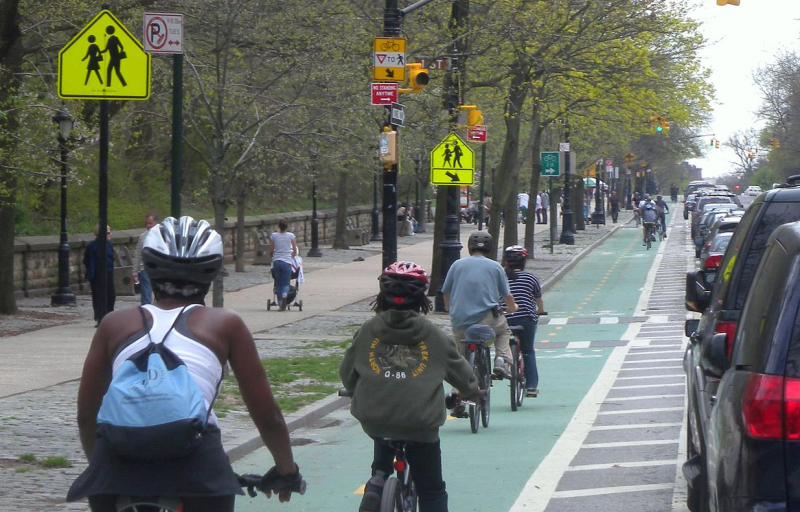
According to a certain perspective that seems to hold sway among local newspaper columnists, bicyclists are reckless daredevils who flout the road rules that everyone else faithfully upholds. But the results of a massive survey published in the Journal of Transport and Land Use point to a different conclusion — everyone breaks traffic laws, and there’s nothing extraordinary about how people behave on bikes.
Researcher Wesley Marshall and his team surveyed 18,000 people online about their compliance with traffic laws when they are driving, biking, or walking. Most respondents — 14,000 — were based in the United States, with the remainder concentrated in Australia, Canada, and Europe.
They found that people admit to breaking the rules of the road at roughly the same (very high) rate, regardless of how they’re getting around.
“Bicyclists, perhaps despite popular conception, really don’t break the rules at any greater rate than any other modes: pedestrians or drivers,” said Aaron Johnson, one of the authors. “When there’s a disregard for the rules it tends to come from efforts to negotiate infrastructure that really wasn’t built for them.”
Only participants who said they bike were surveyed about cycling behavior and only those who said they drive were questioned about motorist behavior. Most participants identified as all of the above — drivers, bicyclists, and pedestrians — said Johnson.
The study was conducted by “snowball sampling,” where surveys are passed along among social networks by word of mouth or through media. Though the survey was not random, the sample was big enough that researchers think the findings are reliable.
Among people who drive, nearly 100 percent said they exceed the speed limit, text behind the wheel, or break other laws; 98 percent of people who walk admitted to disregarding pedestrian signals; 96 percent of people who bike said they disregard stop signs and traffic lights.
But reasons for breaking the rules differed. People were most likely to say they broke a rule while driving or walking to save time, while people who bike were most likely to cite personal safety (by riding on the sidewalk rather than a busy street, for example) or saving energy.
The survey also examined geographical differences among American respondents. Cyclists in cities with higher rates of cycling, for instance, were more likely to say they follow rules. Interestingly, the survey did not find the presence of bike lanes to be a significant factor in cyclists’ reported observance of traffic laws. And intersection density — often considered a proxy for walkability — was associated with higher rates of rule breaking. The authors say these factors deserve additional study.

Streetsblog has migrated to a new comment system. New commenters can register directly in the comments section of any article. Returning commenters: your previous comments and display name have been preserved, but you'll need to reclaim your account by clicking "Forgot your password?" on the sign-in form, entering your email, and following the verification link to set a new password — this is required because passwords could not be carried over during the migration. For questions, contact tips@streetsblog.org.