Does Bike-Share Replace or Enhance Transit Use? That Depends

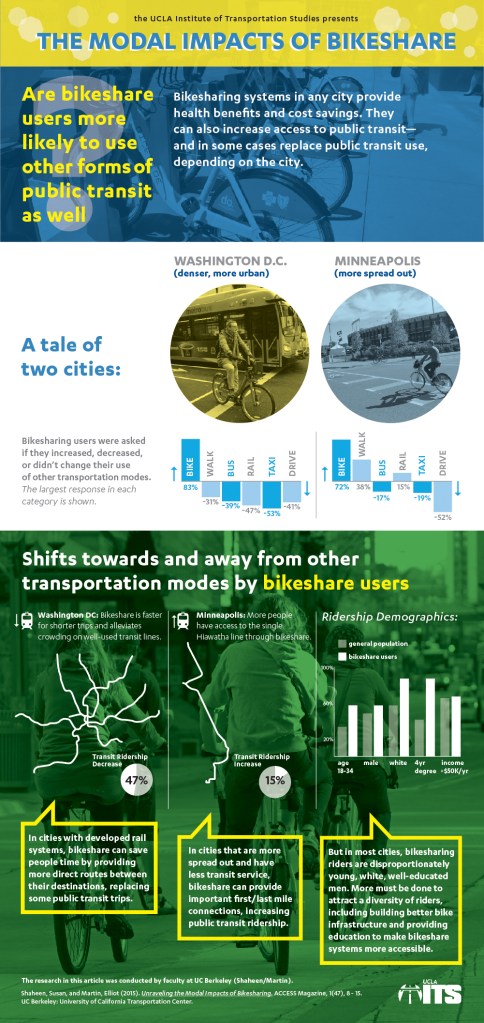
This graphic is based on research by two UC Berkeley faculty into the effects of bike-share use in different U.S. cities. It was originally published in Access Magazine by the UCLA Institute of Transportation Studies.
The researchers found that bike-share users are a practical bunch: they tend to use bike-share to reach transit, if it’s far away from them. If their trips are shorter, they use bike-share instead of transit—the effect of which could be freeing up space on crowded transit lines.
The article on which this information is based can be found here.
Streetsblog has migrated to a new comment system. New commenters can register directly in the comments section of any article. Returning commenters: your previous comments and display name have been preserved, but you'll need to reclaim your account by clicking "Forgot your password?" on the sign-in form, entering your email, and following the verification link to set a new password — this is required because passwords could not be carried over during the migration. For questions, contact tips@streetsblog.org.