Transit Overflow from the Women’s March Demonstrates Need for Better Transit

This weekend’s Women’s March was an unparalleled event in United States history, with over three million people taking to the streets in cities and towns across the country. Timed to coincide with the inauguration weekend of America’s 45th President, the event captured the attention and imagination of people throughout the world.
While there were many “winners” for the weekend, there was one that has not gotten the same amount of attention: America’s public transit systems. If Open Streets events such as CicLAvia, Beach Streets, and Sunday Streets demonstrate the need for better bicycle networks and safer pedestrian design, then Saturday’s transit ridership should also make the case that, if our country had a more robust public transit system, ridership numbers would spike.
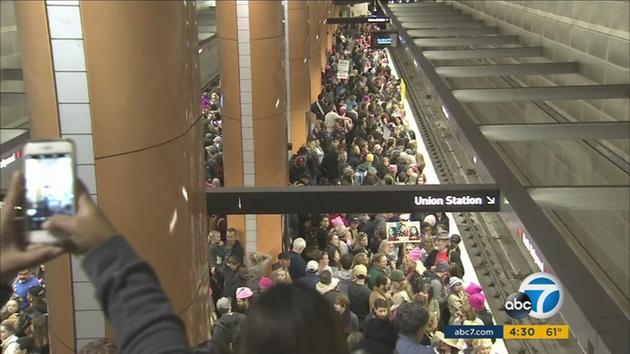
Nowhere was the shortfall more obvious than in Los Angeles. Anecdotally, my social media feed was full of friends and readers who were either experiencing waits of over an hour to use the newly expanded Expo or Gold Lines. News outlets picked up the story, with the Long Beach Press-Telegram declaring plainly that “There are too many marchers for L.A.’s trains to carry.” While other outlets put a more positive spin on the transit shortfall — the L.A. Times headline read “Jubilant protesters crowd into downtown L.A.-bound Metro trains” — most outlets put the shortfall front and center into a headline.
Not every city experienced the transit shortfall that Los Angeles experienced. There were 592,000 boardings on LA Metro trains last Saturday, 360,000 higher than usual for a Saturday, according to Metro. Other services increased service for Saturday, with the Bay Area’s BART increasing rail access to marches in San Francisco, Oakland and Berkeley. But even with those increases, BART was overcrowded.
So far, we’re only talking about trains because that’s where the largest overcrowding took place. Most casual transit users choose to take rail over the bus for a variety of reasons. Building out a working and connected rapid bus system would have the same benefits for people who would ride transit regularly but don’t.
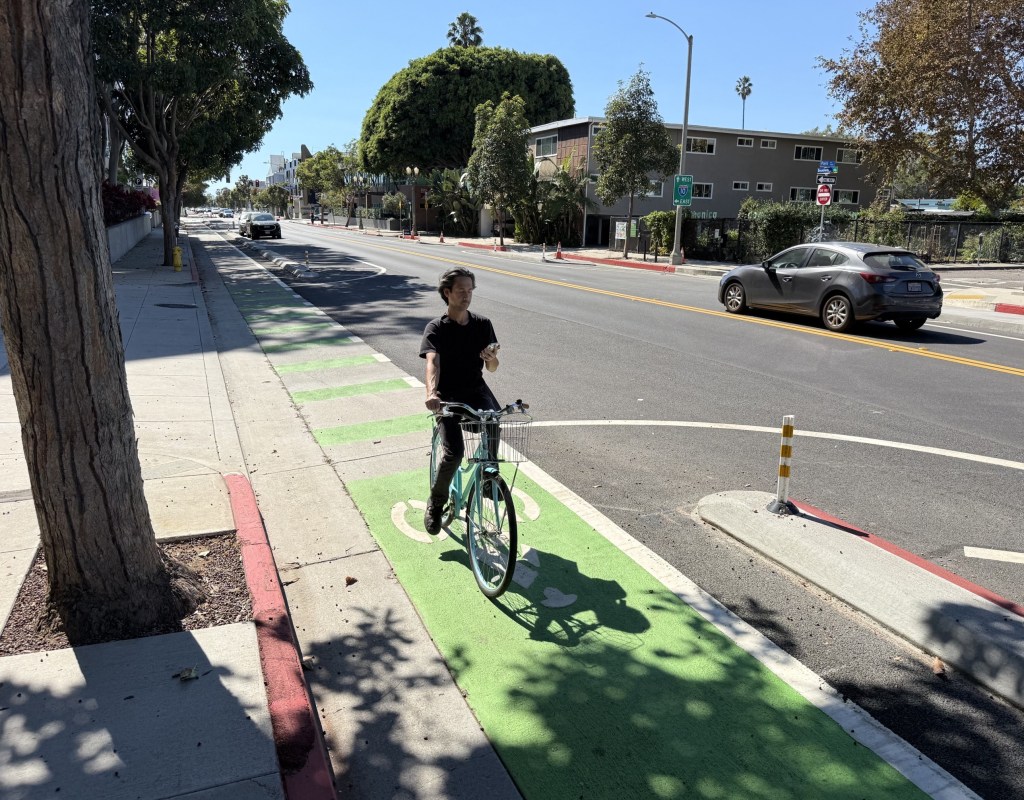
Activists and academics point to the rise of Open Streets events as a turning point in the debate over how city’s should spend transportation and infrastructure dollars. The tens of thousands of people riding and walking when cars are removed and the streets are safe and attractive proved to politicians that there are many people who would choose to walk or bicycle that don’t because of they don’t believe that it is safe or the infrastructure is lacking.
If that’s the lesson from CicLAvia, then a lesson for urban planners and politicians from Saturday is that the same latent demand exists for rail transit service. When the service is more attractive than driving and people know it will be safe and easy to walk from a transit stop to their destination; a higher and higher percentage choose rail.
It wasn’t planned that way, but Saturday showed that the demand is there for rail transit. The more we build, the more people will ride.
Streetsblog has migrated to a new comment system. New commenters can register directly in the comments section of any article. Returning commenters: your previous comments and display name have been preserved, but you'll need to reclaim your account by clicking "Forgot your password?" on the sign-in form, entering your email, and following the verification link to set a new password — this is required because passwords could not be carried over during the migration. For questions, contact tips@streetsblog.org.