8 Transportation Engineering Euphemisms That Should Be Tossed Out

Have you ever gone to a public meeting about a street in your neighborhood, only to be told that your ideas to calm traffic would result in a “level of service” that would be “unacceptable”? Or that an “alternative transportation” option like a bike lane would render the street “capacity deficient”?
Those terms originated in the mid-century highway era, and they remain baked into transportation engineering to this day. There is a whole specialized vocabulary tilted against street design concepts that can improve health, safety, and street life. Ian Lockwood, a transportation engineer and consultant, says it’s time to leave these phrases behind.
In a recent article for the Journal of the Institute for Transportation Engineers [PDF], Lockwood advocates for replacing the following terms to remove bias from transportation engineering, in the same way words like “mailman” and “chairman” were replaced with “mail carrier” and “chairperson” to avoid marginalizing women.
1. Accident
Why it’s a problem: Calling car collisions “accidents” makes them seem like unavoidable acts of God instead of the result of conscious decision-making, and fosters the perception that they cannot be prevented.
Neutral replacement: Collision or crash.
2. Alternative Transportation
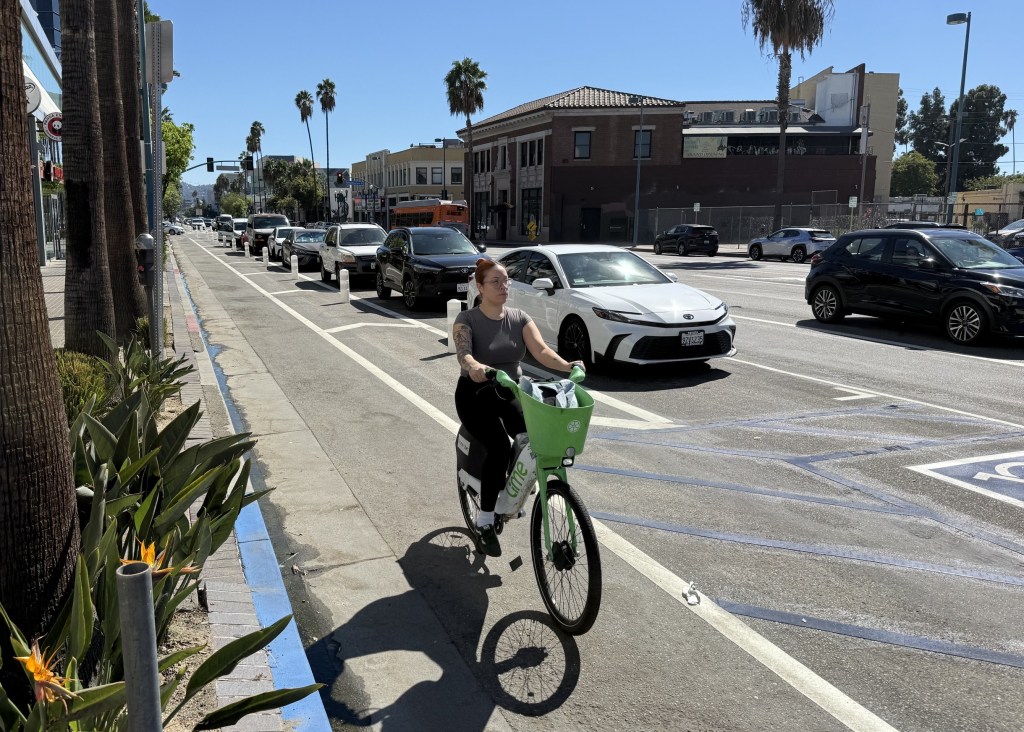
Why it’s a problem: Referring to biking, walking, and transit as “alternatives” establishes driving as the default way to travel, subordinating other ways to get around.
Neutral replacement: Active transportation, non-automobile transportation
3. Capacity
Why it’s a problem: In engineering terms, the “capacity” of a road describes how many vehicles it can carry in a given amount of time. It does not factor in how well a street works for transit, biking, or walking.
Neutral replacement: Maximum motor vehicle volume.
4. Level of Service
Why it’s a problem: One of the most pervasive conventions in transportation engineering, “level of service” is basically a measure of vehicle delay at intersections. The implication that the only “service” rendered by a street is to reduce motorist delay overlooks functions like social interaction or local commerce — not to mention travel modes besides driving. As a planning tool, LOS leads to the obliteration of walkable neighborhoods and the proliferation of car-centric places.
Neutral replacement: Queueing time at an intersection for motorists.
5. Undesirable/Unacceptable
Why it’s a problem: Again, when engineers say a certain level of service is “unacceptable,” they are making a value judgment based how people may perceive a street when they’re driving. Instead engineers should convey results without assuming that driving is the only mode of travel that matters.
Neutral replacement: Describe the effects of a project on specific types of travel or other uses of a street.
6. Efficiency
Why it’s a problem: “More efficient is often a euphemism for faster,” says Lockwood. “An objective translation would be ‘Let us widen the highway so motorists can drive faster.'”
Neutral replacement: Increase driving speeds.
7. Enhance
Why it’s a problem: “‘Enhanced’ connotes that the situation has become better, which is a matter of opinion and perspective,” says Lockwood. For example, engineers might call a road with an added turn lane an “enhancement project.”
Neutral replacement: Instead of saying “motor vehicle speeds were enhanced,” Lockwood suggests the more straightforward “increased” or “reduced.”
8. Improvement/Upgrade
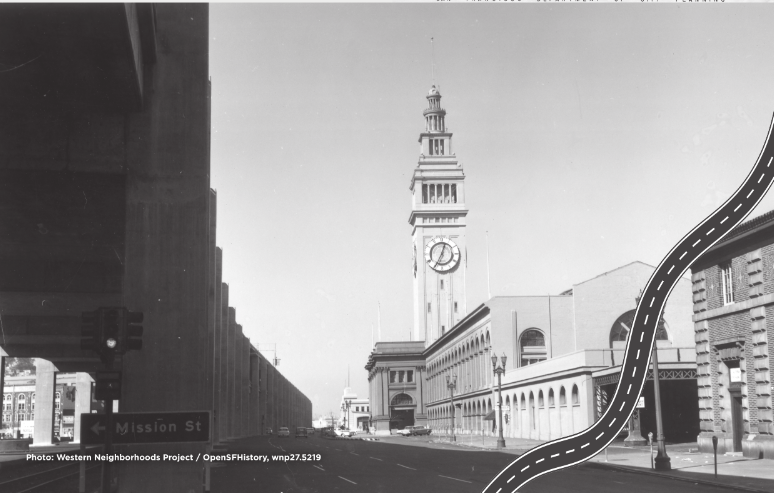
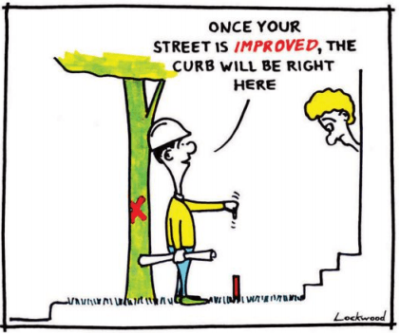
Why it’s a problem: This is industry jargon for road widening, essentially. The question of whether a project is an “improvement” is a value judgment. As the cartoon above illustrates, if a road “improvement” brings traffic closer to your doorstep, you might not view it in such rosy terms.
Neutral replacement: Modification/change.

Streetsblog has migrated to a new comment system. New commenters can register directly in the comments section of any article. Returning commenters: your previous comments and display name have been preserved, but you'll need to reclaim your account by clicking "Forgot your password?" on the sign-in form, entering your email, and following the verification link to set a new password — this is required because passwords could not be carried over during the migration. For questions, contact tips@streetsblog.org.