Choudri Announces Resignation at California High-Speed Rail Authority
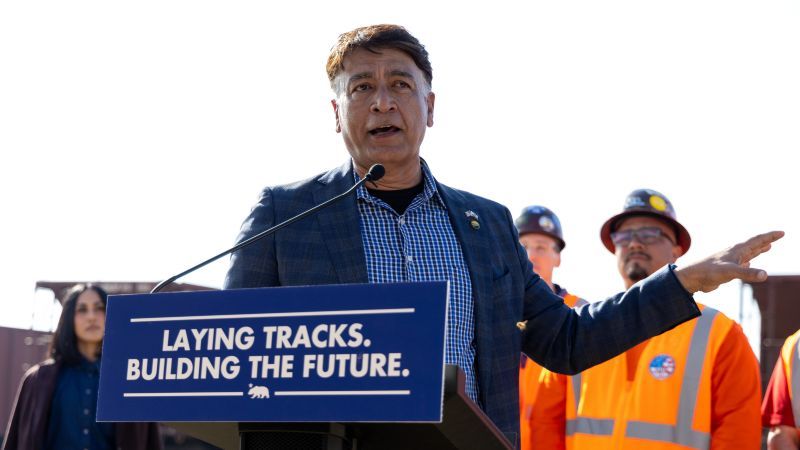
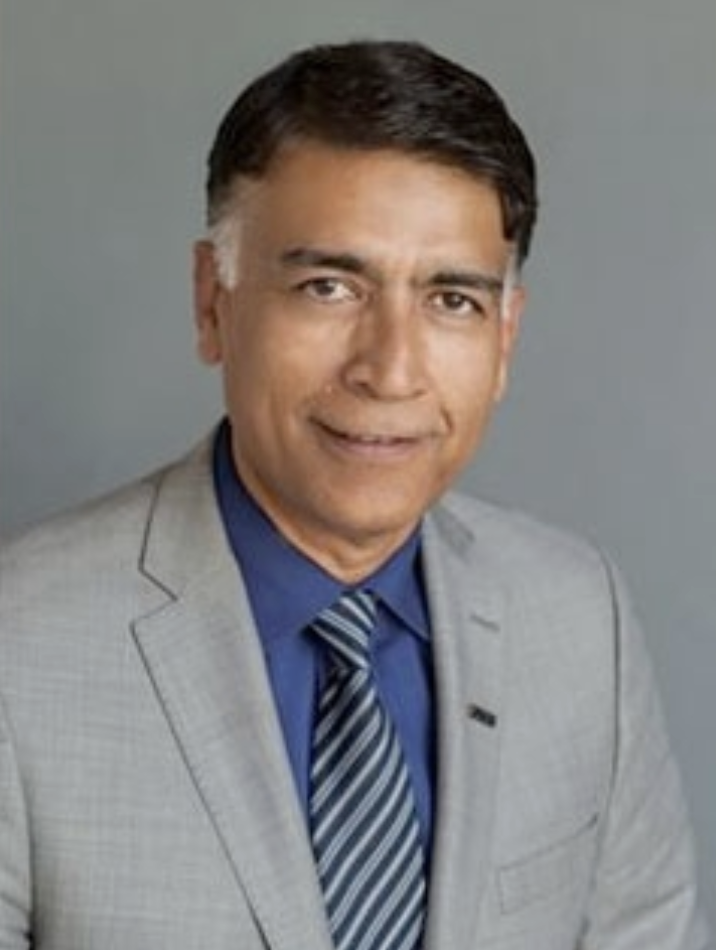
Yesterday, California High-Speed Rail Authority CEO Ian Choudri announced his resignation as concerns over contractor billing created more problems for embattled construction authority than they could handle. State Department of Finance head Joe Stephenshaw has been appointed interim CEO. There is no announced timeline for Choudri’s replacement.
Choudri’s tenure had its ups and downs. Highlights included securing an ongoing annual $1 billion commitment from the state’s cap-and-trade fund, the creation of a business plan that should actually lead to the rail line offering service in less than a decade, and the expected board vote this week to purchase new trains.
But the project also saw its valleys. The rail authority saw most of its legislative package get stalled in Sacramento this year. The Trump administration pulled back promised funding (again). And Choudri himself found himself in another scandal after a domestic disturbance call at his home.
Below is a timeline outlining the highs and lows of Choudri’s two-year term helming the authority.
2024: Appointment and change in leadership
The board selected Choudri on August 8 to take over as CEO. Choudri, then a senior vice president at engineering and infrastructure firm HNTB, succeeded Brian Kelly. Choudri brought more than 30 years of infrastructure experience, including work on high-speed rail projects in France and Spain, and transportation projects involving federal and state agencies.
Kelly left behind a program with most of the San Francisco-to-Los Angeles corridor environmentally cleared, active Central Valley construction, and $3.3 billion in federal grants secured. Choudri’s challenge was to turn that progress into an operating railway, by addressing the project’s funding gap, including reigning in delays and rising costs.
2025: Construction preparation and a worsening federal funding picture
The year began with the Trump Administration essentially declaring war on the project. Secretary of Transportation Sean Duffy held a press conference in L.A. Union Station to announce the results of a feasibility inquiry that hadn’t been started yet. Mocked by protestors, Duffy’s words could barely be heard, but that was a positive as most of what was said about the project wasn’t true.
In June, the federal government announced it was pulling $4 billion in funds promised during the Biden Administration. Later in the summer, they pulled another $175 million. In the fall, California responded and passed a change to its cap-and-trade program designating $1 billion for the rail program annually for the next two decades.
But $1 billion annually isn’t nearly enough to build hundreds of miles of high-speed rail. Choudri began an effort to find private partners to help build a connection between the under-construction Central Valley “spine” to newly electrified Caltrain lines that would lead right into San Francisco.
While critics and right-wing politicians like to hammer the point that no actual rail has been laid, there was significant progress made during Choudri’s first year. The authority moved toward purchasing rail, ties, overhead electrical equipment and other systems needed to make the Central Valley guideway operational. In 2025 the CAHSRA completed NINE large construction projects needed before final track construction can begin.
In December, the authority released draft environmental plans for connecting Los Angeles and Anaheim. What that line is likely decades away, approved plans will allow the agency to seek funding and sponsors.
For the first time since Governor Schwarzenegger’s administration underestimated project costs c. 2008, there was real optimism that the rail line would actually be completed.
February–March 2026: A new business plan
In February, the authority proposed a revised strategy: complete the Merced-to-Bakersfield segment, extend service toward major population centers, and develop new revenue sources.
The plan emphasized private-sector partnerships, real estate development and commercialization of infrastructure assets. The authority said streamlining had reduced the projected cost of Phase 1 by $1.7 billion.
The draft business plan was presented for public review, with comments accepted through April. The plan’s financing strategy and construction schedule would become points of contention in the months ahead.
In June, the board approved the plan, and selected a consortium of Kiewit, Stacy and Witbeck, and Herzog to install track, overhead electrical equipment, train control and communications systems.
The contract covered the 119-mile Central Valley segment, with construction intended to begin later in 2026. The 150-acre Southern Railhead facility in Kern County was completed to serve as the staging and distribution hub for rail materials.
Much of the earlier construction involved bridges, viaducts, grade separations and guideway. Track installation marks a visible transition toward opening an actual operating railway.
August 2026: Funding and schedule warnings intensify
The authority’s inspector general warned that the project could exhaust available cash by December 2027 without additional financing. The authority identified approximately $39.3 billion in long-term funding, but that money would not arrive quickly enough to cover planned construction.
The inspector general also challenged the authority’s schedule and cost assumptions. The authority’s $35.7 billion estimate for the reduced-scope Merced-to-Bakersfield segment did not include all potential financing costs, which could add billions.
Streetsblog argued that a cash shortfall would not automatically mean construction stopped in 2027, but that the authority needed credible financing options and greater transparency about its plans.
A subsequent report detailed concerns that the final business plan did not adequately explain the funding shortfall, cost increases, scope changes and schedule risks. The inspector general claimed that anticipated 2032–33 Central Valley completion should be pushed back to September 2034.
In the meantime, the CAHSRA continued to complete needed projects. Four new projects completed this month brings the total to 66 since the project first broke ground. The 2026 construction highlights include a giant railhead yard, completed last Spring.
October 2026: Oversight crisis and resignation
Following another inspector general investigation into consultant travel expenses, the board moved to tighten oversight of contracts. By October 9, the board had considered the investigation’s findings and corrective actions, including a change requiring in-house legal approval for certain contracts under $25 million.
The investigation found that consultants working for the authority billed taxpayers for questionable travel and activities, including premium transportation, nightlife, and other expenses that lacked adequate justification. The board had been weighing further disciplinary action, potentially including termination.
The Last Days
On Wednesday, the board unanimously approved a $772.1 million contract with Siemens Mobility to design/build/test three seven-car high-speed trainsets by 2030. The agreement also allows up to $63.7 million in import duties and tariffs. These trains are a big milestone, the first U.S. high-speed trains, but the authority’s earlier plan to procure six trainsets had been cut in half.
Later Wednesday, Choudri submitted his resignation, citing personal and family priorities. His departure came amid the consultant travel scandal, questions about management oversight and the board’s consideration of his performance. His exact final day was not publicly clear in the reporting available today.
Choudri’s departure doesn’t mean that the project is on pause. The authority’s official board meeting page lists two significant decisions for today’s meeting:
Agenda Item 9: Certify the Los Angeles-to-Anaheim Final EIR
The board is scheduled to consider certifying the segment’s final environmental impact report under the California Environmental Quality Act (CEQA). This is an important state environmental-review decision, not authorization to complete the entire project or proof that all financing is secured.
Agenda Item 10: Approve the preferred alternative
Directors are scheduled to consider the shared-passenger-track alternative, with a light maintenance facility at 26th Street in Vernon and no optional intermediate high-speed rail station. The action includes related CEQA findings, a statement of overriding considerations and a mitigation monitoring and enforcement plan.