Bill to Exempt L.A. from Housing Density Near-Transit Bill Heads to the Senate Housing Committee Tomorrow

Update: Staff for Senator Durazo reached out noting that our description of the legislation, which was based on what was said at the Metro meeting last week, is different than the analysis on the official legislative website, available here (click on the analysis tab.) The official description is more broad, it doesn’t just apply to L.A. Metro. Streetsblog will provide an update later this week after the legislation is amended and moved (or rejected) tomorrow.
The Los Angeles region has not been supportive of state legislative efforts to mandate density near transit stops. The city of Los Angeles voted to oppose Senator Scott Wiener’s (D-SF) Senate Bill 79 last year, and L.A. Mayor Karen Bass even went so far as to urge Governor Gavin Newsom to veto the legislation. In 2026, Los Angeles Metro has been trying to get itself exempted from following the legislation’s mandate ever since.
On Tuesday, the Senate Housing Committee will hear Senate Bill 1361, introduced by María Elena Durazo (D-Los Angeles), that would do just that with the support of the Metro Board of Directors.
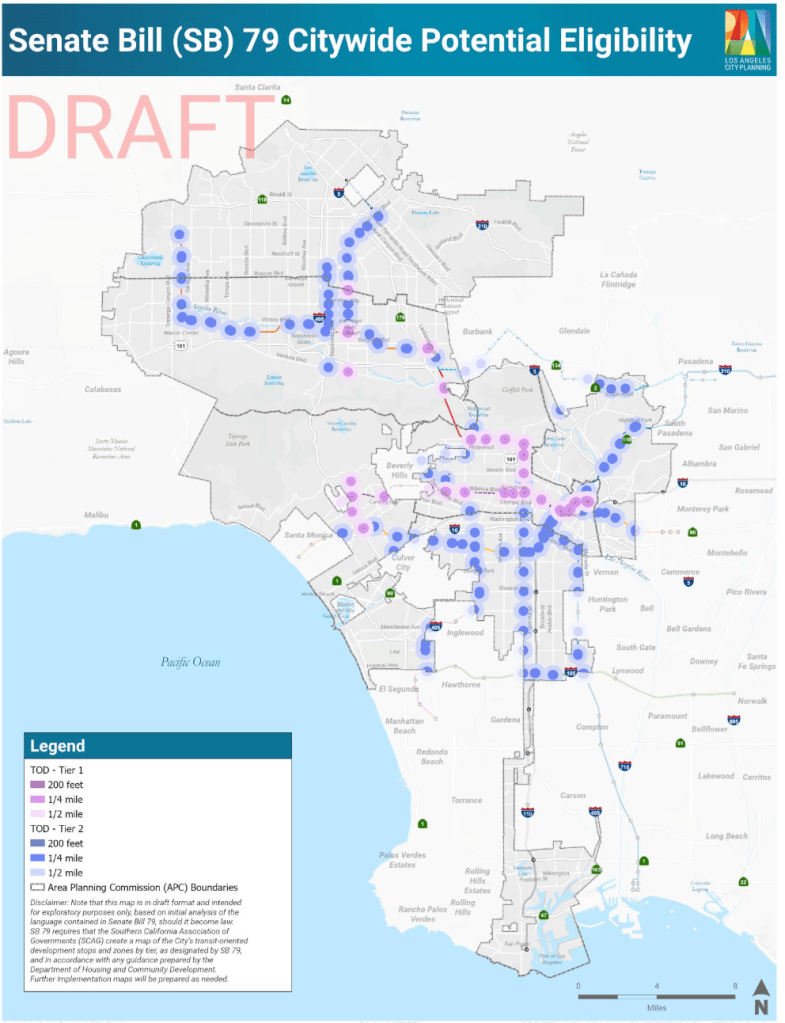
In brief, last year’s SB 79 increased allowable housing density near major transit stations/stops by requiring local governments to permit more homes—often mid- to high-rise—within walking distance of rail stations and high-frequency bus corridors. The law sets minimum zoning standards that override local limits, allowing taller buildings, reduced setbacks, and higher unit counts. It also streamlines approvals by requiring many qualifying projects to be reviewed ministerially, avoiding discretionary hearings if they meet objective rules. SB 79 will take effect on July 1.
Durazo voted in favor of SB 79 when it appeared on the Senate floor.
Durazo’s legislation currently appears to broadly exempt essentially all past and future L.A. County Metro rail and bus rapid transit (BRT) stations/stops. But, according to Metro staff and housing advocates, this final version is still taking shape. A clearer picture may emerge at tomorrow’s committee hearing (see below).
Metro’s Argument
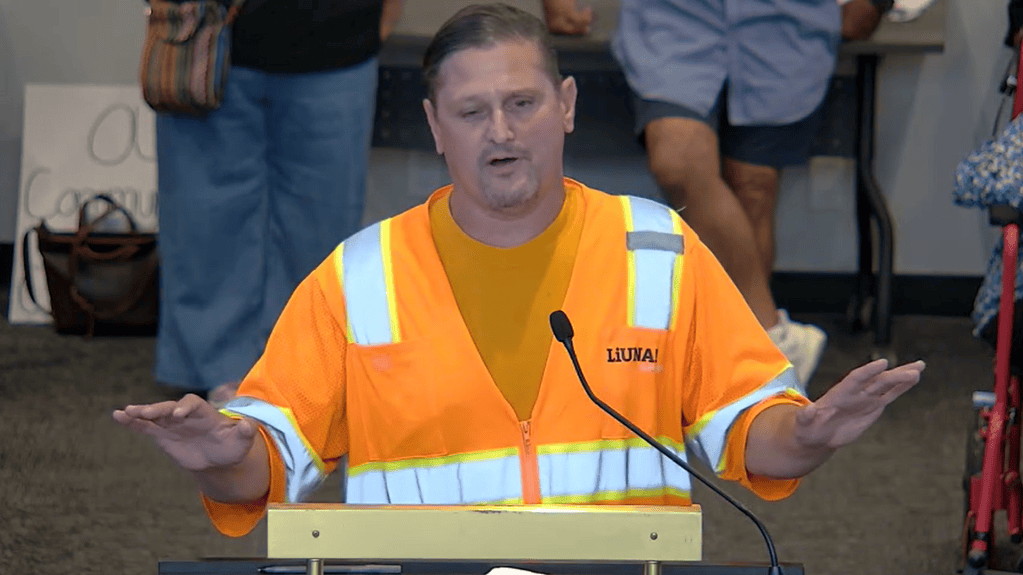
In a hearing of the Metro Executive Management Committee last week [video], outgoing Metro Board Chair Fernando Dutra, who will soon leave the Metro Board after his lopsided defeat in a Whittier election last week, argued that Metro needs SB 1361 to pass.
“One of our cities in the ‘SeeGa’ Line [Metro’s Southeast Gateway Line light rail, an initial segment is currently under construction] that called me the night they made a decision to step back… from everything that we’ve been doing for 10 years on the ‘SeeGa’ Line,” Dutra said.
“Put yourself in their position… They work with a developer for five years to design a project. They agree on the height and width and everything else. They have all these community meetings. Now all of a sudden, the developer can say,’ Hey, this Bill 79 says now instead of going four floor stories, I can go 10 stories.’”
Metro board and staff further discussed SB 79 criticism from cities, speaking as Dutra did in anonymous terms. However there are many potential opposed So Cal cities beyond Los Angeles itself. Burbank and Glendale (with City Councilmember Ara Najarian serving on the Metro Board) got cold feet on some features of the under construction North Hollywood to Pasadena BRT. Paramount and Downey will have rail stops on the SE Gateway Line and both opposed SB 79 last year. Dutra’s Whittier will have a stop on the Eastside E Line Extension.

Senate Housing Committee
While Metro has made SB 1361 a priority, its passage is hardly a sure thing. At last week’s hearing, Metro staff warned the board members that the Senate Housing Committee was “heavily involved” in drafting SB 79. The committee is chaired by Jesse Arreguín (D-Berkeley) a key ally of Senator Scott Wiener (D-SF) who was the author of SB 79 and Scott Haney (D-SF) who was lead author in the Assembly.
That being said, Metro is trying to frame the debate by stating it’s not opposed to density near transit, just that the mandates of SB 79 will lead to less transit (and less density) than if the agency is left on its own.
“[Metro] isn’t an anti-housing body,” argued Madeleine Moore, Metro’s CA Government Relations Deputy Executive Officer. “But, we are just seeing these on the ground impacts that are coming to fruition even before the bill has been enacted.”
But for all of Metro and Bass’ bluster about how the Los Angeles region doesn’t need the state’s help to build transit, history tells a different story. A report from LAist in February shows that the region is falling far short of its state-mandated housing goals. Over the last forty years, the region produced 325 new housing units for every 1,000 people. The cost of living is one of the key reasons that people choose to move from California to another state.
For more of Streetsblog’s coverage of SB 79 from 2025:
Newsom Signs SB 79, October 10
SB 79 Passes Assembly, Still Needs Senate “Concurrence” Before the Governor’s Desk, September 11
Wiener’s Legislation to Upzone Near Transit Clears the Senate (Barely), June 5
Wiener’s Controversial Legislation to Upzone Near Transit Keeps Moving with One Major Change, May 12
Wiener Introduces Legislation to Increase Housing Density Near Transit, March 17
Streetsblog has migrated to a new comment system. New commenters can register directly in the comments section of any article. Returning commenters: your previous comments and display name have been preserved, but you'll need to reclaim your account by clicking "Forgot your password?" on the sign-in form, entering your email, and following the verification link to set a new password — this is required because passwords could not be carried over during the migration. For questions, contact tips@streetsblog.org.