What Is an E-Bike, and What’s an Unlicensed Motorcycle: A Parents’ Guide

(Carter Rubin is a lot of things, including a board member of the California Streets Initiative which publishes Streetsblog California and Santa Monica Next. This article was originally written for Next, but is cross posted with the author’s blessing.)
As a Santa Monica parent, I’ve put over 3,000 miles on my e-bike toting my kid around. It’s revolutionized how I get around town, bringing more smiles to my commutes and errands, saving me money, beating traffic and getting fresh air.
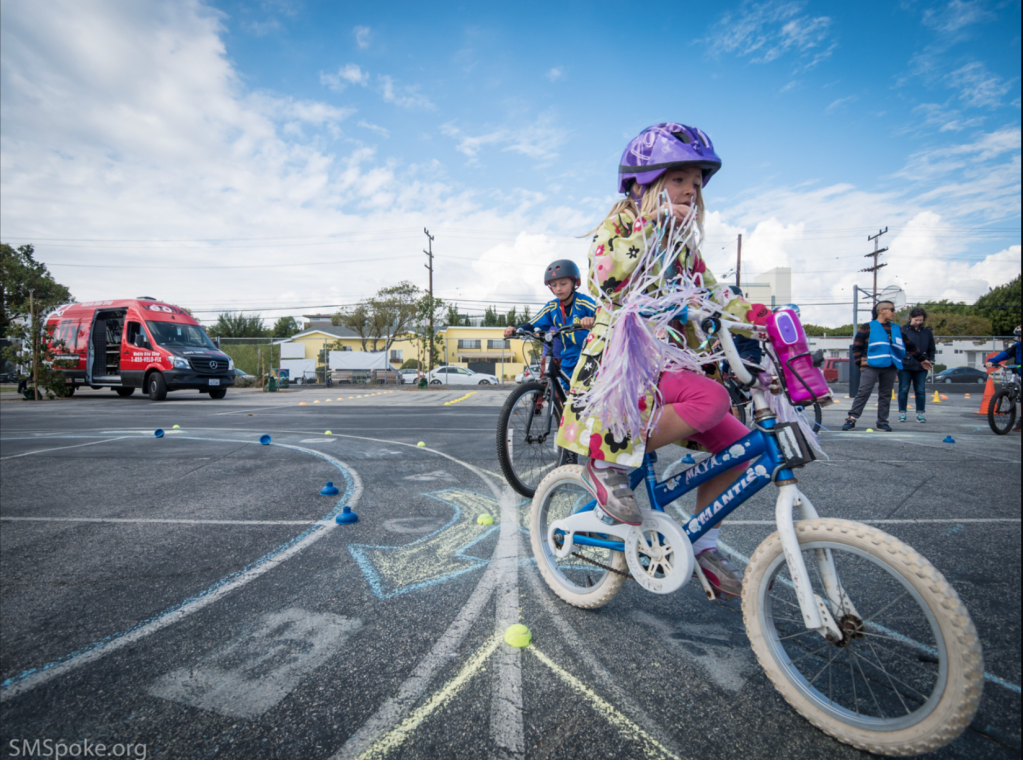
Recently my stalwart e-bike passenger increasingly wants to ride their own bike. So I’ve started paying more attention to what other kids are riding around town. It’s mostly road bikes and mountain bikes, but I’m increasingly seeing e-bikes, and even motorized vehicles that are not, in fact, legal for anyone to ride on city streets, let alone kids.
So, for parents in the final stretch of holiday shopping, here’s my PSA.
What Is a Legal E-Bike?
According to California law, an electric bicycle is a bicycle equipped with fully operable pedals and an electric motor of less than 750 watts of power.
California has established three classes of e-bikes, which the DMV describes as follows:
- Class 1: A low speed pedal-assisted electric bicycle equipped with a motor which provides assistance only when the rider is pedaling and ceases to provide assistance when a speed of 20 mph is reached.
- Class 2: A low speed throttle-assisted electric bicycle equipped with a motor used exclusively to propel the bicycle and NOT capable of providing assistance when a speed of 20 mph is reached.
- Class 3: A low speed pedal-assisted electric bicycle equipped with a speedometer, and a motor which provides assistance only when the rider is pedaling and ceases to provide assistance when a speed of 28 mph is reached.
- The operator of a Class 3 electric bicycle:
- Must be 16 years old or older.
- Must wear a bicycle safety helmet.
It Has To Have Pedals
If it doesn’t have pedals, but it has a motor, then it is not a legal e-bike. It’s either a motorcycle or something not legal to ride on city streets. It doesn’t help that some unscrupulous manufacturers are contributing to this confusion.
If it has a motor putting out more power than 750 watts, then it’s not a legal e-bike.
That means it may be either a motorcycle or a mo-ped, both of which require the driver to be licensed, the vehicle to be registered with the DMV, and the vehicle to have certain equipment like headlights, brake lights and turn signals.
I have seen kids riding electric dirtbikes to school that are not legal street vehicles.
How to Make Sure You’re Buying a Legit E-Bike
My tip? Go to a reputable local bike shop! If you buy online, you may encounter stores that make dubious claims about the legality of their e-powered vehicles to ride on California streets. And by buying local, you’ll have access to mechanics who can help you maintain your e-bike and troubleshoot anything that comes up with the electronics.
So, to sum it up:
- Enjoy the fun, affordable mobility of bikes and e-bikes!
- Make sure you’re not buying an offroad electric dirt bike.
- And advocate for safer streets for everyone — especially kids enjoying pedal-powered freedom — by joining our local bike advocacy organization, Santa Monica Spoke.
Further Reading
What Is an E-Bike? A Guide to California E-Bike Classifications – California Bicycle Association
GoSaMo E-Bike Buyer’s Guide – GoSaMo Transportation Management Organization

Streetsblog has migrated to a new comment system. New commenters can register directly in the comments section of any article. Returning commenters: your previous comments and display name have been preserved, but you'll need to reclaim your account by clicking "Forgot your password?" on the sign-in form, entering your email, and following the verification link to set a new password — this is required because passwords could not be carried over during the migration. For questions, contact tips@streetsblog.org.