Report: Speed Camera Programs Working in San Francisco, Floundering in Bureaucracy in L.A.

A new report released by Streets Are For Everyone (SAFE) highlights that speed safety cameras — authorized for a handful of cities Assembly Bill 645 in 2023 — are already producing big safety gains in Bay Area cities, while cities in Los Angeles County have yet to get a system up and running.
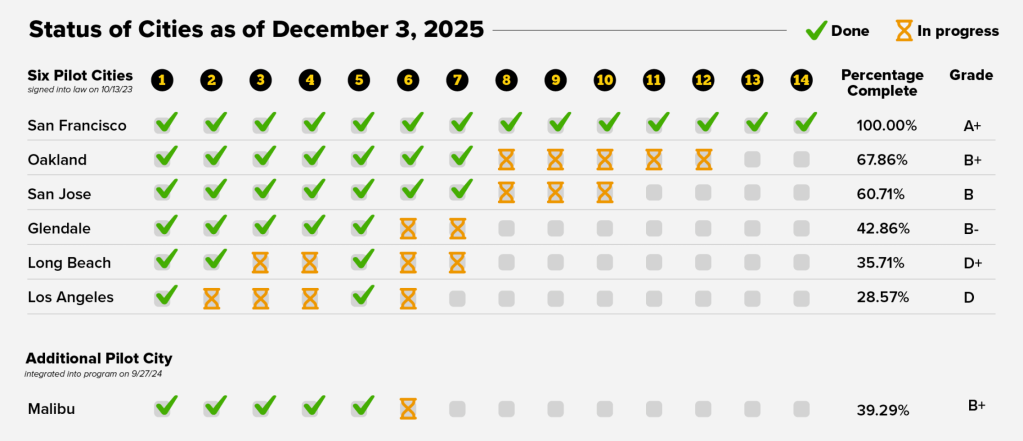
The report grades seven pilot cities as of October 2025, based on how far along they are in fully implementing their speed camera programs. Malibu was added to the pilot program late last year after a horrific crash in 2023 highlighted dangerous speeding along its part of Pacific Coast Highway.
To create a bias-free way of analyzing cities’ progress, and guide cities’ staff, SAFE created key documents outlining key details, an Implementation Checklist, and an Implementation Flowchart. Links in city names below direct to official project websites.
Success story: San Francisco
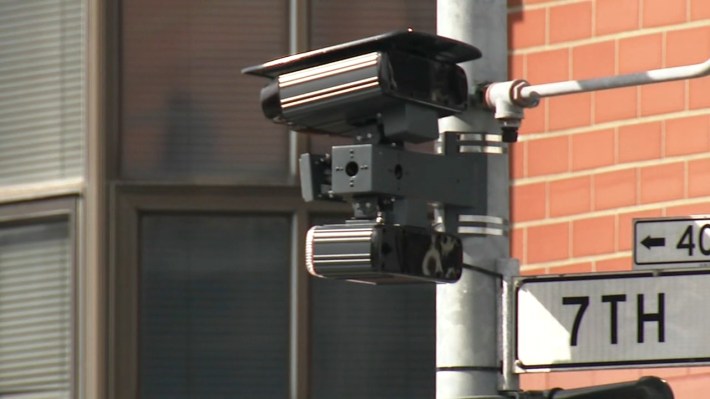
San Francisco earns the top mark — A+ — with all 33 cameras permitted by state law installed and actively issuing citations. Since launching warning tickets in March 2025 and full citations in August, the city reports a dramatic 72% average reduction in speeding at 15 key camera locations. In the first six months, over 400,000 warning notices were issued — and the number of violations has steadily dropped week over week, pointing to a swift change in driving behavior.
Officials and advocates agree that San Francisco’s quick action shows what’s possible when cities make safe speeds a priority. Supporters say the result is safer streets for motorists, pedestrians, and cyclists, especially in high injury neighborhoods.
Mixed Progress Elsewhere
Other cities participating in the pilot program vary widely in progress. Oakland is making progress, with 18 planned cameras and a B+ grade; the city expects to begin issuing warnings by the end of 2025.
San José follows with a B. The city has moved past the planning stage for its 33 cameras and is training staff on how to utilize the technology. Cameras should be activated early next year.
But in Southern California, progress is slower. Glendale has begun vendor selection for its 18 cameras planned, earning a B-. Malibu earns a B+. It is crafting the “Request for Proposals” to seek vendors for its project. As noted above, for Malibu the clock started a year later than the other cities.
Long Beach stands at D+. The details of its program should be approved by its City Council sometime this month, allowing it to move into the RFP process. Long Beach plans to have its program up and running next summer.
Disappointment and Delay in Los Angeles
Bringing up the rear is the City of Los Angeles with a grade of a D, and honestly even this seems high. Los Angeles has permission for 125 speed cameras, half of the total number of cameras permitted in the entire state. Yet, the City of Angels has only completed about a quarter of required steps before cameras can go live.
In Los Angeles, where speeding contributes to hundreds of serious injuries and deaths annually, the slow pace is especially concerning. City agencies are still drafting policies and completing procurement. Officials say the aim is to have the system live by the end of 2026 — but that seems unlikely unless the city can suddenly bring the same energy to this project that it does to harassing advocates and devising clever ways to avoid making streets safer.
Next Steps: Finish Implementation and Scale Up
SAFE’s report stresses that delays — especially in large cities like Los Angeles and Long Beach — come at a very real cost in lives and serious injuries. The group calls for elected officials and transportation agencies to accelerate deployment.
“While San Francisco residents are already benefiting from safer streets, millions in Los Angeles, Long Beach, and Malibu, cities with some of the highest crash rates in the state, remain exposed to preventable traffic violence,” writes SAFE.
Once all seven pilot cities are fully operational, SAFE hopes the data will support expanding speed safety systems statewide. The goal: reduce reckless driving, improve safety for all road users, and finally begin to shrink California’s staggering toll of speed-related traffic deaths and injuries.
Streetsblog has migrated to a new comment system. New commenters can register directly in the comments section of any article. Returning commenters: your previous comments and display name have been preserved, but you'll need to reclaim your account by clicking "Forgot your password?" on the sign-in form, entering your email, and following the verification link to set a new password — this is required because passwords could not be carried over during the migration. For questions, contact tips@streetsblog.org.