How (And Why) to Start a Delivery Bike Revolution

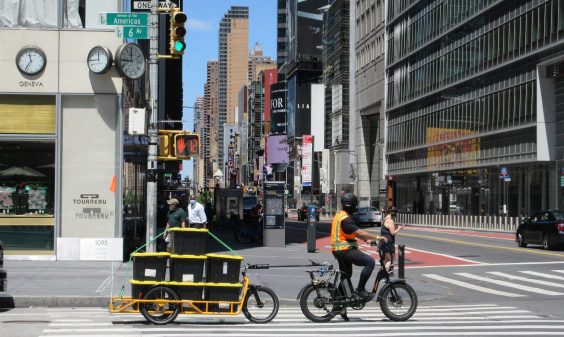
Cargo bikes are cities’ secret weapon against climate change, traffic violence, congestion, and more, a new paper argues — but getting more of these last-mile workhorses on the street will require a strategic approach that goes beyond basic bike-friendliness.
According to the University of Washington’s Urban Freight Lab and nonprofit People for Bikes, cargo bikes could play a major role in greening the delivery sector, which is responsible for a staggering 28 percent of greenhouse gas emissions in cities worldwide. Ultra-heavy freight trucks and vans, meanwhile, are significantly more likely to kill any pedestrians and cyclists they might strike, in addition to blocking crosswalks and bike lanes, which can cause crashes with other vehicles.
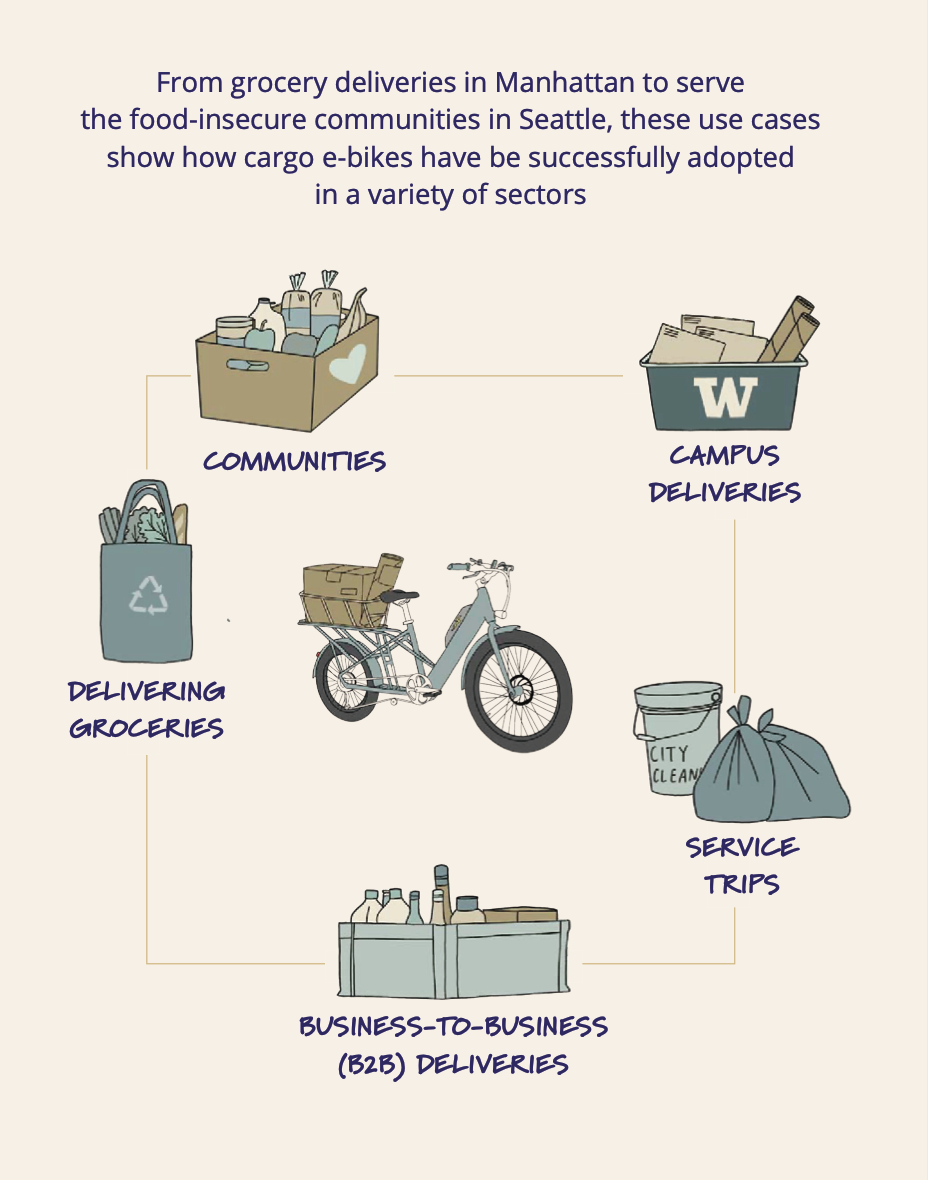
Some cities have recognized the transformative potential of deliveries by cargo bike — case studies include college campuses, business-to-business corridors and grocery delivery routes — but others have struggled to scale them up.
“There was a time when we thought cargo bikes were going to explode across North America, but then things kind of calmed down,” said Giacomo Dalla Chiara, investigative lead at Urban Freight Lab and the author of the report. “So we thought, let’s bring everything together, and give [communities] a roadmap.”

The report authors acknowledge that the core components of a good cargo bike strategy aren’t fundamentally different from a good general bike plan, like creating better (and wider) bike infrastructure and broader policy definitions that literally and legally accommodate e-bikes of all sizes, while clearly delineating them from mopeds and other modes. Dr. Ash Lovell, the electric bicycle policy director for PeopleForBikes, cites America’s lack of bike infrastructure as the primary reason why cargo bike delivery hasn’t taken off in the U.S., even as it’s flourished in Europe.
“E-cargo bikes can be so instrumental in reducing urban congestion and air pollution,” added Lovell. “But if you don’t have safe and connecting infrastructure for delivery drivers to ride on, the chance is so much lower that businesses will use them.“
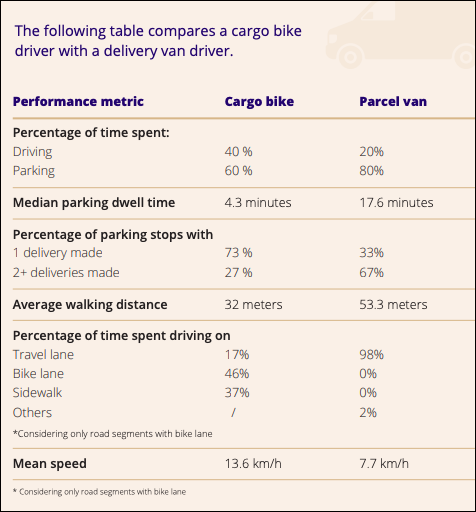
Commercial cycling also requires cities to rethink other aspects of their built environment. That includes reimagining their bike parking strategies, by allowing (or even outright re-dedicating) bigger bikes to park in automobile spaces, as well as building more-frequent curb cuts on sidewalks so bikes don’t have to ride much on pedestrian paths to reach their destinations. And cities should think beyond the street, too, by establishing safe charging stations and rest areas for delivery drivers to recharge in all senses of the word.
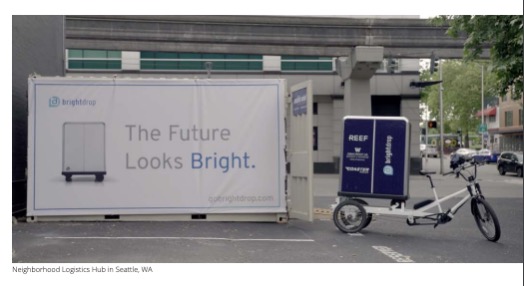
Some cities may even need to make zoning reforms to make way for “microhubs,” or car-light, miniature warehouses that allow larger vehicles to dump a cache of goods directly into neighborhoods to be parceled out onto bikes. Unlike traditional warehouses — which are often, rightly, barred from residential neighborhoods because they increase vehicle traffic and noise pollution — some microhubs can be as small as single parking space, and often constitute little more than a shipping container.
“There’s really no cargo bike delivery without microhubs,” stresses Dalla Chiara. “Finding space for cargo bikes close to where they serve is so essential.”
Even the best infrastructure and policy in the world, though, won’t succeed without cultural change to match. That’s why the researchers recommended robust pilot programs to fine-tune delivery strategies, and make sure fleets blend seamlessly into neighborhoods and amongst other modes. Public awareness campaigns can also be helpful to educate business owners and residents on cargo bikes’ benefits, as well as their unique safety concerns, like the importance of buying certified batteries to prevent building fires.
Perhaps the fastest way to get residents up to speed on pedal-assist, though, is simply to make them a regular part of a daily life. That’s why the report authors recommended more e-bike incentives and subsidies, like “green grants” for businesses to buy e-bikes of their own, or using public procurement processes to replace certain city maintenance vehicles like graffiti removal trucks with bikes.
Critically, the researchers recommended that e-bike incentives need to be offered to residents, too, even if they’ll never use their vehicle to make a delivery — and particularly if they’re low-income.
“Whether it’s being used for commercial use or transportation or anything else, the more people who are riding, the more people who are going to support policies that support this mode,” added Lovell.
The researchers emphasized that while e-cargo bikes will never replace automotive delivery outright, every freight truck we can subtract from the road counts — and in time, it may even help shift the broader status quo away from cars.
“Not everything will be delivered on bike; we’re not trying to say that,” added Della Chiara. “But they can work together with bigger vehicles. … We need to transition away from a car-focused transportation system, where every time I go shopping, I get in my car, and every time, I order something, it shows up in a delivery van.”

Streetsblog has migrated to a new comment system. New commenters can register directly in the comments section of any article. Returning commenters: your previous comments and display name have been preserved, but you'll need to reclaim your account by clicking "Forgot your password?" on the sign-in form, entering your email, and following the verification link to set a new password — this is required because passwords could not be carried over during the migration. For questions, contact tips@streetsblog.org.