Op-Ed: San Francisco Needs to Get Serious About Downtown’s Future
Note: GJEL Accident Attorneys regularly sponsors coverage on Streetsblog San Francisco and Streetsblog California. Unless noted in the story, GJEL Accident Attorneys is not consulted for the content or editorial direction of the sponsored content.
For an area of San Francisco that has been slow to recover, last week’s Warriors Parade brought a much-needed flurry of activity to our downtown neighborhoods. But the Warriors can’t provide a parade every week. It underscored the need for San Francisco to hurry up and provide real relief for our downtown core.
The numbers are stark: sales tax revenue in the area is down 40 percent and only 30 percent of office workers have returned. Unfortunately, it doesn’t seem like elected officials in San Francisco are reacting. The director of the city’s main economic agency recently suggested waiting another six months to “look at bigger guns.” Supervisors of Districts 3 and 6, encompassing downtown, have the power to call for a joint-agency hearing and demand an action plan. Neither have so far.
As the economic engine of our city, we can’t gamble with the future of downtown. Here’s what citizens should ask their city government to pursue right now:
Streamline and fast track housing conversions
Our downtown needs more residents to lessen its reliance on workers and convention-goers alone. This transition will be slow, but we need to start now. The city can fight for state funding to incentivize conversions from offices to housing, while also stripping away excessive permitting fees and regulations that force developers to work with the longest permitting timelines in the entire country. In 2022, Washington D.C. and Chicago will each see more than 1,000 housing units converted from office use.

Activate streets, plazas, and parks
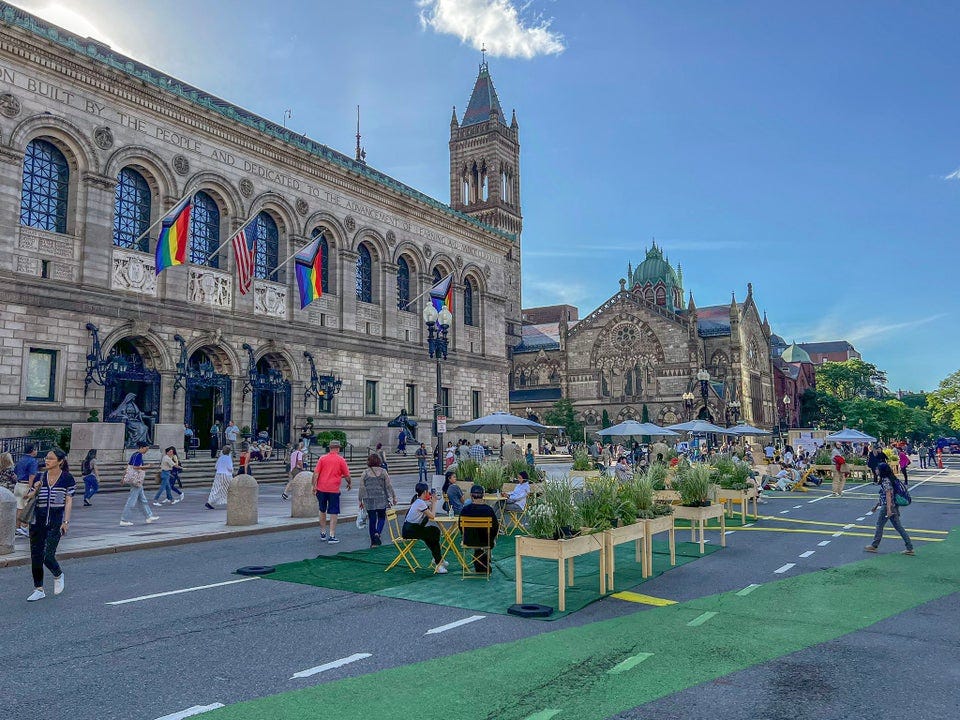
Activity attracts people. People bring purchasing power, energy, and more people. Downtown streets need all of the above, so the city should activate underused streets and public spaces with community events. These activations can be quick: consider Boston’s recent 10-day “Copley Connect” pilot where they closed a major block downtown to private vehicles and filled it with concerts, family events, and a farmers market, all while studying transportation impacts.
Remove barriers to pop-ups and permits
We should put empty commercial space to use, even for a short term. The city should coordinate pop-ups and art galleries by connecting commercial real estate operators with community organizations. Beyond this, we need to reform complex planning codes to allow for more flexibility. For example, it is currently illegal in all of the Financial District to operate “Flexible Retail,” the type of business that combines two uses under one roof. So, that means creative and attractive businesses such as a combination bookstores and coffee shop could never open. This needs to change.
Adjust our transit service and experience
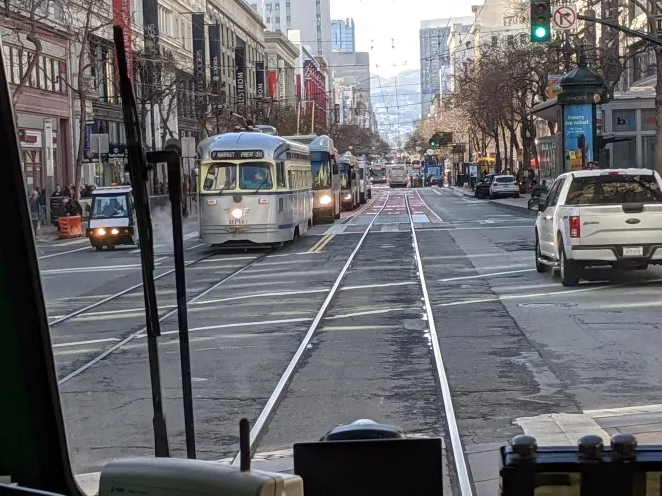
It’s widely reported that mid-week office work is surging while Mondays and Fridays are still soft. Our transit systems should act accordingly by increasing midweek route frequency to make travel downtown seamless from around the city. We can go even further and use transit as an attraction itself. Think more Muni heritage days, boat tram celebrations, and even themed summer routes that connect tourists to downtown from hotspots like Fort Mason, Ghirardelli, and Alcatraz Landing.
Act on infrastructure projects now
The silver lining with fewer people? Less disruption for public works projects. The city should prioritize projects in the downtown area to break ground now and take advantage of less activity to deliver projects more quickly. Let’s build protected bike lanes now, underground our power lines now, and plant trees and gardens. This will all create a more resilient, beautiful downtown for residents and visitors to discover as they return.
At the outset of the pandemic, an impressive cross-sector group came together to produce an “Economic Recovery Report.” But that was mid-pandemic with more questions than answers. It’s time for an updated effort solely focused on our downtown neighborhood concerns.
Let’s work together to pursue a re-imagination of downtown San Francisco with creativity. Without immediate action, there’s an expiration date on San Francisco’s decades-long run of strong tourism, high convention attendance, and lucrative downtown companies. It’s time to push our elected officials and city departments to get to work.
***
Danny Sauter is a non-profit director who lives in North Beach. He ran for District 3 Supervisor in 2020.
Streetsblog has migrated to a new comment system. New commenters can register directly in the comments section of any article. Returning commenters: your previous comments and display name have been preserved, but you'll need to reclaim your account by clicking "Forgot your password?" on the sign-in form, entering your email, and following the verification link to set a new password — this is required because passwords could not be carried over during the migration. For questions, contact tips@streetsblog.org.