Metro and the Future of the 405 Freeway Corridor

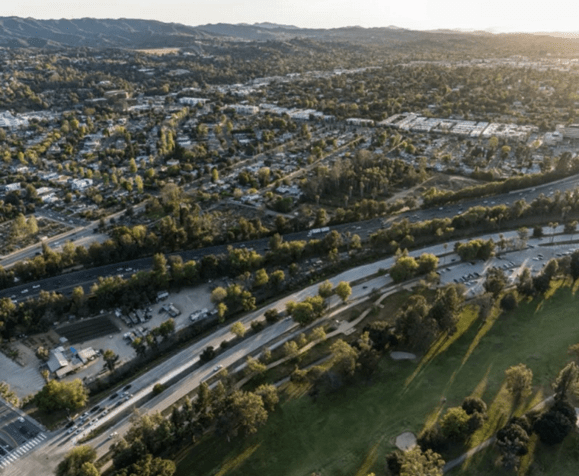
Streetsblog listened in on today’s Metro meeting explaining the agency’s draft I-405 Comprehensive Multimodal Corridor Plan (CMCP). Metro is currently seeking input on the plan – details below.

The CMCP is less a clear strategic plan designed to, say, plan what happens next in the 405 corridor. It’s more a “big staple” plan. Metro asked a bunch of government agencies, including itself, what projects they already have for the six-mile wide corridor centered on the 405. Then Metro pretty much just put a big staple through all 436 of those little plans and declared it a big Multimodal Corridor plan.
But perhaps Metro couldn’t be faulted too much here, because they’re just doing what the California Transportation Commission asked for. Metro is looking to pursue state funding from the CTC-administered Solutions for Congested Corridors Program (SCCP) which offers construction funding grants only to projects “in a currently adopted regional transportation plan and an existing comprehensive corridor plan.” Hence Metro is scrambling to pull together its comprehensive corridor plan for the 405 corridor.
To Metro’s credit, Metro did host a stakeholder process that ranked all those projects stapled into the plan. But Metro is noncommittal about actually follow through on its own ranking. Despite identifying clear tier 1 projects in its report, today a Metro representative stated that “tiering helps inform” which projects Metro might seek SCCP funding for. In short, a bad ranking doesn’t stop Metro from funding/building a project, just as a good ranking doesn’t guarantee projects will get funded or built.
Transit and active transportation projects generally rank highly. Most of them – from Bus Rapid Transit to river bikeways to C Line improvements – are in Metro’s tier 1.
There are also a lot of freeway/ramp/road widening projects in tiers 2 and 3. Some of these are freeway widening projects that Metro and Caltrans have already been working on for years – including planned Metro widening of the 405 Freeway through several South Bay cities.
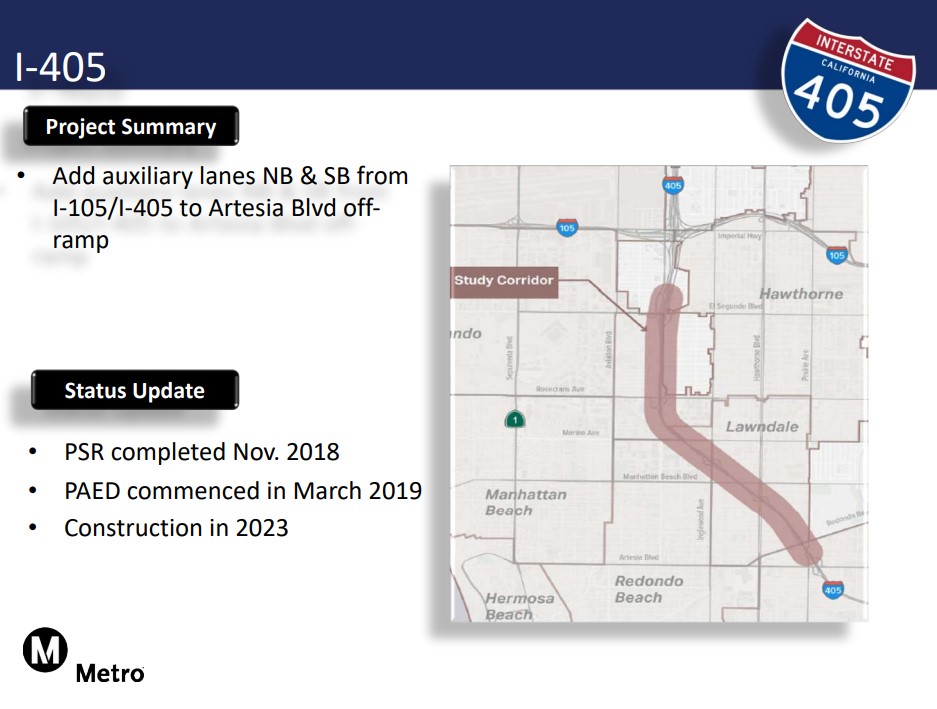
So, the plan is a big list of ranked projects on and near the 405. Some are highly ranked transit, bike, walk and complete streets projects. Some are lower ranked freeway/road/ramp expansion projects.
Who wants to guess which of these are going to get funding first? Which of these projects will Metro build first?
Metro currently has a draft 405 CMCP out for public input, with comments due by June 10. Review the plan at Metro’s project page or story map, or just look at the big spreadsheet of projects. Give input via Metro’s online form or other ways outlined at The Source.
Streetsblog has migrated to a new comment system. New commenters can register directly in the comments section of any article. Returning commenters: your previous comments and display name have been preserved, but you'll need to reclaim your account by clicking "Forgot your password?" on the sign-in form, entering your email, and following the verification link to set a new password — this is required because passwords could not be carried over during the migration. For questions, contact tips@streetsblog.org.