GOP Infrastructure Bill Goes All-In On Cars

Senate Republicans celebrated Earth Day by releasing a counter-offer to President Biden’s infrastructure plan that would deepen America’s dependence on gas-powered cars.
In a fact sheet delivered to Biden on Thursday morning and later posted on Twitter, a group of GOP lawmakers led by Sen. Shelley Moore Capito (R-W.Va.) outlined the broad strokes of the “Republican Roadmap,” a $568-billion package that would bolster federal infrastructure spending over five years.
The legislation — which is less than a quarter of the size of Biden’s $2.25-billion American Jobs Plan — would increase the amount of funding dedicated to roads and bridges by 260 percent compared to Democrats’ package, while slashing funding for mass transportation by a quarter, cutting dollars for intercity rail by 75 percent, and outright eliminating money for care infrastructure, zoning reform, and housing, all of which advocates have argued are particularly essential to decarbonizing the transportation sector. It also axes new programs devoted to electric car adoption, improving safety for vulnerable road users, and reconnecting Black neighborhoods that were destroyed by the interstate highway system, among other cuts.
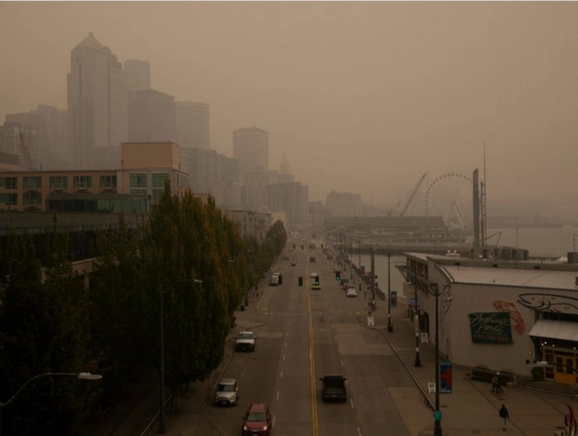
The outline of the plan acknowledges the importance of readying American communities for “extreme weather events and natural disasters,” but does not acknowledge the existence of climate change. The transportation sector has been the largest contributor to greenhouse gas emissions in America since 2015. (See chart, right.)
What the GOP fact sheet failed to outline, though, is how the bill would be paid for, besides a vague commitment to “repurpose unused federal spending” likely related to COVID relief and a package of unspecified user fees to ensure that electric vehicle drivers pay their fair share.
In addition to somehow funding $299 billion in highway improvements and repair, the GOP presumably hopes these mystery user fees will somehow “shore up any infrastructure related trust fund that is facing a revenue shortfall.” But the plan did not clarify how that could be accomplished without raising the federal gas tax, which lawmakers from both parties have declined to do for the last 28 years, or further raiding the Treasury, as the government has been doing to stabilize the Highway Trust Fund ever since. Advocates were quick to point out that an electric fee alone certainly wouldn’t do it, especially without any federal investment in EV adoption and charging to increase the share of greener vehicles on the road. Fewer than 2 percent of all cars sold in 2019 were plug-ins.
Republicans aren’t the only lawmakers engaging in a little magical thinking about their transportation goals. Biden made waves this week when he announced his intention to cut U.S. carbon emissions by at least 50 percent of 2005 levels by the end of the decade — before advocates pointed out that his own infrastructure plan, which emphasizes electric vehicles more heavily than shared and active modes, may not do enough to meet that goal.
“Electrifying our vehicles is an important step, but will not, by itself, be enough to reach Biden’s goal,” said Corrine Kisner, executive director of the National Association of City Transportation Officials. “We must also fundamentally shift how we travel. Decades of prioritizing vehicles over people on our streets made private cars the most convenient (and sometimes only) option for most trips. Championing new policies and investing in public transit — not just stations and rail lines, but frequent, reliable service — can reverse this unsustainable path.”
Senate Democrats had already rejected the GOP counter-offer before it was even released. But if the Biden administration continues to insist on passing its bill with bipartisan support, our national transportation outlook may get a lot dirtier soon.
Streetsblog has migrated to a new comment system. New commenters can register directly in the comments section of any article. Returning commenters: your previous comments and display name have been preserved, but you'll need to reclaim your account by clicking "Forgot your password?" on the sign-in form, entering your email, and following the verification link to set a new password — this is required because passwords could not be carried over during the migration. For questions, contact tips@streetsblog.org.