Metro Committee Approves $200M Cost Overrun for Purple Line Subway Extension

Yesterday, the Metro board Construction Committee approved a budget increase of $200 million for construction of the Westside Purple Line Extension Section 1 (WPLE1). The seven percent increase takes the project budget from $2.8 billion to $3.0 billion. The subway budget increase item is expected to be easily approved by the full Metro board when it meets next week.
The Purple Line (now renamed the D Line) subway is being extended westward in three sections. Section one will extend the line 3.9 miles under Wilshire Boulevard from Wilshire/Western to La Cienega Boulevard at the edge of Beverly Hills. WPLE1 construction began construction in 2014, and was then anticipated to be completed in 2023 for a 2024 opening to the public. This week, Metro reports the project is 63 percent complete.
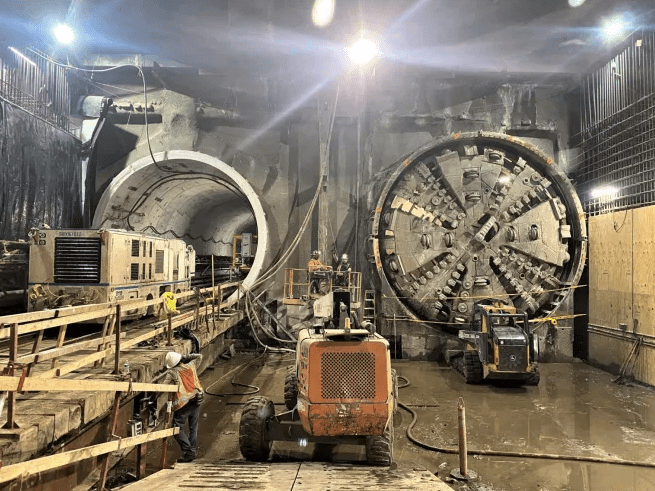
In mid-2018, Metro’s two WPLE1 tunnel boring machines (TBM) initially dug eastward from La Brea Avenue to the current D Line terminus at Western. The TBMs were then transported back to La Brea and launched westward in October 2019.
That is where tunneling difficulties began.
In tunneling in the area between La Brea and Fairfax Avenue, including below the La Brea tar pits, Metro hit tar sands and methane. When methane gas is detected above an acceptable level, it forces Metro to automatically shut down tunneling and take safety ventilation measures. Then Metro must certify that gas levels are safe before resuming work. Tunneling between La Brea and Fairfax resulted in more than 60 shutdowns.
Metro is not entirely out of the rough patch yet. TBMs are currently proceeding through “tar and gassy conditions” from Fairfax to La Cienega. In this stretch, Metro discovered an oil well – near Crescent Heights Boulevard – that necessitated a 10-foot shift in the tunnel trajectory. Yesterday at the committee meeting, staff reported that there is still “one more anomaly” (typically an abandoned oil well) near La Cienega still to get through or around.
As outlined in the Metro staff presentation, several other factors have contributed to increased WPLE1 costs: higher than expected dewatering costs, hydrogen sulfide gas, archeological finds, changes from L.A. City DWP and Bureau of Engineering, Beverly Hills limitations on construction, and more.
To pay for the $200 million overrun, Metro is shifting unused funds left over from E Line construction.
Though the difficult tunneling conditions are costing Metro an extra $200 million, the project’s progress is a success story. Despite methane, tar, hydrogen sulfide, COVID-19, paleolithic fossils, excess water, and much more, the project has proceeded without any major incidents – such as, say, a methane explosion. Though there is a lot of work still to do, the extension remains on schedule for a 2024 opening to the public.
Streetsblog has migrated to a new comment system. New commenters can register directly in the comments section of any article. Returning commenters: your previous comments and display name have been preserved, but you'll need to reclaim your account by clicking "Forgot your password?" on the sign-in form, entering your email, and following the verification link to set a new password — this is required because passwords could not be carried over during the migration. For questions, contact tips@streetsblog.org.