Silicon Valley Bicycle Coalition Pushes for Open Streets
The Silicon Valley Bicycle Coalition is encouraging leaders on the Peninsula to open more space and make it safer for people sheltering in place to get out for a little exercise.
From a letter the organization sent to every city council and city manager in San Mateo and Santa Clara Counties, outlining three recommendations for safer streets while the shelter in place order lasts:
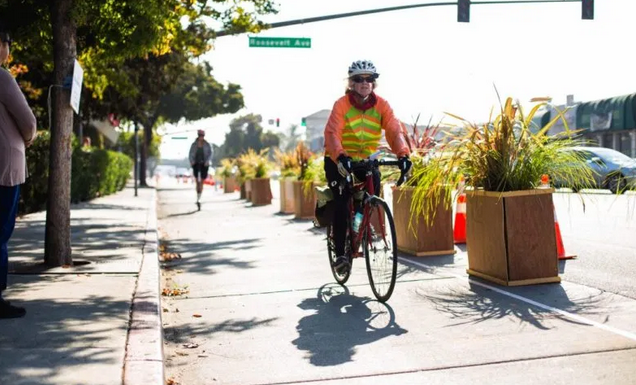
Our biking and walking networks are insufficient to meet the needs of people getting exercise outdoors and traveling while maintaining six feet of social distance. We recommend identifying streets where bikeways and sidewalks could be expanded, creating quick build or pilot bikeways and sidewalks on streets that have excess vehicle lanes. Cities’ Bicycle and Pedestrian Advisory Committees are the perfect resource to identify appropriate corridors.
The SVBC was at least partially inspired by the city of Oakland’s “slow streets” program, which will eventually restrict through car traffic on some seventy miles of that city’s streets, to free up more space for recreation during the pandemic. SVBC, meanwhile, fully recognizes that staffs are spread thin and is offering to help with the program. “SVBC is ready to help identify streets and rally volunteers to install signs and barricades to make it work,” they write in the letter.
This is already having an impact. SVBC’s Emma Shlaes told Streetsblog via email that “Palo Alto discussed street closures at their council meeting Monday night.” That story was covered by the San Francisco Chronicle. Shlaes added that, unofficially at least, other cities are also discussing the idea.
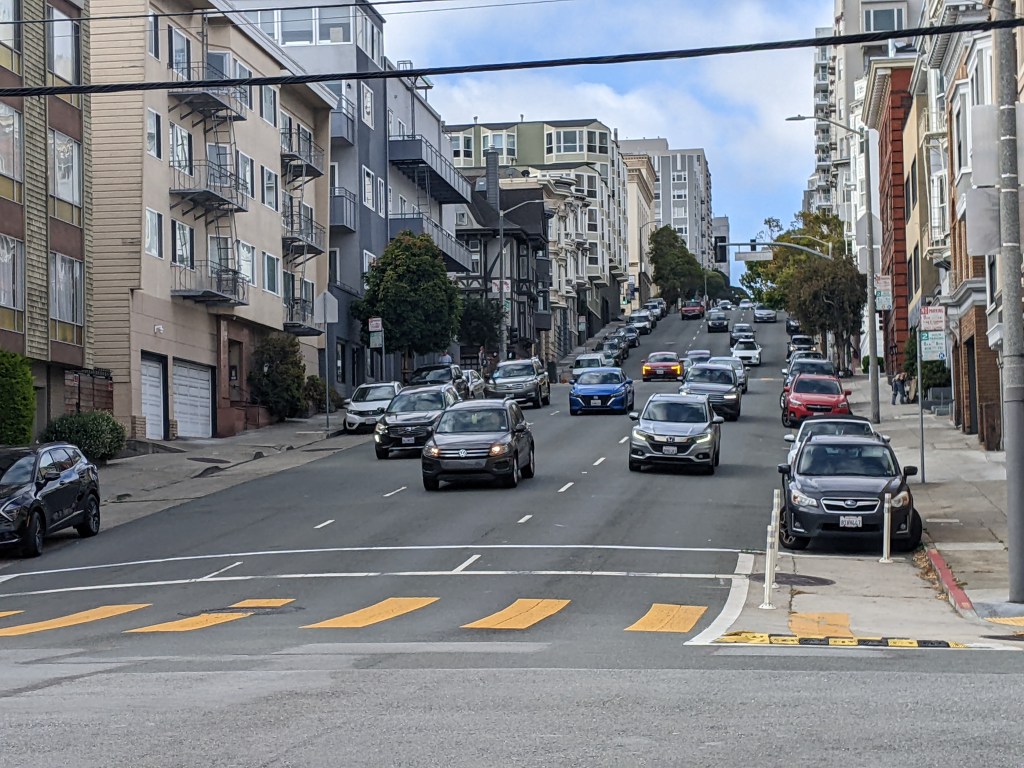
Meanwhile, “slow streets” wasn’t the only ask. The air is pristine and streets are relatively empty, as a side effect of COVID-19 and the ‘shelter-in-place’ order. However, irresponsible motorists have taken this as an opportunity to drive at unsafe speeds. The SVBC is also asking cities to “Publicize a reduced speed advisory to 15 mph for residential streets to keep everyone walking and biking safe…An additional step would be to adjust signal timing to slow vehicle speeds.”
They also want something Streetsblog has long advocated for: an end to ‘beg buttons.’ The practice of forcing pedestrians to push a button in order to get a walk signal has taken on new importance in the era of the coronavirus, social distancing, and not touching surfaces that could retain the virus. “Switch the pedestrian phase of traffic signals to be automatic and ensure that bicycles are captured at traffic signals,” writes the SVBC in their letter.
Shlaes tells Streetsblog that Redwood City and San Jose have already responded. “To avoid requiring people to touch shared surfaces, the Department of Transportation is making pedestrian signals ‘touch-free’ in San José’s downtown core,” wrote an official from the city in an email forwarded by Shlaes. “Beginning today, pedestrian buttons at over 100 intersections will be disabled and the signal to cross the street will activate automatically on a scheduled cycle.” Redwood City has followed suit. Shlaes told Streetsblog that “Santa Clara County Roads and Airports is also addressing the signal timing.”
Let the SVBC know if you want to get involved here.
Streetsblog has migrated to a new comment system. New commenters can register directly in the comments section of any article. Returning commenters: your previous comments and display name have been preserved, but you'll need to reclaim your account by clicking "Forgot your password?" on the sign-in form, entering your email, and following the verification link to set a new password — this is required because passwords could not be carried over during the migration. For questions, contact tips@streetsblog.org.