It’s Time for an Uber Tax

Note: GJEL Accident Attorneys regularly sponsors coverage on Streetsblog San Francisco and Streetsblog California. Unless noted in the story, GJEL Accident Attorneys is not consulted for the content or editorial direction of the sponsored content.
There’s no debating it anymore. Uber and Lyft exact a hefty toll on San Francisco, in terms of congestion, traffic violations, blocked bike lanes, etc.
Exactly how big a toll is still up for debate, but Walk San Francisco, the San Francisco Bicycle Coalition and the San Francisco Transit Riders think it’s long overdue for Transportation Network Companies to pay a share on those costs. For that matter, so does Mayor London Breed, the Board of Supervisors, and a growing list of supporters you can read about here.
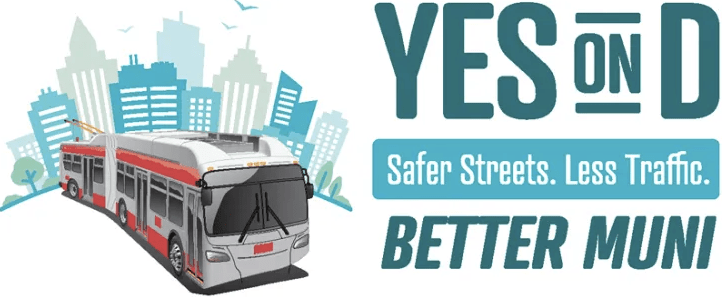
From Walk San Francisco’s endorsement of D, the full name of which is the “San Francisco, California, Proposition D, Ride-Share Business Tax to Fund Muni, Pedestrian, and Bicycle Services and Infrastructure”:
The tax will total only $0.10 to $0.20 for a shared ride (like UberPool), and about $0.40 to $0.60 for a more typical solo ride in an Uber or Lyft vehicle. Specifically, it’s a 3.25% charge to each individual ride, and a 1.5% charge for shared rides or rides in zero-emission vehicles.
While this tax is small, it is estimated to raise about $30 million every year in much-needed funds for: 1) public transportation and 2) to fix the city’s most dangerous streets.
More specifically, half of the funds will go to the SF Municipal Transportation Agency (SFMTA) to hire more Muni drivers and buy more buses and trains. The other half of the funds will be designated for Vision Zero walking and biking safety projects, to be managed by the San Francisco County Transportation Authority (SFCTA).
The San Francisco Bicycle Coalition’s Janice Li had this to say in their endorsement:
We know that this tax is far from a panacea to heal our congestion ills, but this is a small yet mighty measure. Yes on D means that we recognize companies like Uber and Lyft need to pay into our transportation system. As rideshare companies put an increasing impact on our streets and our bike lanes, Yes on D says that those companies need to share a portion of their profits rather than continuing to cede public goods to private gains.
Streetsblog, of course, endorses D as well. So do the city’s newspapers.
TNC’s use public roads, cause congestion, increase emissions, and have, collectively made many bicycle lanes unusable. And $30 million a year buys a lot of bus and bike lane improvements. It’s only fair that the companies that are slowing transit and making bike lanes unusable outta help pay for protected bike lanes and other improvements, so we can all get around safely.
So, yeah, this is an easy one: vote “Yes” on “D.”
Streetsblog has migrated to a new comment system. New commenters can register directly in the comments section of any article. Returning commenters: your previous comments and display name have been preserved, but you'll need to reclaim your account by clicking "Forgot your password?" on the sign-in form, entering your email, and following the verification link to set a new password — this is required because passwords could not be carried over during the migration. For questions, contact tips@streetsblog.org.