A Great Big Freeway — Thanks to Induced Demand

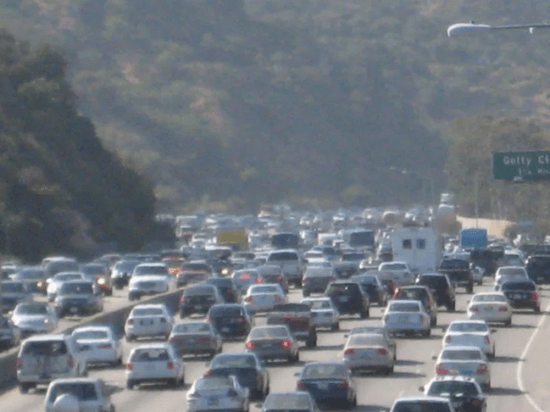
Los Angeles is getting what it paid for when it widened 10 miles of its most infamous freeways — another lane of traffic.
The extra lane of the I-405 between the 10 and the 101 freeways that opened in May, 2014, to supposedly alleviate congestion actually ended up adding a minute of travel time for drivers of the 10-mile stretch — and new data shows congestion is even worse.
The $1.6-billion infrastructure investment, known as the I-405 Sepulveda Pass Improvement Project, still resembles the parking lot at a Guns & Roses concert. Average commuting times through the Sepulveda Pass in both directions have gotten even longer in the last four years, according to data analyzed by the traffic analysis film INRIX from 2015 to 2019.
The most frustrating delays occurred during the afternoon rush when SoCal drivers heading north between 3 and 4 pm crawled along the I-405 at 19 miles per hour this year, instead of the jaunty 28 miles per hour they drove in 2015. That’s led to a 50-percent increase in travel time, from 23 minutes through the Sepulveda Pass in 2015 to 34 minutes this year.
The 405 isn’t the only SoCal freeway experiencing grinding delays. Rush hour speeds have slowed on 31 of 52 LA-area highways in the past four years, according to USC’s outlet Crosstown.
The reasons for the slowdowns are simple: The number of drivers on the road in Southern California has increased as 2.3 million more people have moved or grown up in the region and bought 2.1 million new vehicles over the past 15 years, putting more people on freeways and local roads. And widened highways encourage more drivers live further away from city centers, making people more dependent on driving. It’s a phenomenon known as the fundamental law of highway congestion, or induced demand.
For instance, since there’s no cost to getting onto the 405, if you add another lane to the 405, drivers who were taking an alternate route or leaving an hour earlier or later than normal, will instead drive on the highway during rush hour since that’s when they prefer to leave.
“At any given time the latent demand to be on a busy road is very high, so if you make it easier to travel on that road, all you’re going to do is attract some of the people who would be on the road but for the congestion levels,” said UCLA Luskin School of Public Affairs urban planning professor Mike Manville. “So you have a road that is every bid as congested just wider.”
For most Californians, $1.6 billion is a lot of money and it could have gone toward other transit projects that could move people around more efficiently. A proposed rail line could move transit riders from the West Side to the Valley through the Sepulveda Pass in only 15 minutes. It could open as early as 2033.
But the best option for reducing congestion in many transit experts’ opinion is tolling — especially along the 405 between the 10 and the 101.
“The beauty of pricing the road is that you don’t choose the way people behaviorally respond. That gives them an incentive not to do what is causing the problem,” Manville added. “When you do price the road, people switch to transit. We should let people figure out what’s best for them.”

Streetsblog has migrated to a new comment system. New commenters can register directly in the comments section of any article. Returning commenters: your previous comments and display name have been preserved, but you'll need to reclaim your account by clicking "Forgot your password?" on the sign-in form, entering your email, and following the verification link to set a new password — this is required because passwords could not be carried over during the migration. For questions, contact tips@streetsblog.org.