Richmond, Virginia Shows How to Boost Transit in a Smaller City

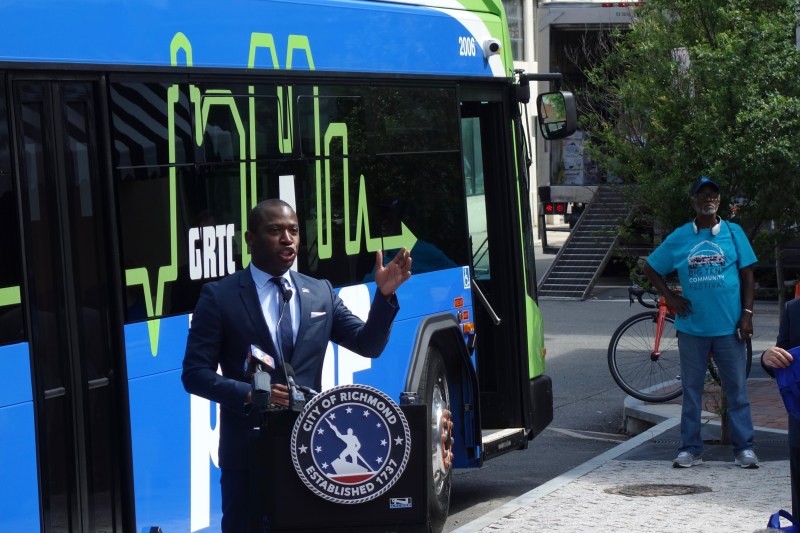
Many cities are struggling with declining transit ridership, but Richmond, Virginia — population 227,000 — seems to have found a winning formula.
Monthly ridership on Greater Richmond Transit Company is up 21 percent year over year thanks to one big investment, some smart planning and some policy changes — and with only a small increase in its annual operating budget.
The most important change was the opening of its new seven-mile Bus Rapid Transit line, “The Pulse,” which includes three miles of dedicated lanes and many of the features that make BRT faster than conventional bus service. The line, funded in part by a $25-million federal TIGER grant, serves 40,000 weekly trips.
Meanwhile, the same day the new line opened, GCTC debuted a redesigned bus network, designed with input from consultant Jarrett Walker. The new routes offer increased service frequency on five lines. The redesign, which does require riders to transfer more frequently, was cost-neutral for the agency.
Ross Catrow, an organizer with the transit advocacy group RVA Rapid Transit, credits the increase with “a little bit of everything.”
“It was kind of like pulling all these little pieces together,” he said.
GRTC was able to ink a deal with the Virginia Commonwealth University, which began offering free rides to all its students and employees, including those of the affiliated hospital, which is the city’s largest employer.
In addition, nearby Henrico County chipped in a little over $1 million to expand Route 19 and brings service out to Short Pump Town Center, a major mall.
“Some folks who haven’t ridden the bus before who now have access to jobs at the suburban mall,” said Catrow. “They’re like this was really arduous to get out here before and now its a lot easier.”
Catrow says when he’s riding he also sees lots of VCU badges, employees of the hospital, people who may not have ridden before.
“We had no transit momentum in the city for like 50 years,” he said. “And now we have a ton.”
Catrow says he hopes transit advocates can leverage the progress to push for expanded service.

Streetsblog has migrated to a new comment system. New commenters can register directly in the comments section of any article. Returning commenters: your previous comments and display name have been preserved, but you'll need to reclaim your account by clicking "Forgot your password?" on the sign-in form, entering your email, and following the verification link to set a new password — this is required because passwords could not be carried over during the migration. For questions, contact tips@streetsblog.org.