Canopies on Market Street

Note: GJEL Accident Attorneys regularly sponsors coverage on Streetsblog San Francisco and Streetsblog California. Unless noted in the story, GJEL Accident Attorneys is not consulted for the content or editorial direction of the sponsored content.
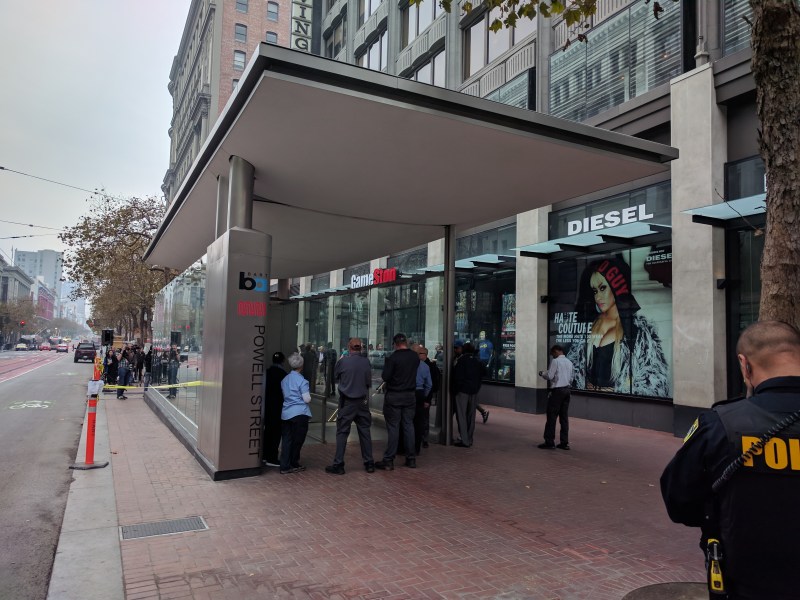
BART opened canopies today over an entrance at its Civic Center station and over the Powell Street Station entrance at Ellis and Market.
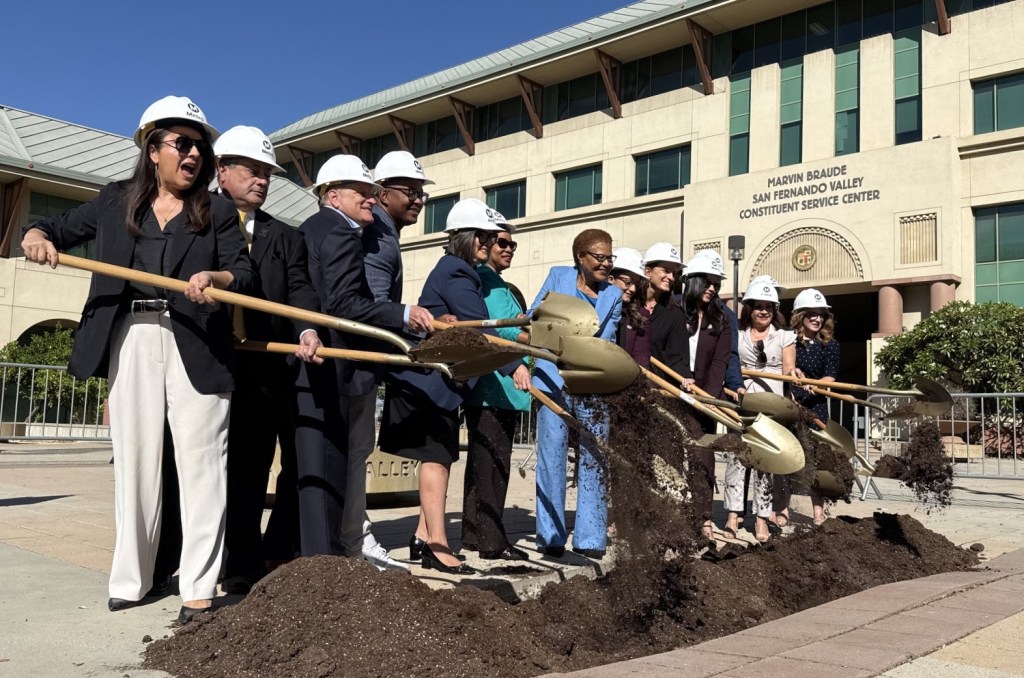
“This is the future–safe entrances, new trains, elevator attendants, homeless outreach, and new substations so we can move trains more rapidly,” said Bevan Dufty, BART Board Director for the 9th District, which includes portions of San Francisco, at a ribbon cutting ceremony for one of the canopies, held this morning at Powell Station.
The two canopies are part of a “Downtown San Francisco Market Street Canopies and Escalators Modernization Project,” which will also replace 41 escalators at the Embarcadero, Montgomery, Powell and Civic Center stations. The canopies cost about $2.2 million each and are meant to protect escalator mechanisms from the elements. Based on the 19th Street BART station canopies in Oakland, BART officials estimate that escalator breakdowns will be cut by 30 percent. Twenty-two additional canopies will be constructed above all of the remaining street entrances on Market over the next few years.
BART is going to pause now and see how things work out with the two pilot designs. “We’ll be keeping a critical eye on the finishes,” explained Luis Paez, Senior Resident Engineer for BART. So far they’ve noticed the fiberglass ceiling on the canopy smudges a bit more easily than they would like. They also want to see how the graffiti- and scratch-resistant coatings hold up on the stainless steel and glass.
So far things look good, said Paez, adding that he is especially pleased with how the canopy looks at night. From a distance it seems to be “faintly glowing” he said, making it easy to find the entrance. His hope is the canopy design will become iconic, like with the New York subway entrances with their globe lights or the famous Hector Guimard “Metropolitan” entrances to the Paris Metro.
The new canopies also have arrival monitors (see above) so it will no longer be necessary to go into the station to find out when your train is expected.
And, as part of the canopy design, there is now a gate at the top of the stairs. Diane ‘Dee’ Malabuyo, whose job includes going down the stairs and opening the station between 3:30 and 4 in the morning, said it will make opening the station less harrowing. “It’s scary to come down the stairs… there are a lot of people on the stairway,” she explained. The canopy also has security cameras with real time feeds.
The contract for the remaining canopies, meanwhile, is expected to be awarded early next year and will come to $55 million. Funding sources include Prop. 1B, Measure RR, and SFMTA. SFMTA, which of course shares the stations, is contributing $30 million from San Francisco Prop. A funds. Construction of the remaining canopies should be finished in 2025 and all escalators will be replaced and upgraded by 2027.
Streetsblog has migrated to a new comment system. New commenters can register directly in the comments section of any article. Returning commenters: your previous comments and display name have been preserved, but you'll need to reclaim your account by clicking "Forgot your password?" on the sign-in form, entering your email, and following the verification link to set a new password — this is required because passwords could not be carried over during the migration. For questions, contact tips@streetsblog.org.