BART Makes Headway against Headache-Inducing Howl

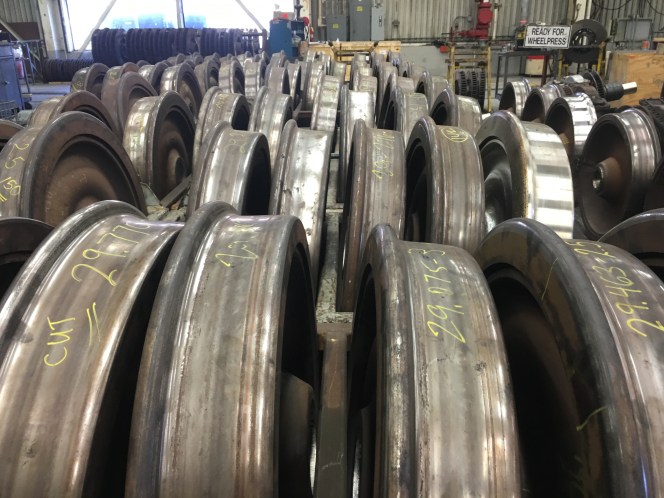
This week BART announced that it has ground and reshaped the wheels on more than half of its train cars, as part of an ongoing effort to reduce the transit system’s infamous and ear-splitting howl. The wheels are being ground to “an advanced wheel profile that reduces both noise and wear on the rail,” wrote the railroad in its announcement about the milestone.
BART produced an informative podcast/interview with Ben Holland, a managing engineer at the agency, to discuss the science of wheel/rail grinding and noise. In the podcast, Holland explains that a “train’s wheels and the rails interact together as a system. The effort to quiet the BART system is really a partnership between our railcar department and our track department. That means the shape of the wheel and the shape of the railhead together are critical to ensuring safe and quiet operation.”
As many Streetsblog readers are aware, BART trains were originally designed with a cylindrical/flat surface wheel. Normally, train wheels are designed with a slightly tapered/conical shape, which is what keeps a train on its tracks (the flanges on the sides of the wheel are actually a backup). The idea back in the 1970s was to use cylindrical wheels to compensate for the annoying side-to-side motion that one experienced on older trains. But as train technology evolved, better ways were found to reduce that side-to-side swaying effect. Meanwhile, BART’s cylindrical wheels created their own problems. They cause excessive wear to the rails–and they helped generate a corrugated pattern on the rail surface. That pattern acts like a violin string and generates BART’s terrible howling sound.
By slowly grinding and replacing rails, and grinding train wheels into a more standard, conical profile, BART is slowly getting those noise levels down. “We’re actually seeing 15 to 20 Dba sound pressure level improvement and that really correlates well to the noise that we hear. Of course, people react differently to noise but overall the feedback from our customers has been very positive. They’ve noticed the improvement and our complaints have dropped dramatically as a result,” said Holland in BART’s podcast.
In other words, BART is still loud, but it’s becoming possible to have a conversation on the train without shouting.
BART expects to have nearly all its wheels reshaped in early 2019. Meanwhile, the new “fleet of the future” already comes with the quieter wheel shape.
Check out the full interview here for a lesson in BART noise and train wheel/rail dynamics.
Streetsblog has migrated to a new comment system. New commenters can register directly in the comments section of any article. Returning commenters: your previous comments and display name have been preserved, but you'll need to reclaim your account by clicking "Forgot your password?" on the sign-in form, entering your email, and following the verification link to set a new password — this is required because passwords could not be carried over during the migration. For questions, contact tips@streetsblog.org.