Seattle’s Playful Traffic Circles Tame Neighborhood Streets

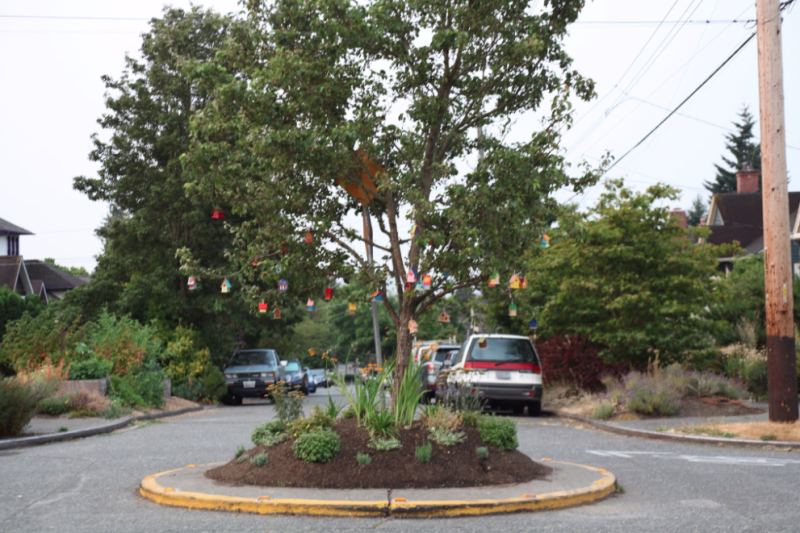
Last week, Dongho Chang, Seattle’s chief transportation engineer, posted a series of photos on Twitter of the city’s traffic circles. These neighborhood traffic-calming treatments are so charming, we had to post them here.
Seattle started installing traffic circles in the early 1970s, and now there are more than 1,200 throughout the city, says Chang. Seattle DOT’s traffic circle program typically adds them to intersections in residential areas with no traffic lights or stop signs, though some have replaced stop signs on low-traffic streets at crossings with larger streets.
The circles compel drivers to slow down while approaching intersections, and they’ve made a big difference. “They are installed to address angle collisions, and we typically look for two collisions within the past three years as a basis for considering them,” said Chang. A 1997 study by the city found that the traffic circles reduced collisions causing injury 97 percent and all collisions 90 percent.
Neighborhoods can request traffic circles from the DOT. Because demand is so high, the city prioritizes intersections with safety problems, Chang said.
Each traffic circle costs about $20,000 to design and construct. Crews remove pavement to allow street trees and other vegetation to grow from soil beneath the surface of the street. The city leads the process of landscaping, often in cooperation with neighborhood residents, which is why you see so many creative touches.
The result is an effective, practical, and beautiful way for cities to improve traffic safety on residential streets.


Streetsblog has migrated to a new comment system. New commenters can register directly in the comments section of any article. Returning commenters: your previous comments and display name have been preserved, but you'll need to reclaim your account by clicking "Forgot your password?" on the sign-in form, entering your email, and following the verification link to set a new password — this is required because passwords could not be carried over during the migration. For questions, contact tips@streetsblog.org.