South San Francisco Bay Cities Still Have the Asphalt Bug


“Induced demand” is the idea that building and widening roads doesn’t make traffic better–it makes it worse. Late last year Caltrans finally acknowledged that, yeah, it’s probably true that all the work they’ve been doing for the past few decades has been for naught.
Not everyone got the memo. The Valley Transportation Authority (VTA)’s proposed half-cent sales tax, which is supposed to fund everything from buses to Caltrain to bicycle routes, could also open the floodgates to billions of dollars in continued highway expansion. That’s because Palo Alto, Mountain View, Sunnyvale, Los Altos, Los Altos Hills, Cupertino, Campbell, Saratoga, Los Gatos, and Monte Sereno have included a total of $1.5 billion in auto traffic capacity expansion projects in their draft proposals on where to spend the money [PDF]. That means $1 billion will go to county expressways and another $500 million on state highways and local arterial roadways.
San Jose’s funding priorities [PDF] include $650 million countywide for reconstructed highway interchanges “to support economic development,” including $320 million for six expanded interchanges. Even more money could be sunk into traffic capacity expansions on city streets via a “local streets and roads” category intended for repaving but which also can include lane additions and signal modifications. The North County and West Valley cities have proposed $1 billion for local streets and roads, while San Jose has proposed $1.8 billion.
In other words, more and more asphalt.
“As a voting member of the VTA Board of Directors, I think expressways are extremely important,” said San Jose City Council member Johnny Khamis at the city’s February 9 review of the sales tax. “I take an expressway every single day to work because I can’t get on Highway 87 because it’s too congested!”

But Khamis’s belief is out of sync with state policy to abandon Levels of Service, the flawed notion that managing traffic is about moving cars rather than people. Anyone who’s come down to Los Angeles and tried out the newly widened 405 knows all about the “joys” of driving on a wider expressway.
Fortunately, urban planning and environmental groups are urging VTA and city councils to support public transit rather than highway expansions. We want “less funding for expressways and highway projects overall,” said Chris Lepe, Silicon Valley Senior Community Planner for TransForm. “We need better public transportation along those corridors.”
Then again, the insistence by city leaders on more asphalt could end up bringing down the whole proposal, which requires a two-thirds majority to pass the November ballot.
“The Sierra Club opposes additional freeway or expressway lanes and is not likely to support this tax if it contains this sort of expansion,” said Sierra Club Loma Prieta Chapter Executive Committee member Shani Kleinhaus. Kleinhaus noted that the environmental review of the county’s Expressway Plan 2040 did not include Traffic Demand Management programs as a feasible mitigation measure, a violation of the California Environmental Quality Act (CEQA).
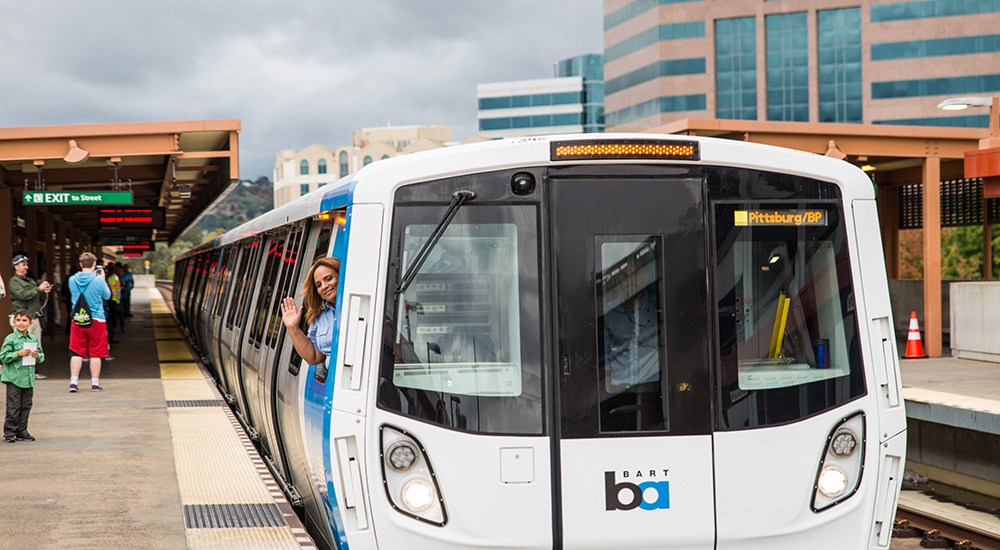
The VTA sales tax, if passed, would help pay for major transit upgrades as well. San Jose is calling for $1.5 billion for four-station, $4.3 billion extension of BART from Berryessa to Santa Clara. The North County cities are proposing a more modest $1.2 billion for the extension. The project includes $800 million to connect the San Jose Diridon Caltrain Station with the Santa Clara Caltrain Station, a segment already served by Caltrain with plenty of excess rider capacity. How much to spend on BART and Caltrain is a major point of contention between San Jose and other cities in the county.
The new sales tax would generate an estimated $6 billion for major transportation projects over the next 30 years. That would be a nice bit of cash for transit, walking and cycling infrastructure. Let’s just hope South Bay officials can kick the asphalt habit before the plan gets much further along.

Read More:
Streetsblog has migrated to a new comment system. New commenters can register directly in the comments section of any article. Returning commenters: your previous comments and display name have been preserved, but you'll need to reclaim your account by clicking "Forgot your password?" on the sign-in form, entering your email, and following the verification link to set a new password — this is required because passwords could not be carried over during the migration. For questions, contact tips@streetsblog.org.