The Growing Vehicle Problem That California Needs to Address

If California’s streets will ever be safe for pedestrians and bicycle riders, then something has to be done about the sizes of vehicles. The United States is an outlier among countries in the increasing number of pedestrians killed on our streets. Smart Growth America reports that there has been a 72 percent increase in pedestrian fatalities in the last 15 years. Much of the rest of the world is making safety improvements while the United States is heading in the wrong direction. The International Transport Forum in recent years has removed road safety data from their calculations for the United States because its anomalous and depressing numbers skew the averages, making other member countries look bad when in reality those countries are making progress.
How we design cities and streets is a huge factor, but in many other cultures the form of vehicles is adjusted to the form of the city. In the United States, the size and form of the city is changed to accommodate the forms of our vehicles: sizes of our streets, our street systems, our parking lots, our buildings. Americans’ preference for big personal vehicles ends up supersizing the American built landscape.
It is not just the fault of consumers. Manufacturers and dealerships make substantially more money selling big rather than small. Marketing pickups not just for the trades, but also as a lifestyle vehicle has expanded the consumer base making the United States the richest vein in the world for car industry profits. Three out of the four top-selling cars in the United States are pickup trucks: Ford F-Series, Chevrolet Silverados, and Ram trucks. Many drivers are retired seniors (usually male), and the cargo beds are rarely used to carry anything.
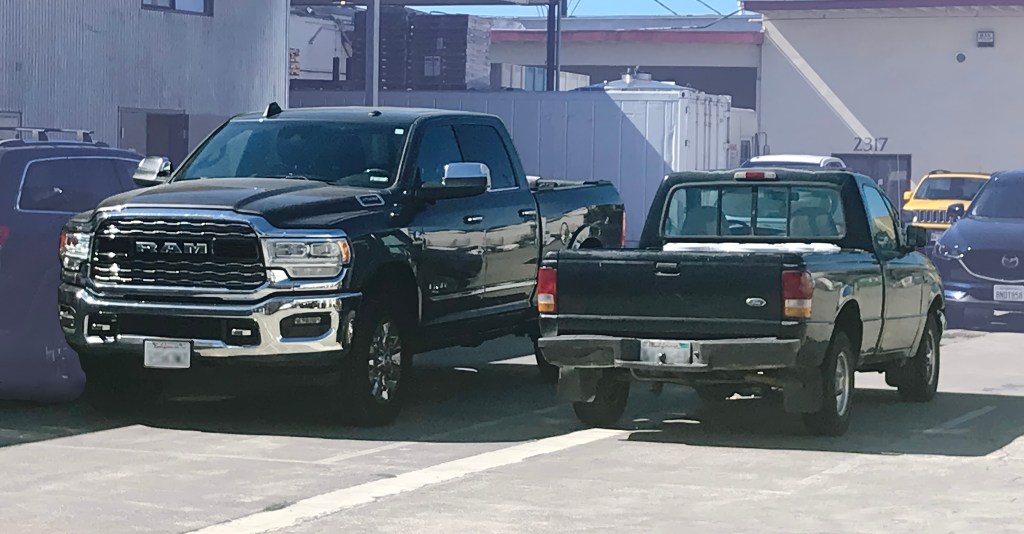
The deadliness of crashes can in part be traced to these big pickups and various heavy SUVs. SUVs used to alarm transportation planners by their size but now are dwarfed by large pickup trucks. American pickup trucks can weigh 4,000 to 8,000 pounds. Many have high front ends that instead of hitting pedestrians low and crushing their legs, instead crush internal organs. And their size leaves no safe space on a travel lane for a bicycle rider. Some in the auto industry are acknowledging the problem. “[Cars] that used to weigh a ton and a half are now three tons,” said Ned Curic, chief technology officer of automaker Stellantis N.V., the parent company of Jeep, Dodge, Chrysler, and Fiat.
And vehicles are getting heavier as they are electrified. Electric vehicles are 10% to 25% heavier than gas-driven ones; in a growing future of electric pickups and SUVs, fatality rates will get worse.
In newspaper articles, we hear about pedestrians and bicycle riders’ deaths, but the massively greater number of serious injuries are rarely in the news because they are not as carefully verified as fatalities are. Manufacturers add safety features to their products to mitigate the dangers: advanced airbags, backup cameras, blind-spot monitoring, anti-lock brakes, automatic emergency braking, forward-collision warning, adaptive cruise control, lane-centering assistance, driver-attention monitoring, and others. All these mitigations add to the cost of car ownership for drivers already stressed by other rising living costs.
The growing sizes of American vehicles is a bane on local governments which must figure out to park these behemoths, maintain roadway pavement crumbling under their weight, and worry about the safety of residents. The tax burdens fall unfairly on taxpayers who don’t own a car: transit riders, walkers, disabled, students, low-income people, elderly, people wanting to reduce their carbon footprint. The environmental burden of these vehicles, even if electrified, is a whole other topic this essay will not go into. Leave it to say that large personal vehicles require considerable resources to manufacture and recycle: steel, plastic, energy, water, shipping.
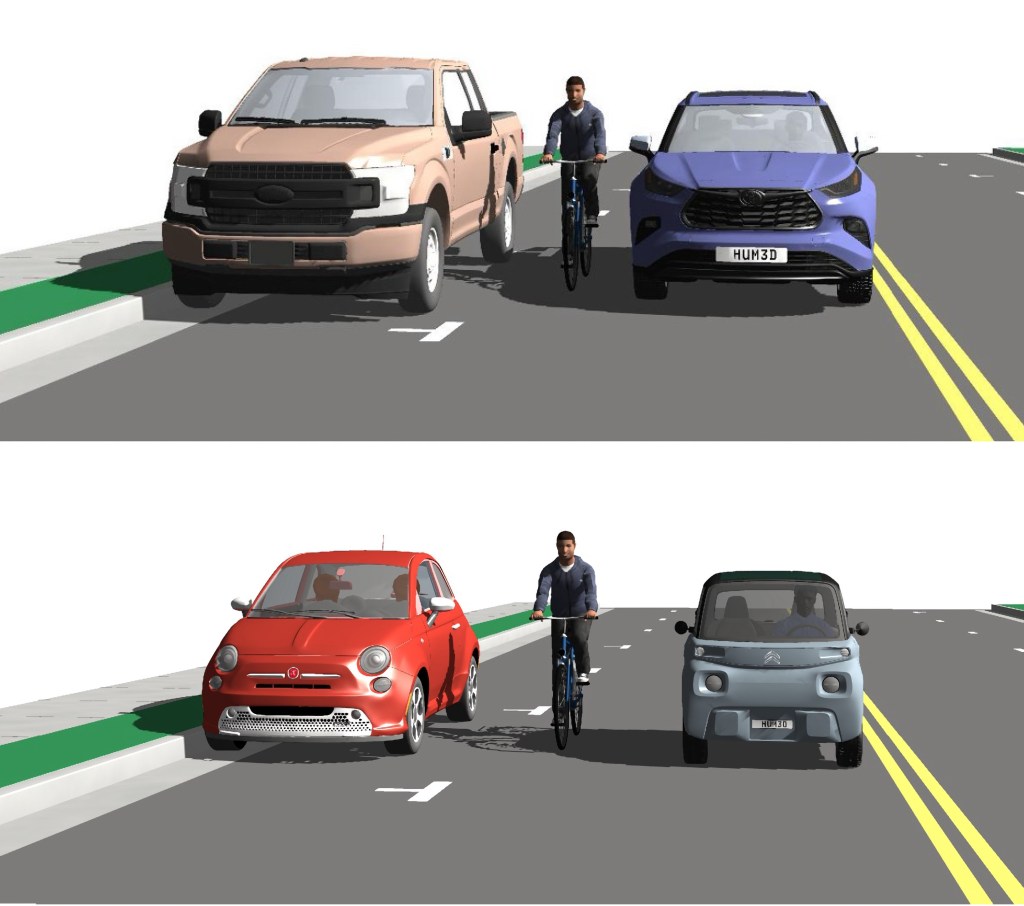
Possible solutions
This problem isn’t limited to the United States. Other governments around the world are trying to control vehicle sizes. The Japanese government decades ago set standards for a small class of cars called kei cars that come with tax benefits for consumers. (Kei means light or compact.)
The best-selling car in Japan, the Honda N-Box, is a kei car. France and Norway impose vehicle weight fees on cars. So does Hawaii. (California imposes weight fees on commercial vehicles but not on personal vehicles.) Relatively modest weight fees were recently passed in Washington, DC:
| Class I | 3,499 lbs or less | $70 / yr | |
| Class II | 3,500–4,999 lbs | $175 / yr | |
| Class III | 5,000–5,999 lbs | $300 / yr | |
| Class IV | 6,000 lbs or more | $550 / yr | +$75 per 1,000 lbs over 10,000 |
| DMVUSA | |||
In France, the weight fees are imposed when a car is bought, and they are substantial: about €3,800 for a 4,000-pound vehicle in Paris, over €16,000 for a 5,000-pound, and nearly €30,000 (over $33,000) for a 6,000-pound vehicle. It is not surprising that Ford F150 pickup trucks and Chevrolet Suburbans are rare in France.
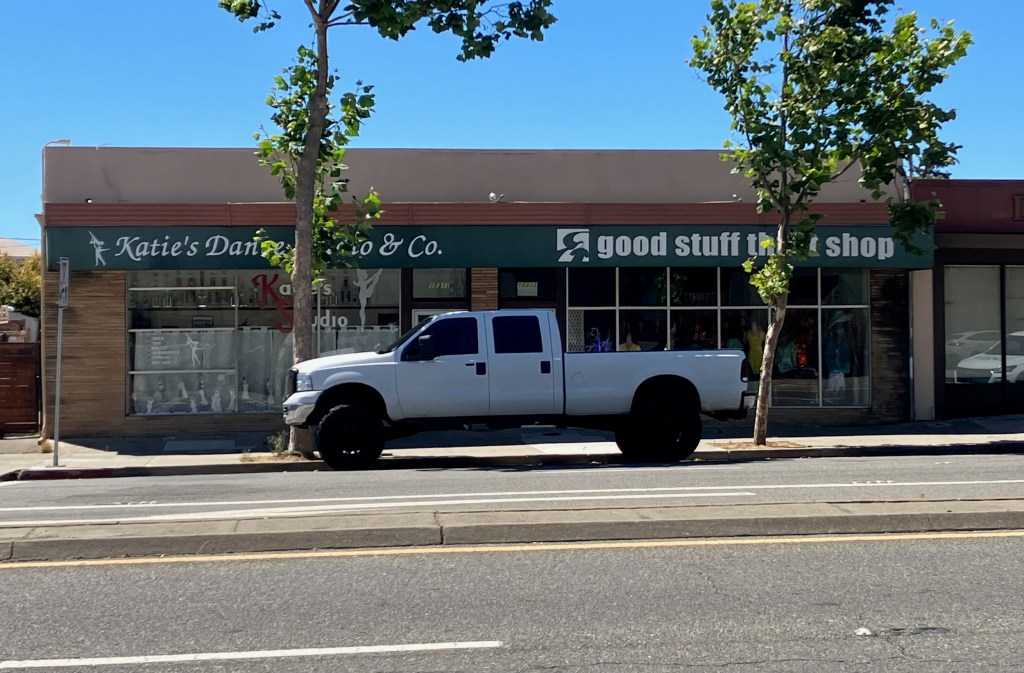
Vehicle sizes also affect commercial main streets in America. The Ford F-250 is as much as 22 feet long and 8.8 feet wide (including mirrors), which exceeds a typical 8-by-20-foot parking space. Big vehicles mean fewer customers parked in front of shops.
It may be difficult to pass legislation controlling vehicle sizes in much of the United States; it’s become a culture war issue. The demographics in California are more favorable. If following France’s lead is too big a lift, legislation at the state level could adopt Washington, D.C.’s fee structure initially. Surveys of buyers of new pickup trucks indicate that they are being bought by diverse buyers with above average median household incomes for what has become a luxury vehicle. If they are being bought as a luxury item, shouldn’t they pay a luxury tax, a tax that could help pay for street safety improvements?
An alternative to assessing a new fee is to issue safety data like the New Car Assessment Program (NCAP) that is run by the National Highway Traffic and Safety Administration, which assesses car safety for occupants by crashing cars with crash test dummies inside. Other countries have adopted NCAPs with a big difference; they also include how safe the vehicles are for pedestrians and bicycle riders on the street. California could establish street safety ratings by aggregating information on car weights, widths, driver visibility, and how tall the hoods are, and publish this information to prospective buyers. This could be branded with a street safety grade: A to D or one to five stars. Such a program would not be too costly and would not require the state to crash test cars.
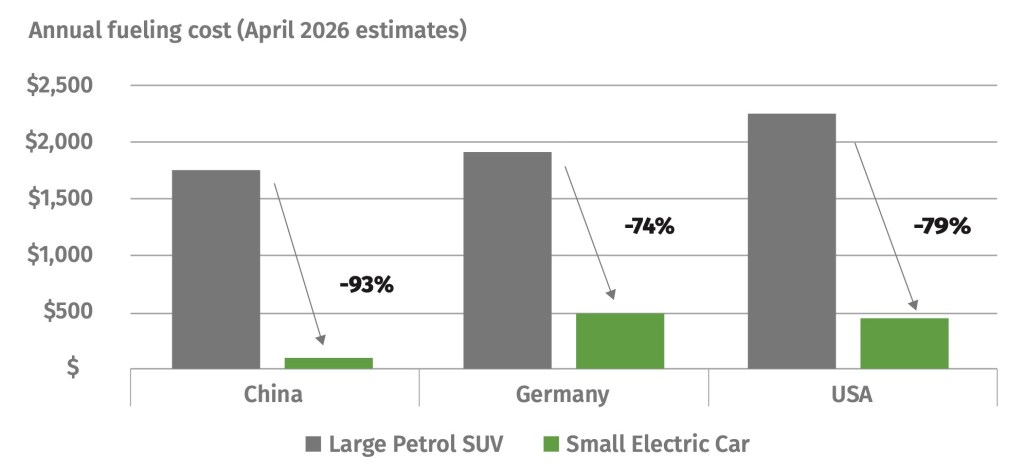
In the State of California, the environmental benefits by themselves should make reducing vehicle sizes win hearts. Making them smaller and electric would produce huge reductions in carbon emissions and financial benefits to consumers. Considering the ballooning fuel prices resulting from the Trump administration’s war with Iran, piggybacking safety onto consumers’ financial concerns makes the present an opportune moment.
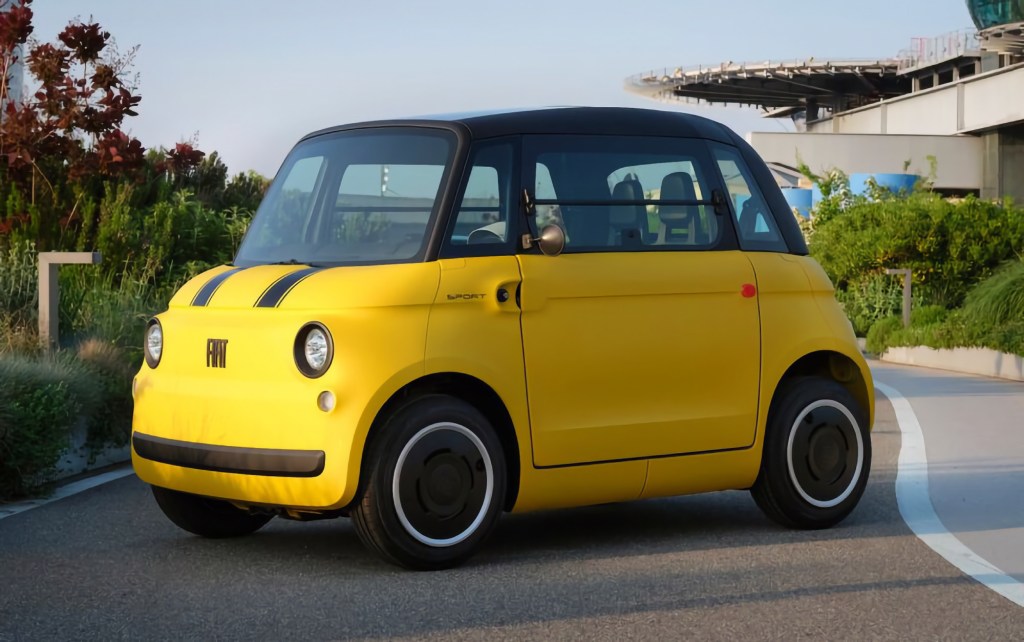
Neighborhood Electric Vehicles
Fiat recently announced that it will be increasing its sales focus on the small vehicle end of the market. In the summer of 2026 Fiat announced the arrival of the Fiat Topolino for sale in the United States. (NEVs are gaining in popularity in Europe: Netherlands, France, Spain, and Italy.) The Topolino is in the federal government’s category of Low-Speed Vehicles (LSVs), the government’s name for Neighborhood Electric Vehicles (NEVs). But an important missing factor is American governments’ encouragement for this kind of vehicle.
The federal government limits these small vehicles to 25 mph. Allowed NEV speeds in Europe are much higher. The United States government’s rationale for the 25-mph speed limit is that NEVs are only safe at that speed or under. Yet they are legally allowed on streets of 30 to 35 mph. Vehicles traveling only 25 mph on these streets are going to induce reckless driving maneuvers by other vehicles. Also, this begs the question of which is worse on urban avenues, a 1,500-pound vehicle with excellent driver’s view of the street or a 6,000-pound vehicle with a visually obstructive hood 4 to 5 feet tall that is certain to crush other vehicles in a collision, NEVs or not?
The International Transport Forum defines urban roads in the United States as 25-35 mph. NEVs are marketed as urban vehicles so should be able to travel in that speed range. The main avenue where I live in the East Bay of the San Francisco Bay Area is 22-mile-long San Pablo Avenue most of which has a speed limit of 30 mph. If NEVs were allowed to go 5 mph faster and many major avenues reduced by 5 mph to 30 mph, that would be a safe middle ground. Class III e-bikes are legally allowed to go 28 mph, so 30 mph for an NEV should not be an unreasonable speed. San Pablo Avenue should then be a viable avenue to use an NEV on.
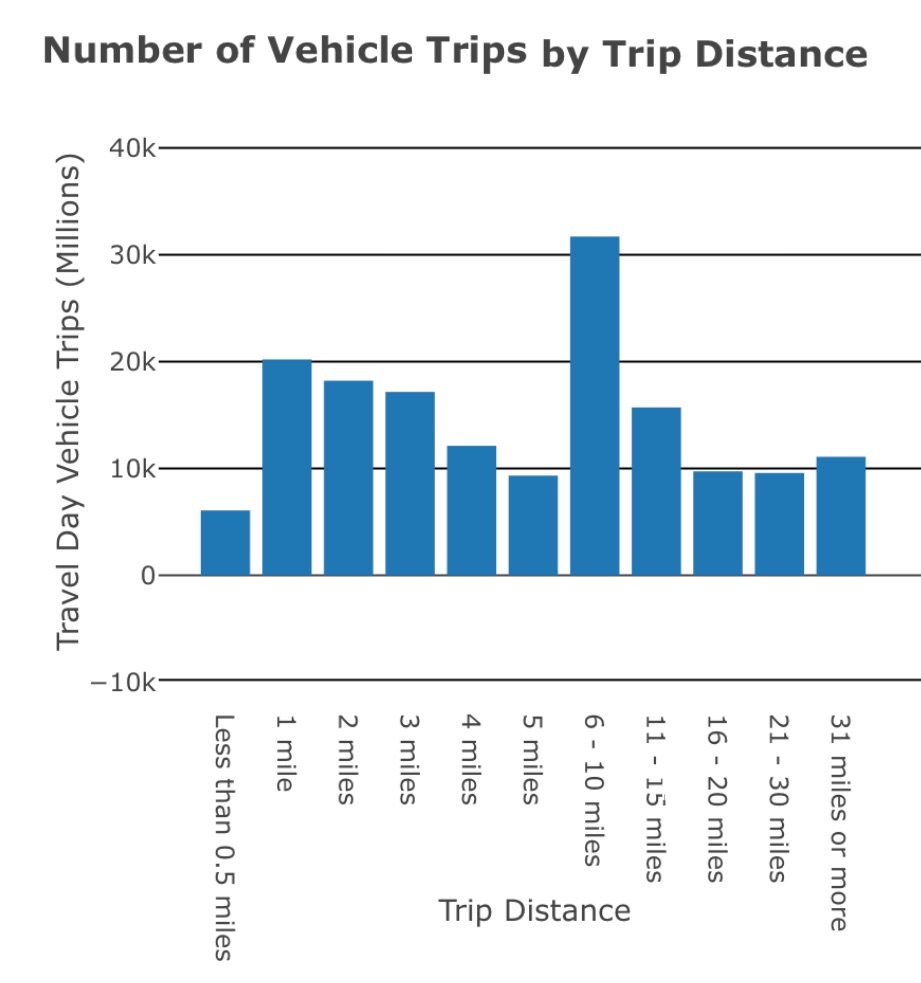
Americans buy full-sized or larger vehicles for long-distance travel but use them for every trip, regardless of distance. According to the Bureau of Transportation Statistics, just 2% of Americans’ trips are over 50 miles, while over half of all trips in the United States are under 5 miles. Why use a 5,000-pound vehicle to go such short distances? NEVs are designed for these distances.
Bicycling advocates shouldn’t worry that NEVs will undermine bicycle use. Bicycles will continue to be the easiest vehicles to park, the most affordable, capable of being taken on many transit systems, and the most fun to ride.
In a perfect world all travel would be by bicycle and transit. In a more realistic but still highly desirable future, more full-sized car trips would become unnecessary, replaced by bicycles and NEVs for local travel. Those older people less certain of their balance on a two-wheel vehicle would naturally gravitate to NEVs, while young people (and confident older people) will continue to be comfortable with two-wheel travel. Copenhagen, known for its high rates of bicycling, has just 11% of the population over 65 years old. Denmark nationally has 23.6% over 65 years old. Sustainable low-carbon transportation for all ages must be adopted throughout cultures, not just in select, dense cities.
The Bay Area has many hilly neighborhoods where residents feel they need full-sized cars. In the future, the flatlands will see more bicycle riders. The fewer cars on flatland streets, the more likely people will use bicycles and other small vehicles for local trips. But if the hills continue to generate full-sized car traffic, that will undermine progress in the flats. Hillside residents need a small electric vehicle that can descend and climb hills. Manufacturers of NEVs need to provide higher powered options for climbing urban hills.
Forward-looking governments’ planning metric that is replacing Level of Service is Vehicle Miles Traveled (VMT). This helps in planning for shortened` trip distances but does not address the problems associated with vehicle sizes. Governments will have to play a role if small vehicles like NEVs are to gain in popularity in North America like they have in Europe. Only government can resolve important outstanding questions. If NEVs shouldn’t be parked on sidewalks or ridden in bike lanes, where will they be encouraged? How can the behavior of other motorists be made accommodating? How can charging stations be opened to them? How should posted speed limits be modified? Government engagement is essential. As a McKinsey & Company report states, the support for micromobility is urgent; “public and private sector engagement and investment will be decisive.” In California, this will require regulatory changes and encouragement to manufacturers to make the NEV modifications necessary for sales: allowing NEVs to go a little faster in urban environments and be powered enough to climb urban hills.
The State of California needs to distinguish between two branches of travel: local travel by light-weight low-speed vehicles like NEVs and e-bikes, and distance travel by faster cars and trucks that need to be smaller. Taxing unnecessarily large vehicles may be necessary to reduce vehicle sizes and to help pay for street safety measures that large-vehicle use necessitates. This will make our streets safer for all modes of travel. The potential benefits from distinguishing near travel in small electric vehicles—on streets that make micromobility viable—from far travel on freeways and highways are considerable: mitigation of climate change, less resource consumption, less traffic congestion, healthier local economies, reduced cost of living, more walkable town centers, and more room on streets for safer bicycling.

More from Streetsblog California

How to Fight a Freeway 101

San Diego Wants Your Input on Streets for All Plan
San Diego’s new Streets for All manual offers a roadmap for safer, more welcoming neighborhood and commercial streets. Some advocates charge the current draft has fatal flaws that will make it hard to implement. Make your voice heard before November 13.
The post San Diego Wants Your Input on Streets for All Plan appeared first on Streetsblog San Diego.