The California DMV’s Culture of Obstruction

How many people driving on California’s roads, right now, have multiple drunk-driving offenses? How many have driven recklessly and caused crashes where someone was killed? Almost no one knows. Of course, the California Department of Motor Vehicles (DMV) knows, but it probably won’t tell you. Last year the journalism nonprofit CalMatters pried some of these numbers loose, and they were disturbing. Known dangerous drivers are common, and all too often they go on to hurt or kill more people.
Does the DMV erect barriers to public information because it wants California’s roads to be unsafe? Almost assuredly, no. More likely, the DMV exhibits some of the worst instincts that afflict large institutions: insularity, and a reflexive fear of oversight and accountability. Over decades, these organizational habits have manifested as a culture of obstruction, so now, when someone seeks public information about what happens on our roads, the DMV’s first, second, and third responses are to refuse.
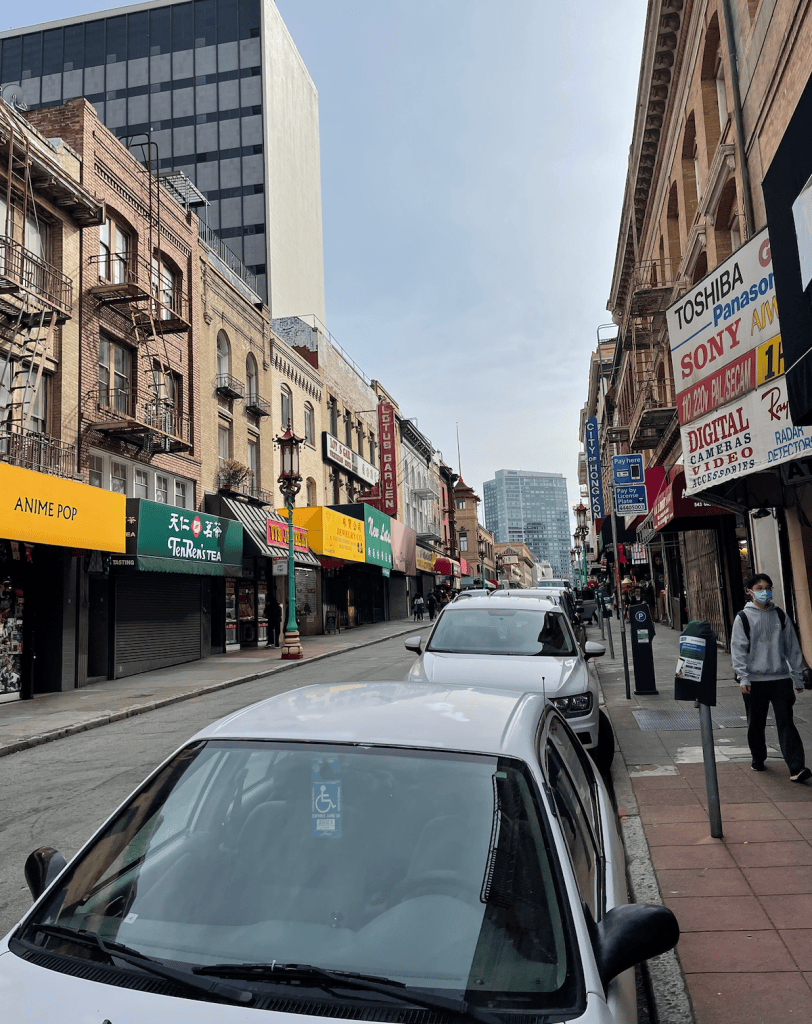
As transportation researchers, we have some experience here. The DMV oversees California’s disabled parking placard program. In California, like many other states, people who hold these placards can park in designated “blue” spots that offer more access. Unlike many other states, however, California placard holders can also park free at meters for an unlimited time. This benefit, combined with lax oversight, has created a lot of fraud. Particularly in places where street parking is expensive, illegal placard use is rampant. News organizations, government agencies and academic researchers have all documented this abuse. People buy and sell placards on the black market, doctors charge people to falsify applications, and—-as California’s state auditor has found—people regularly report their placards lost so they can sell or give away the replacements (some placard holders received up to twenty replacements over a three-year period). This abuse deprives local governments of revenue, casts unfair suspicion on people who really need accessible parking, and makes it more difficult for those people to find such spaces.
In an effort to study this problem, last fall we asked the DMV, through a public records request, for data showing how many placards it was issuing, and the reasons why. This information is plainly in the public interest, and we stated explicitly that we did not want any personally-identifiable information. This information should also not be hard to provide; this is a task that could be handled, in almost any imaginable circumstance, via a rudimentary spreadsheet program.
It has now been roughly a year, and the DMV has provided us a total of zero records. What it has provided instead is a master class in obfuscation. Over the course of many jargon-laden emails, the DMV told us (among other things), that the data we want are in a format that would require (depending on the message) expensive hand tabulation, or a mysterious procedure called a “file pass,” which seems to involve the DMV writing custom software (at huge expense) to extract it. We asked for a plain language explanation of what this data format was. We got no answer. The DMV told us repeatedly that the data we wanted were not in its “driver database,” so we asked, multiple times, if any of the data were in other DMV databases, or in already-compiled reports. We got no answer. More than once the DMV said our request couldn’t proceed until they estimated the total likely cost to us of meeting it. When we asked for that estimate, the DMV never provided one. When the DMV said there were too many records, we said we would happily work with a sample. Rather than produce the sample, the DMV offered new explanations about why it didn’t have to share the data. The goalposts, in short, kept moving. Eventually the DMV stopped replying completely and we threw up our hands. This felt like the outcome the process was designed to produce.
Did we just get unlucky, and correspond with a uniquely uncooperative DMV representative? No. This was our third attempt at getting these records, and the other two experiences were similar. And one of us, for a separate project, was similarly stonewalled by DMV officials who were wary of being interviewed; one official didn’t come to a scheduled interview but a PR staffer did, who proceeded to ask the researcher questions.
All this behavior runs afoul, at least in spirit, of California’s Public Records Act. The law clearly requires agency staff to explain how data are stored, and to help the public access it. The DMV did neither. If we believe the DMV’s excuses, then its data management system is essentially unusable. But given its shifting explanations and evasions, there is little reason to believe them. It seems more likely the DMV goes out of its way to not share information. That’s absurd; the DMV isn’t the CIA. There are few benefits to shrouding depersonalized DMV data in secrecy, and there are real costs. People may or may not think placard fraud is important. But driving is the most dangerous thing most of us do on a daily basis, and the part of our life where we pose the greatest risk to others. The DMV plays a big role in managing this everyday risk, and we cannot continue on with their status quo of doing so in secret.
Marcel Moran, PhD is assistant professor in the School of Planning, Policy, and Environmental Studies at San José State University. Michael Manville, PhD is professor of Urban Planning at UCLA Luskin School of Public Affairs. Miriam Pinski, PhD is Research Lead at the Shared-Use Mobility Center.

Michael Manville is Associate Professor of Urban Planning at the UCLA Luskin School of Public Affairs
Read More:
More from Streetsblog California
Thursday’s Headlines
What It Will Take To Turn the ‘Blue Wave’ Into a Watershed Moment for Transportation Reform
Midterm Results: Big Wins for Transit, Walking, and Biking
Commentary: Advocates Should be Proud of What They’ve Accomplished
‘Grace Period’ Ends for San Diego County E-bike Ordinance.
Community members faced with unclear guidance as new legislation takes effect.
The post ‘Grace Period’ Ends for San Diego County E-bike Ordinance. appeared first on Streetsblog San Diego.