Newsom Signs Budget Trailers, Saves Bike Lanes in Encinitas, Blocks Them in L.A.

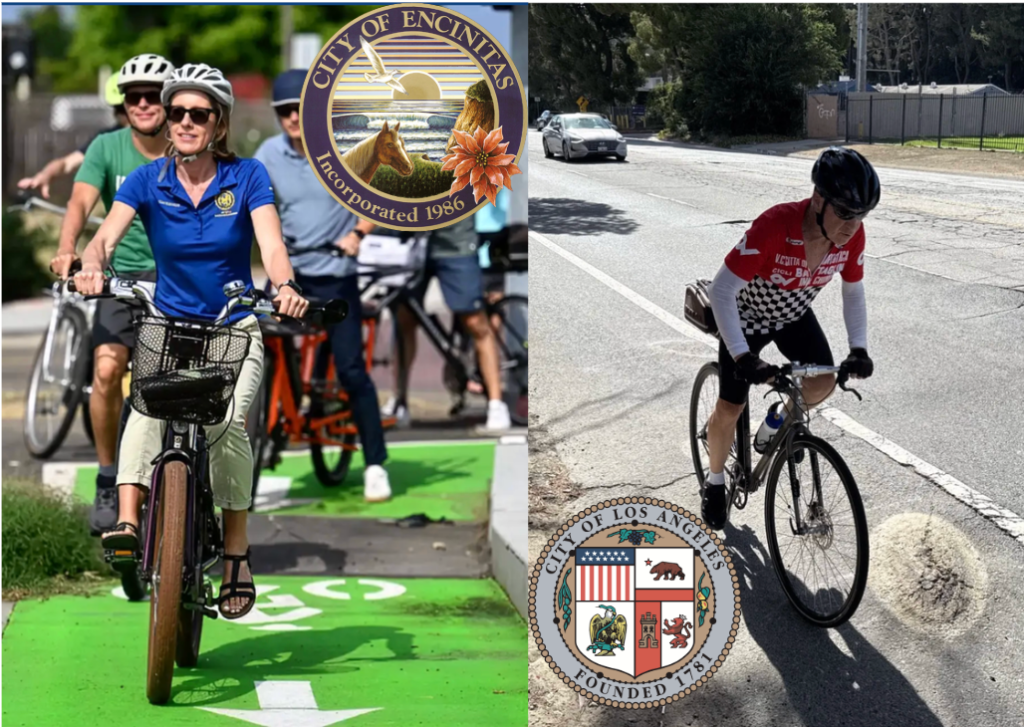
Two budget bills Gov. Newsom signed this week quietly override two city councils’ decisions about bike lanes, without naming either project.
Both provisions appeared in the final days of the legislative session and were specific enough to affect essentially one project in one city, without naming either project directly.
Senate Bill 114 includes language that basically prevents Encinitas from removing a state-funded protected bikeway on Santa Fe Drive. The other, Senate Bill 194, basically bans the implementation of a planned safety redesign of Forest Lawn Drive in Los Angeles.
Neither provision was part of the original legislation that Streetsblog was tracking. Both were inserted into budget bills at the end of the legislative session, bypassing the normal committee process.
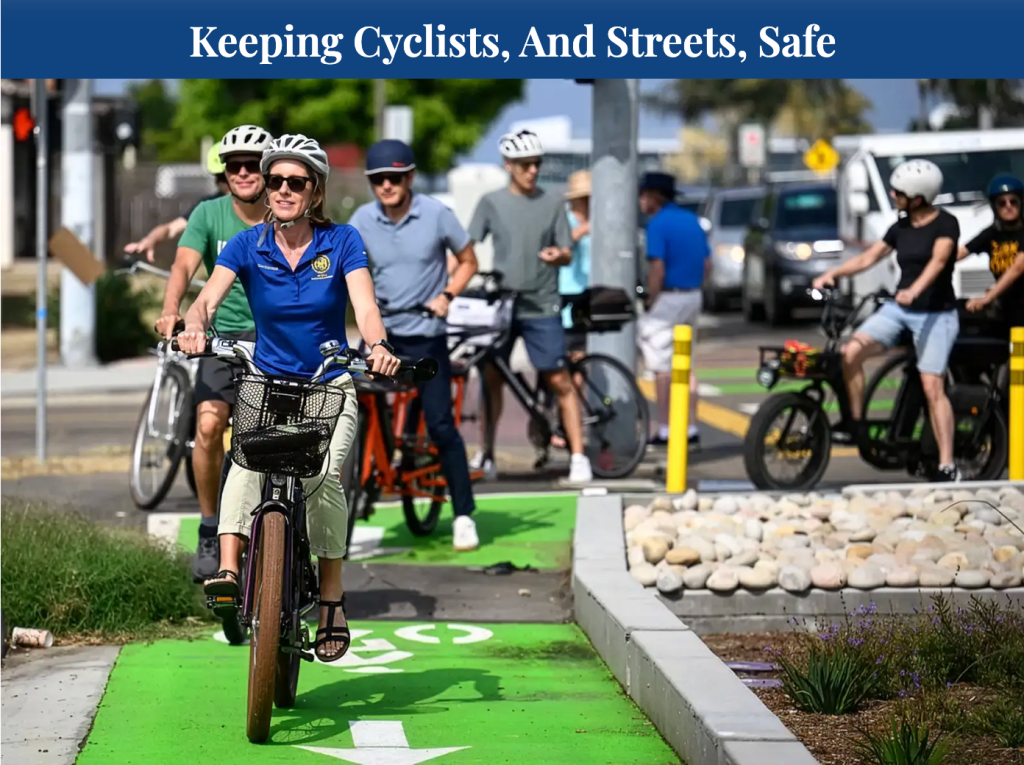
Santa Fe Drive: State funding comes with strings attached
In Encinitas, the new law could prevent the city from removing a protected bikeway that state money helped pay for.
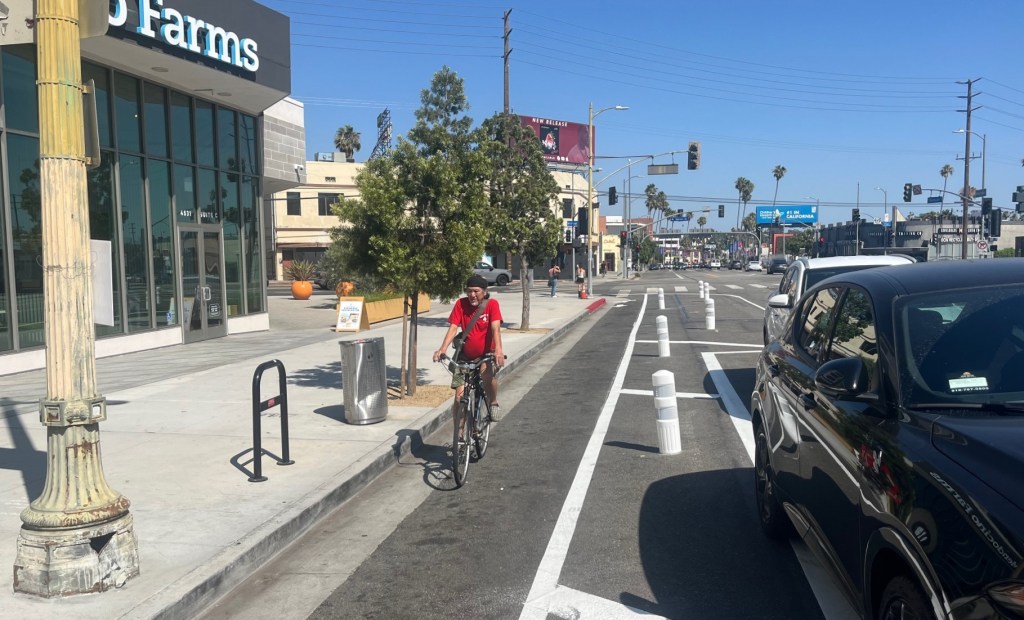
The Santa Fe Drive West Segment Project was completed in 2025 after about $4.1 million in improvements, including repaving and stormwater work, new sidewalks, traffic calming and a physically separated bikeway. State funding accounted for $3.09 million of the project.
Earlier this year, the Encinitas City Council approved a redesign that would remove the physical protection from the bikeway and restore more painted bike lanes and automobile parking. City officials cited concerns about congestion, emergency access and conflicts between turning vehicles and people riding bikes.
State Sen. Catherine Blakespear, a former Encinitas mayor who helped secure the state grant, had already tried to address the issue through Senate Bill 569. That bill would have established statewide rules for removing or reducing physical separation on state-funded bicycle and pedestrian projects. It passed the Senate but failed in the Assembly.
Instead, language was inserted into SB 114 late in the session specifically addressing the Santa Fe Drive project.
Under the provision, Encinitas cannot remove or modify the separated bikeway for the first five years after the project’s notice of completion. For the following 10 years, the city could remove it only if it returns the full $3.09 million state allocation and demonstrates that the replacement provides equal or greater safety, accessibility and mobility for people using nonmotorized transportation.
Encinitas officials objected to the provision and asked Newsom to line-item veto it. The City Council took that position after the legislation passed, but Newsom signed SB 114 last Friday, September 18.
For more on this story, visit previous coverage at Streetsblog San Diego.
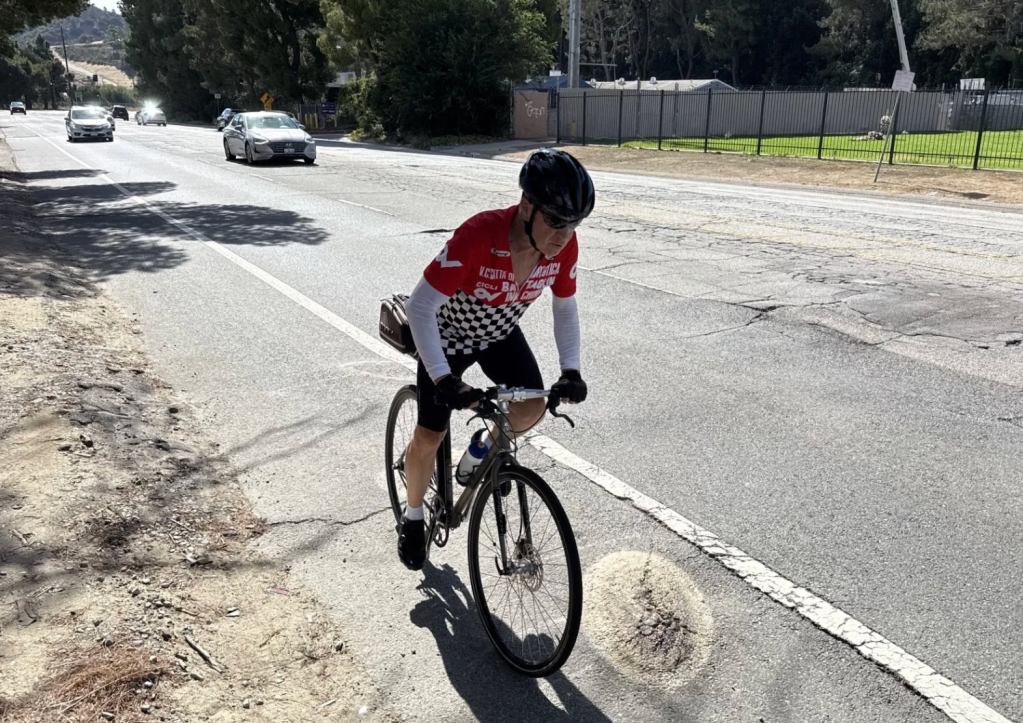
Forest Lawn Drive: A different kind of state intervention
In Los Angeles, the budget trailer bill went in the opposite direction.
As Streetsblog Los Angeles reported last month, SB 194 was amended just hours before a midnight legislative deadline to include language designed to derail the city’s planned Forest Lawn Drive safety project.
The language does not mention Forest Lawn Drive by name. Instead, it applies to “a city with a population of at least 2 million” and “prohibits that city from reducing the number of vehicle lanes on a street that provides the only access to two or more adjacent cemeteries” unless several additional requirements are met.
That combination describes Forest Lawn Drive in Los Angeles and nowhere else.
The city had a shovel-ready safety redesign of the road after years of work by LADOT and Councilmember Nithya Raman. The proposed project was intended to improve safety for people driving and bicycling on the corridor. Forest Lawn and Mount Sinai cemeteries opposed the redesign, and Mayor Karen Bass paused the project before construction could begin.
If those names seem familiar to a casual reader, Raman is challenging Bass for the office of mayor in this fall’s election.
The new state law adds another hurdle to the political one. Before reducing vehicle lanes on a road meeting the bill’s criteria, Los Angeles would have to hold a public hearing, take a formal vote and make specified findings and declarations.
Newsom signed SB 194 as part of the same wave of late-session legislation. Streetsblog’s subsequent legislative tracking lists the Forest Lawn provision among the bills the governor has signed.
The result is a strange bookend to the Santa Fe provision.
For more, visit earlier coverage at Streetsblog Los Angeles.
Trailer Instead of Committees
Budget “trailer bills” are legislation used to implement or modify provisions of the state’s annual budget. Unlike ordinary legislation, they can move extremely quickly, often with little or no opportunity for the normal committee process.
The Forest Lawn language illustrates just how quickly that can happen. SB 194 was amended shortly before a midnight deadline on Aug. 28, with the new language introduced only hours before the deadline. Because it was a budget trailer bill, it did not go through the normal committee process before the Legislature voted on it.
The Santa Fe language followed a similar path. After SB 569 failed in the regular legislative process, Blakespear worked to insert Santa Fe-specific language into the budget legislation on Aug. 28, just days before the Legislature adjourned.
That is why both provisions look so different from conventional legislation.
Trailer bills are not inherently unusual. California uses them every year to make the statutory changes needed to implement the budget. But their speed and limited committee review can also make them a vehicle for policy provisions that might have faced a much longer and more public debate if introduced as stand-alone legislation.
Streetsblog has migrated to a new comment system. New commenters can register directly in the comments section of any article. Returning commenters: your previous comments and display name have been preserved, but you'll need to reclaim your account by clicking "Forgot your password?" on the sign-in form, entering your email, and following the verification link to set a new password — this is required because passwords could not be carried over during the migration. For questions, contact tips@streetsblog.org.