San Diego Avoids Disastrous Cuts to Transportation Safety, Final Budget Praised by Advocates

When San Diego Mayor Todd Gloria first presented his budget for the fiscal year, which began last week, it looked dire.
The proposed budget would have eliminated the San Diego Department of Transportation’s Multi-Modal Team, a group of engineers responsible for designing and implementing projects such as safer crossings, bike lanes, traffic calming projects, and other Vision Zero improvements. Advocates argued that eliminating the team would undermine the city’s stated commitment to eliminating traffic deaths and serious injuries.
But two months later, the budget approved by the San Diego City Council and that went into effect last week, looked significantly different.
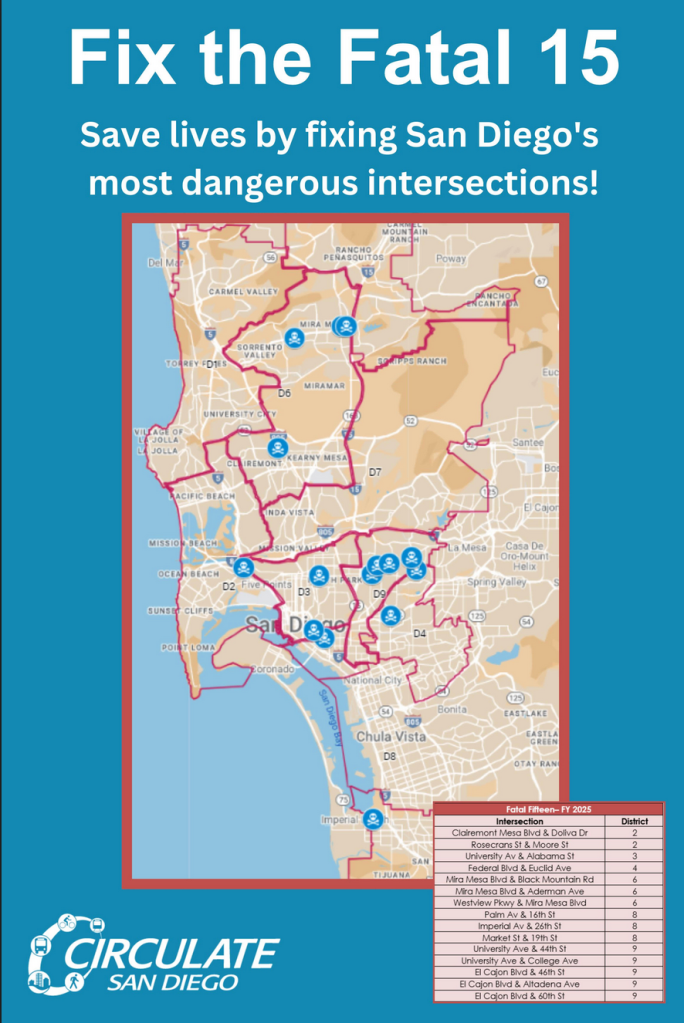
The final budget restored funding for the Multi-Modal Team and included new investments in traffic safety projects, including funding to address the city’s most dangerous intersections (the Fatal 15) and implement a speed management plan. The changes turned the budget from a disaster for livable streets advocates into one that was celebrated instead.
From cuts to restoration
Gloria’s spring proposal came at a difficult time, with city officials attempting to close a projected deficit via a combination of spending reductions, and service changes with little thought given to bringing in new revenue. At that time, supporters pointed to DOT’s overall budget not seeing an overall reduction, but advocates pointed to the specific cuts mentioned above that would have had a major impact on the city’s ability to build safer streets.
So they rolled up their sleeves and got to work. Action alerts went out. Advocates descended on city hall. During budget hearings focused on DOT, the conversation was focused on reversing the proposed cuts, not coping with them. While the mayor’s proposed budget emphasized investments in traditional public safety departments, council members and advocates argued that preventing traffic deaths should also be considered a core public safety responsibility.
Council President Joe LaCava emphasized that the final budget reflects a commitment to treating traffic safety as a core city responsibility.
“Street safety is public safety,” LaCava said when the final budget was passed. “The safety measures included in today’s budget advance the shared priorities the coalition and I hold by making driving, walking, and cycling safer.”
The adopted budget included $551,000 for improvements at the city’s “Fatal 15” intersections — the locations identified as having the highest need for safety upgrades — along with $2.4 million for implementation of the city’s Speed Management Plan. It also preserved approximately $1.45 million to maintain the Multi-Modal Team.
Advocacy groups that had pushed for the changes celebrated the final budget as a reversal from the cuts proposed in the spring.
“This budget represents a strong commitment by the City Council to prioritize traffic safety,” wrote Aria Grossman, Policy Manager at Circulate Planning & Policy (fullin a statement.
For families who have lost loved ones in traffic crashes, the funding represents more than a budget line item.
“Today’s decision is an investment in preventing future tragedies and making our streets safer for everyone,” said Laura Keenan, co-founder of Families for Safe Streets San Diego.
How did the budget change?
The answer is a combination of factors.
First, the city’s budget process includes several rounds of review after the mayor releases a proposal. The City Council, supported by recommendations from staff and the Independent Budget Analyst, has the ability to modify spending priorities before adoption.
Second, the initial proposal reflected one set of assumptions about balancing the budget. As negotiations continued, council members identified programs they wanted to restore or protect.
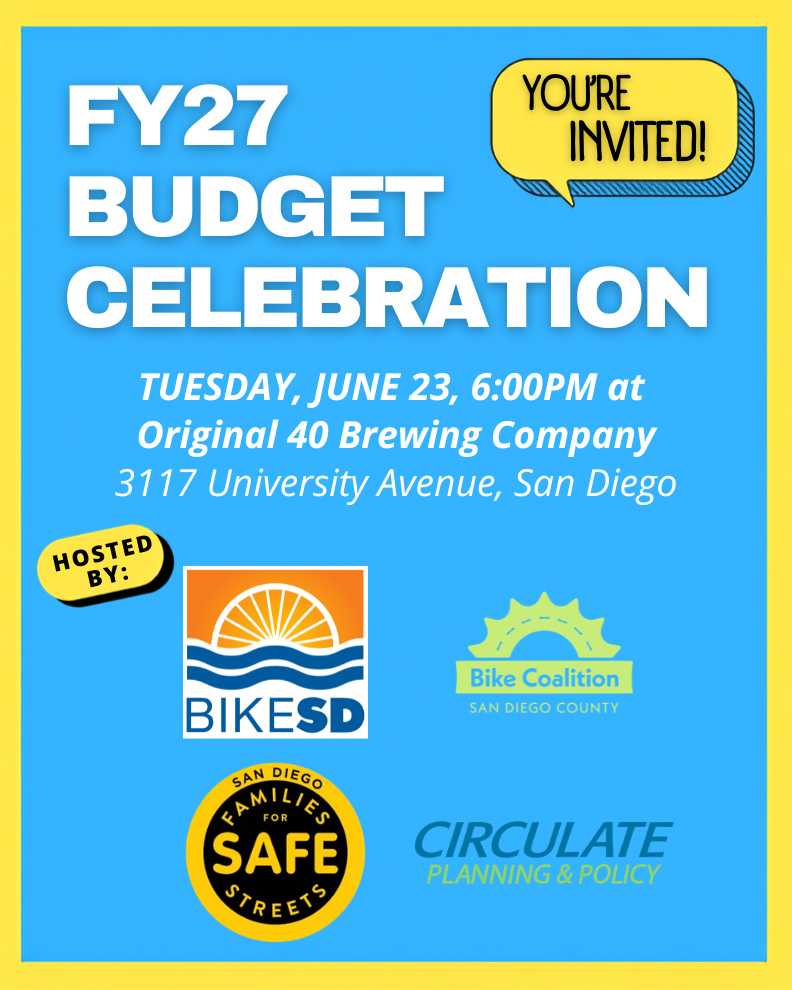
Third, organized advocacy played a role. Groups including Circulate Planning & Policy, Bike SD, Families for Safe Streets San Diego, and the San Diego County Bicycle Coalition and others argued that transportation safety investments should not be sacrificed during a difficult budget year.
“The budget passed by the San Diego City Council affirms a fundamental truth, that traffic safety is public safety,” said Ian Hembree, Advocacy and Community Manager for the San Diego County Bicycle Coalition.
The result was a final budget that looked very different from the one introduced in April.
Streetsblog has migrated to a new comment system. New commenters can register directly in the comments section of any article. Returning commenters: your previous comments and display name have been preserved, but you'll need to reclaim your account by clicking "Forgot your password?" on the sign-in form, entering your email, and following the verification link to set a new password — this is required because passwords could not be carried over during the migration. For questions, contact tips@streetsblog.org.