Mayor Gloria’s Budget Has Deep Cuts for Safety and Bicycle Program for the San Diego Department of Transportation

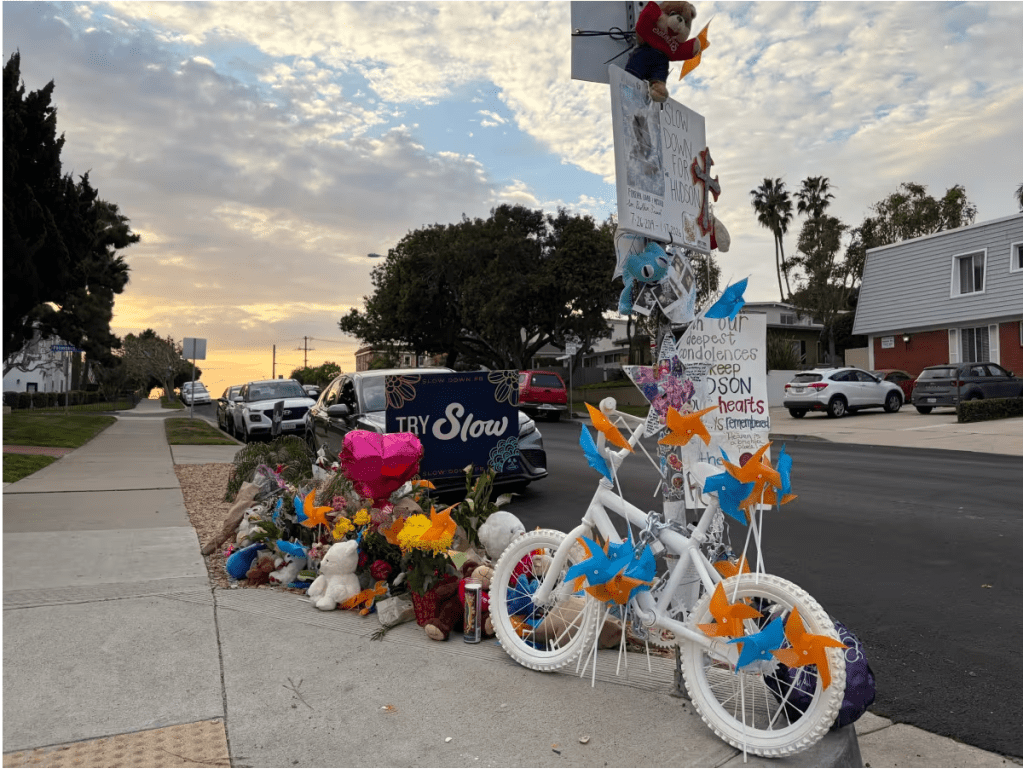
The City of San Diego released its draft Fiscal Year 2027 budget this week, with Mayor Todd Gloria outlining a proposal shaped by a significant deficit and difficult tradeoffs across departments. The plan includes major cuts to a wide range of city services, from parks to arts funding, as officials attempt to close the budget gap.
Transportation, at first glance, appears to fare better than many departments. The city’s transportation budget would see a roughly $10 million increase in overall spending. But the devil is in the details. Advocates and watchdog organizations warn that the top line number masks cuts to programs aimed at improving safety for people walking and biking.
Specifically, the budget calls for the elimination of the multi-modal team in the transportation department – the traffic engineers who plan and design street elements that make roads safer for all users. According to early reporting, funding cuts would also scale back or delay bike lane projects and other traffic safety improvements that are already in the works.
Recent data underscores why advocates are alarmed about these cuts. In San Diego, pedestrian crashes remain both common and increasingly deadly. Pedestrian deaths have climbed steadily over the past decade, even after the city adopted its Vision Zero policy aimed at eliminating traffic fatalities. Hit-and-run crashes are also a persistent danger, with more than 200 incidents in 2024 alone causing dozens of deaths and hundreds of injuries.
Bicyclists face similar risks on San Diego’s streets. The city records roughly 500 bicycle-related crashes each year, with several fatalities annually, while countywide totals are even higher.
Advocates Respond
Advocates and community groups responded quickly—and critically—to the mayor’s proposal.
In a statement, the San Diego Vision Zero Coalition warned that the proposed cuts undermine years of progress toward safer streets, calling on city leaders to restore funding for proven safety programs and infrastructure investments.
The Vision Zero Coalition and the San Diego Bicycle Coalition released an action alert (below) to help people advocate for a restoration of the safety programs in the city’s budget. The message is simple: these cuts endanger people’s lives and well being, but it doesn’t have to be that way.
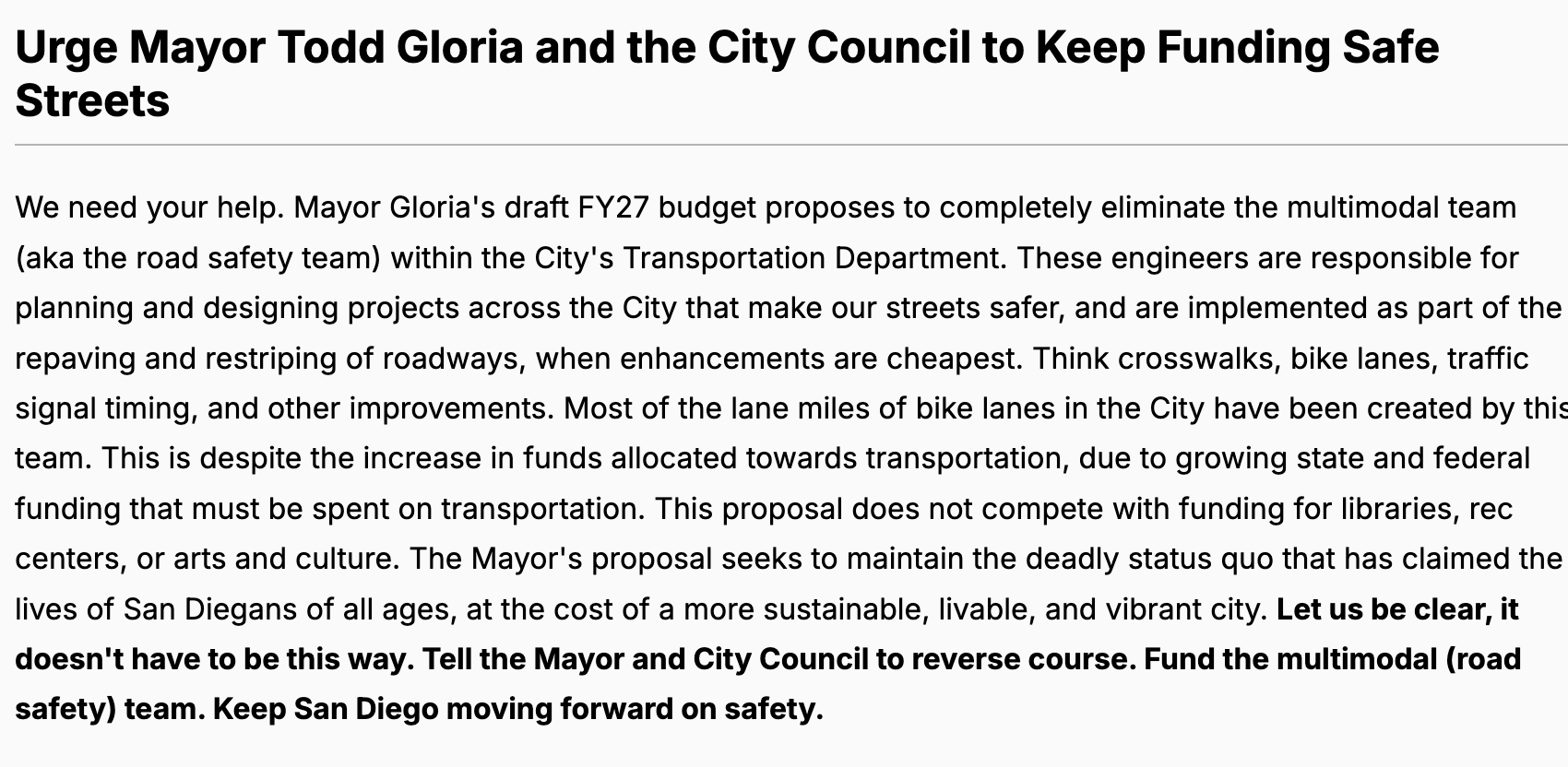
However, the strongest criticism came from Bike SD, who blasted Gloria for betraying a campaign promise to make the city more safe.
“The mayor ran on a platform of saving lives and encouraging mode shift but has fallen short of doing either. With this budget proposal, it’s clear that he lacks the vision and political will to do much of anything he promised to do when running,” writes Anar Salayev, the Executive Director of BikeSD.
Salayev has good reason to feel betrayed. When running for Mayor, Gloria regularly promised to be a champion for safe streets.
“We’re building a different (transportation) system now to try and make our commitments under Vision Zero and our landmark Climate Action Plan…Even in a difficult budget year we still put good money towards our Vision Zero plans,” Gloria said at one mayoral debate less than two years ago when he was running for re-election.
And it wasn’t just the professional advocacy groups that were outraged.
A press statement from Respect Bird Rock, a La Jolla-based community advocacy group, struck a more mixed tone. The group expressed support for continued investment in high-crash locations but warned that key system-wide safety efforts are at risk without additional funding.
“We are encouraged by the Mayor’s continued commitment to transportation safety, including funding for the ‘Fatal 15’ high-crash intersections and the City’s broader Vision Zero goals,” the group wrote. However, they emphasized that the Citywide Speed Management Plan—approved earlier this year—remains unfunded in the proposal.
The group argued that without relatively modest investments in signage and implementation, the plan to lower speed limits across hundreds of miles of city streets could stall, leaving dangerous conditions unchanged in school zones, business districts, and high-injury corridors.
Streetsblog reached out on bicycle safety message boards for reaction, and all of the responses we received were negative.
This response from Brandon Duran best summarized residents’ concerns: “Scrapping the multi-modal team will only serve to exacerbate the city’s problems with aging road infrastructure and terrible traffic. Without safe streets, there is little incentive for people to transition to a car-less lifestyle, and signals to residents that the city continues to prioritize drivers over pedestrians, cyclists, and transit users. These actions would hurt the city’s stated goals of fighting the climate crisis by going backwards on car dependency.”
Part 3: Funding Preserved for the “Fatal 15”
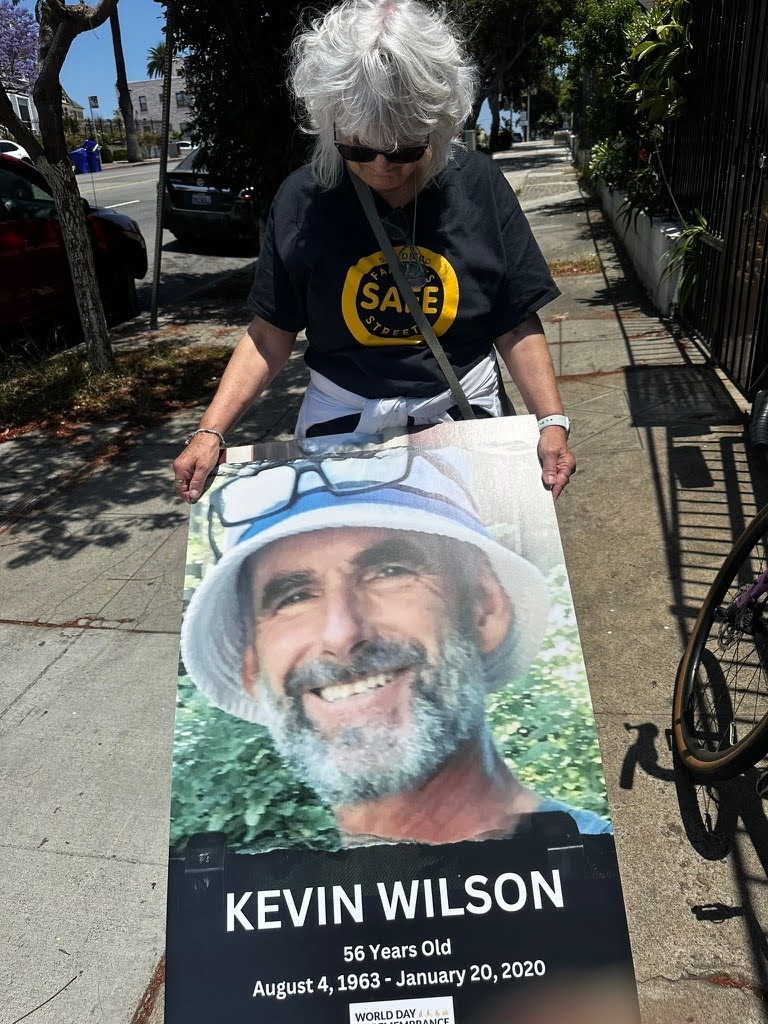
Despite the broader concerns, advocates did acknowledge one important area of continuity: the city is maintaining funding for improvements at the “Fatal 15,” the intersections and corridors with the highest rates of severe and fatal crashes.
These projects have been a central focus of San Diego’s Vision Zero strategy, targeting these locations with engineering fixes such as signal upgrades, safer crossings, and traffic calming measures. Previous efforts have led to changes at several high-risk intersections, with more planned.
Still, advocates caution that focusing only on the worst locations is not enough. While the Fatal 15 program addresses immediate hotspots, they argue that broader investments—like bike networks, safer street designs, and lower speed limits—are necessary to prevent dangerous conditions from emerging elsewhere.
Streetsblog has migrated to a new comment system. New commenters can register directly in the comments section of any article. Returning commenters: your previous comments and display name have been preserved, but you'll need to reclaim your account by clicking "Forgot your password?" on the sign-in form, entering your email, and following the verification link to set a new password — this is required because passwords could not be carried over during the migration. For questions, contact tips@streetsblog.org.