Republican State Senator Blames State Gas Taxes, Dems. for High Fuel Prices

The deadline for legislation to be passed through committee has come and gone in the State Senate. Among the legislation that failed to advance was Senate Bill 1035: Motor vehicle fuel tax: greenhouse gas reduction programs: suspension, by Senator Tony Strickland (R-Huntington Beach), which would have suspended the state’s gas tax.
Yesterday, Strickland bemoaned the failure of his legislation in a partisan rant aimed at blaming gas prices on Democrats and the gas tax.
“At a time when affordability is the top concern for families, Senate Democrats said ‘Hell no’ to much-needed financial relief. This was a missed opportunity to take action,” he declared. “Here in California, despite all the talk about fighting for affordability and California being a leader on policy, Sacramento Democrats are falling in line with Governor Newsom and refusing even to discuss relief at the pump.”
But It’s Not That Simple
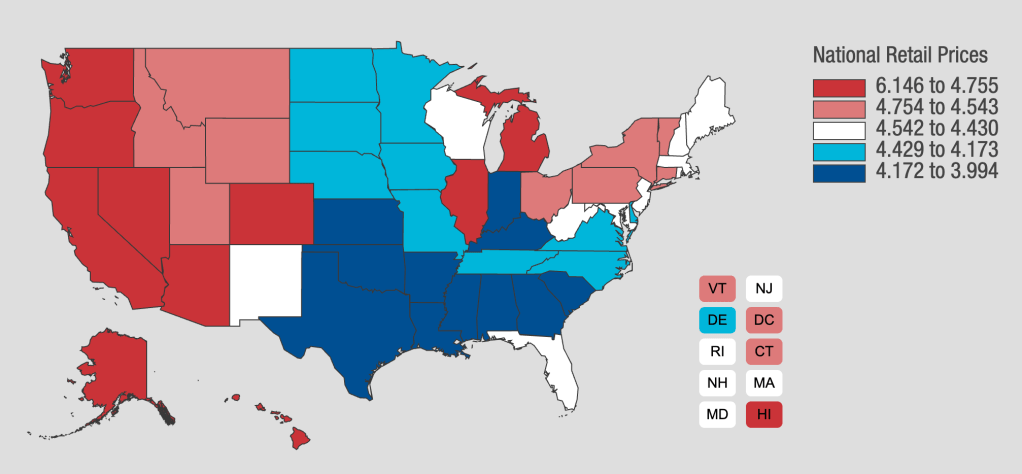
It’s true that California has both the highest gas tax in the country ($.79 per gallon) and the highest gas prices in the country ($6.15 on average, as of yesterday). The total gas tax paid by Californians is only $.25 higher than the national average, but the cost per gallon is $1.61 higher.
In short:
- Crude oil prices: the cost of oil on the global market is the single biggest factor affecting California gasoline prices.
- Refinery operations: outages, maintenance, or unexpected shutdowns at California refineries can quickly drive prices higher.
- California’s cleaner-burning fuel requirements: the state’s unique gasoline blend costs more to produce and limits where fuel can be sourced.
- Taxes and environmental fees: state and federal gas taxes, Cap-and-Trade, and Low Carbon Fuel Standard costs all add to pump prices.
- Supply and transportation constraints: California lacks interstate gasoline pipelines and relies heavily on in-state refining and marine imports, making the market more vulnerable to disruptions.
For more details, the state’s energy commission gives a pretty neutral look at the various influences and Streetsblog did its own breakdown a couple of weeks ago.
Of course, Strickland’s press statement excludes the reason for the massive global increase in crude oil costs in the past two and a half months because of President Donald Trump war against Iran. Iran responded to the initial attack from the United States by not allowing oil tankers and other trade through the Strait of Hormuz. 20% of the world’s oil supply comes through the strait in normal times, and the global oil market has been thrown into chaos. In the U.S., that means an average 50% increase in the cost of gasoline at the pump.
And of course, there’s a cost to Californians in reducing or suspending the gas tax. California’s gas taxes and fees fund transportation infrastructure and programs, including road and highway maintenance, public transit, bridge repairs, traffic safety improvements, and efforts to reduce pollution and greenhouse gas emissions. Other states that have suspended or reduced the tax in response to the price hikes from Trump’s war, including Utah, Indiana, and Georgia, have large surpluses in their general fund that have offset the reduced revenue from gas taxes.
Whither the Feds?
Trump himself is talking about suspending the federal gas tax of $.18, which would take a majority vote of both Houses of Congress. Given that prominent Democrats in the Senate have already signaled their support, it is likely that legislation for a “gas tax holiday” would have majority support, should it be brought to a vote.
The federal gas tax pays for the maintenance, repair, and construction of national infrastructure, including highways, bridges, and mass transit systems. Revenue from the tax goes directly into the Federal Highway Trust Fund.
Streetsblog has migrated to a new comment system. New commenters can register directly in the comments section of any article. Returning commenters: your previous comments and display name have been preserved, but you'll need to reclaim your account by clicking "Forgot your password?" on the sign-in form, entering your email, and following the verification link to set a new password — this is required because passwords could not be carried over during the migration. For questions, contact tips@streetsblog.org.