The Missing Link: Pacific Beach Planning Group Considers Finishing San Diego Boardwalk

Harry Bubbins is a member of the La Jolla Community Planning Association. The views expressed here are his own.
As a planning group member from an adjacent neighborhood, I walked into the Pacific Beach Planning Group meeting at the local library on Cass Street excited about an agenda item. I left with a history lesson, a sense that consensus is forming, and a greater appreciation for the San Diegans who volunteer their time on such groups.
The agenda item was simple: Should Ocean Boulevard between Grand Avenue and Thomas Avenue finally be opened to people — not just cars — on weekends and holidays?
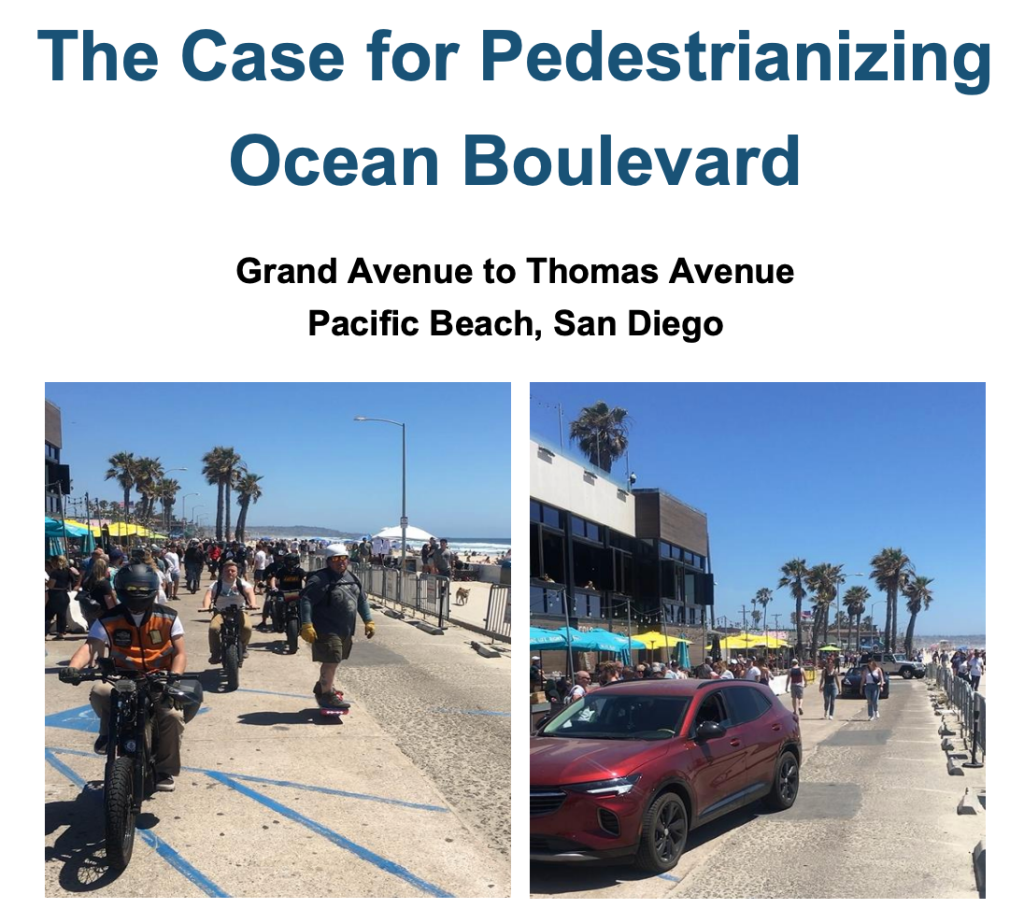
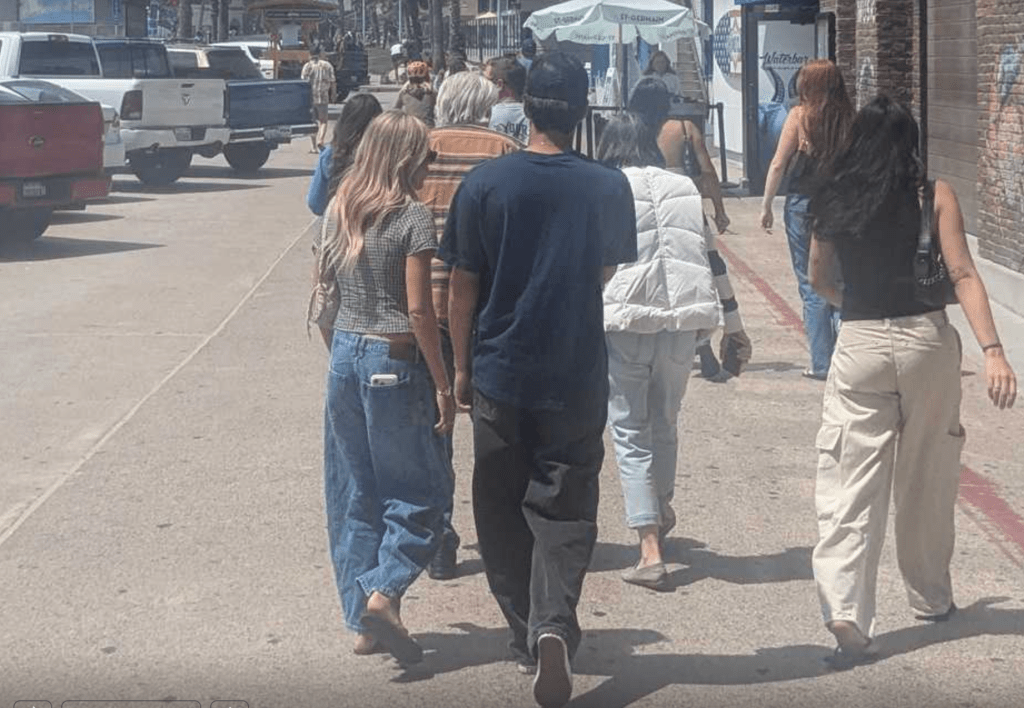
The proposal, “The Case for Pedestrianizing Ocean Boulevard,” brought forward by beautifulPB, cites extensive 2025 traffic sensor data showing that pedestrians and cyclists already make up nearly 74% of all traffic on that stretch. The adjacent boardwalk routinely hits 11,000 to 12,000 people on summer weekends. When that overflows, people spill onto the roadway because they have nowhere else to go. July 4th weekend data showed pedestrian traffic on the roadway spiking dramatically while vehicle traffic remained flat.
That’s not a road. That’s where people walk and bike — but without the safety features or curbs a real path would have.
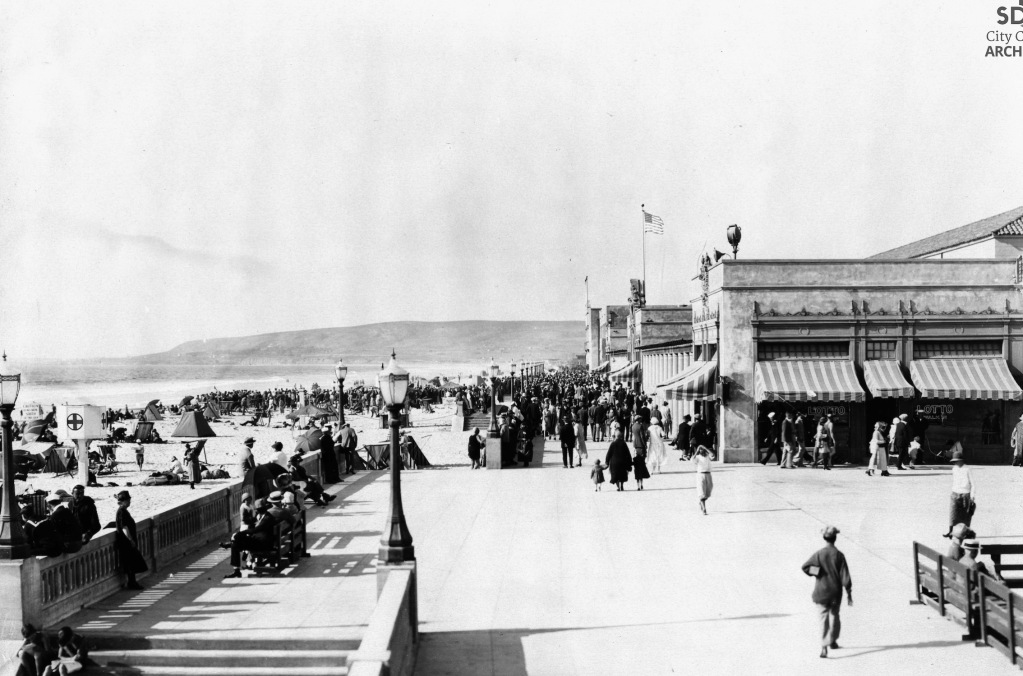
The former Ocean Avenue was transformed decades ago into the community boardwalk we know today. But this one block — Grand to Thomas — was left behind. While the boardwalk is a people-first corridor, this adjacent stretch remains a hybrid: half pedestrian overflow, half asphalt storage for a handful of cars. The planning group last night acknowledged what the data has shown: this is the missing link.
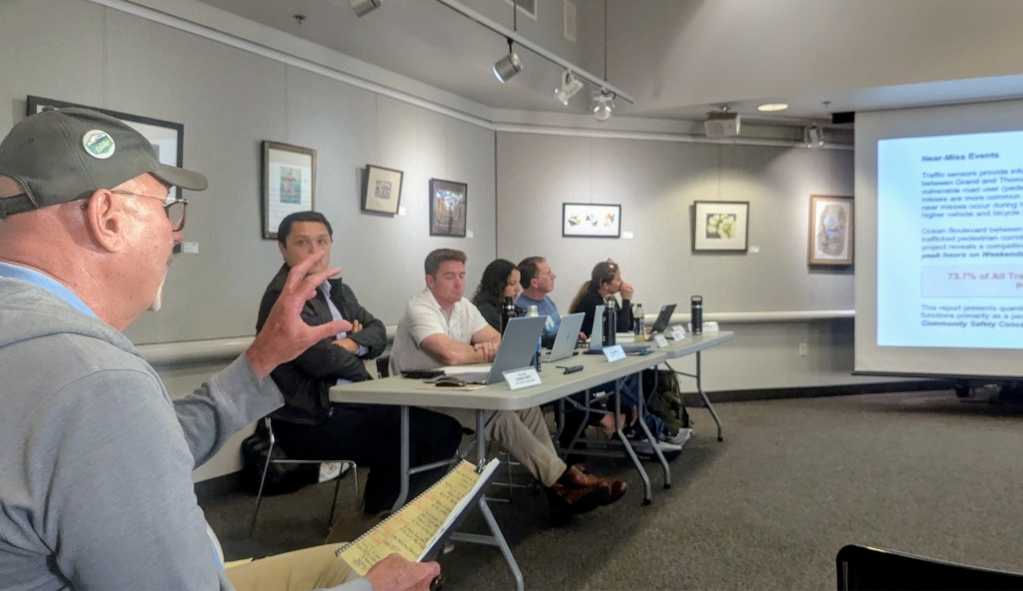
Robert “RJ” Kunysz of Beautiful PB presented the proposal.
Full-Time vs. Part-Time
The group seemed generally supportive of correcting this oversight. The conversation quickly shifted from “if” to “how.”
Two perspectives emerged.
The incrementalists advocated for starting with a weekend and holiday opening — roughly 10 AM to 10 PM. A pilot program. Test it. See what happens. The logic is understandable and practical: ease the community into it.
There is also a Coastal Commission question, which may or may not be triggered depending on the final proposal. Some engaged residents have observed that the Coastal Commission has sometimes prioritized parking infrastructure and vehicle access over pedestrian and bicycle access — a perception rooted in specific enforcement cases where the Commission required parking as a condition of coastal permits.
At the same time, the Commission’s stated mission is to maximize public access for all Californians, and they have supported pedestrian-priority projects like San Francisco’s Great Highway weekend openings.
The practicalists made a case for full-time opening without confusing schedules. Their logic is also understandable. Part-time streets can confuse drivers and create enforcement challenges. It was observed to be simpler and safer to just finish the job, referencing how the section of the boardwalk just north towards Law Street works 24/7. If that works, why would this block need a complicated schedule?
The Parking Conversation
Then came the car storage discussion — what some call parking.
The not-uncommon topic — transforming a few parking spaces — emerged. It was observed and agreed that the existing spots along this stretch are often occupied by the same vehicles, parked in place all day. That’s not beach access or customer turnover. That’s long-term storage. And it actively blocks access for the very beachgoers and customers businesses claim to want.
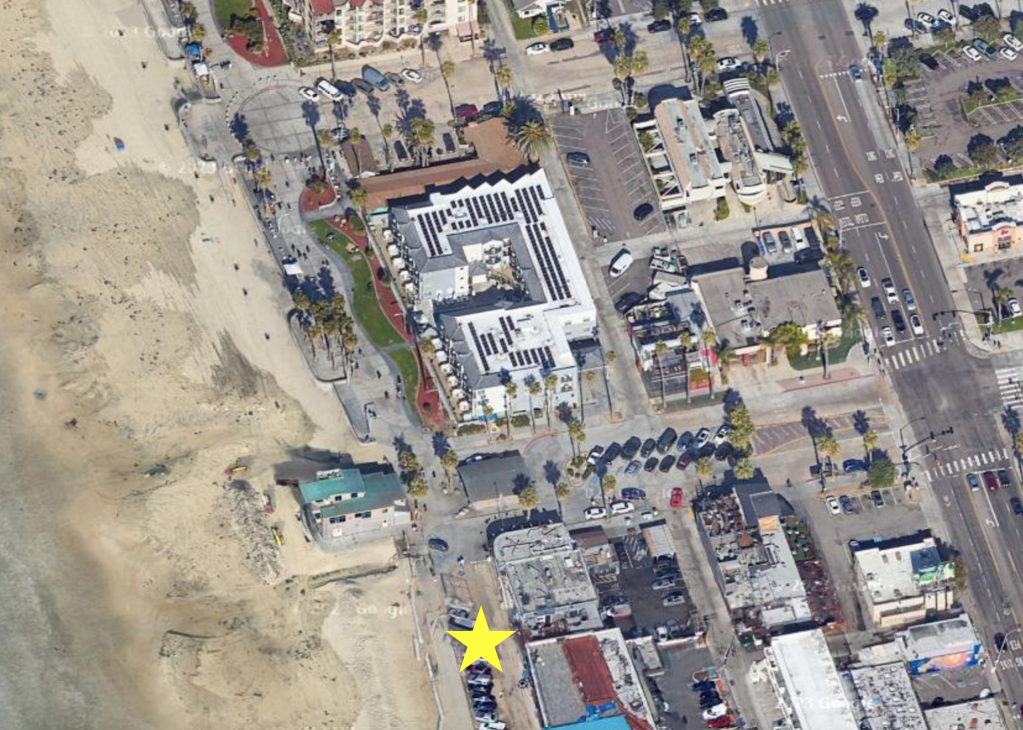
Alternatives exist. Members pointed to a map projected for all to see that Grand Avenue could accommodate more drop-off zones and short-term loading. Similarly, near Thomas Avenue there is underutilized parking that could be arranged and pursued. Nearby hotels and commercial lots have spaces that rarely hit capacity.
The popular Tuesday farmers market was cited as a successful model of temporary street transformation, proving that opening streets to people doesn’t harm local access — it improves it.
A Few Skeptics
Of course, this was a public meeting. You can’t have one without a few familiar arguments surfacing.
One member raised concerns that have been heard before: suggesting that a non-profit group has a hidden agenda to take cars away from everyone. I have read such tropes online, but hearing it in person was striking — especially from otherwise well-meaning people.
Another offered what can only be described as a notable gamble, something like: “No one has reported a death there yet, so why do we need to do anything?”
It’s a fair question on its face. But the sensors are already catching near-misses — vehicles passing within one meter of pedestrians and cyclists. Video footage confirms it. Daily experience of biking or walking through this stretch verifies the benefit of opening it up like the rest of the boardwalk. Hoping nothing bad happens is not a safety strategy.
No one actually wants to wait for a tragedy. And honestly, this isn’t even about deaths. It’s about civic space and finishing the boardwalk — creating something better for everyone who uses it.
What Happens Next
No vote was taken at this meeting. The item was presented for information only.
According to planning group leadership, formal action is expected in June. That’s when members will likely vote on whether to recommend the pilot to the City of San Diego. BeautifulPB has described the pilot as low-cost and reversible — portable barriers, bike racks, and continued sensor monitoring.
If the planning group issues a favorable recommendation, further approvals would still be needed. But the conversation has clearly shifted. Grassroots efforts matter. Data matters. Public engagement matters.
Since the boardwalk was transformed decades ago, the Grand-to-Thomas block has been the missing link — a remnant of post-WWII car-first thinking that removed trolleys and prioritized vehicles over people. June will tell us if the planning group takes the practical step to support this community project and finish the job.
The Pacific Beach Planning Group is expected to take up the item for action at its June 10 regular meeting.

Streetsblog has migrated to a new comment system. New commenters can register directly in the comments section of any article. Returning commenters: your previous comments and display name have been preserved, but you'll need to reclaim your account by clicking "Forgot your password?" on the sign-in form, entering your email, and following the verification link to set a new password — this is required because passwords could not be carried over during the migration. For questions, contact tips@streetsblog.org.