Committee Approves L.A. Metro Station Bike Parking Contract

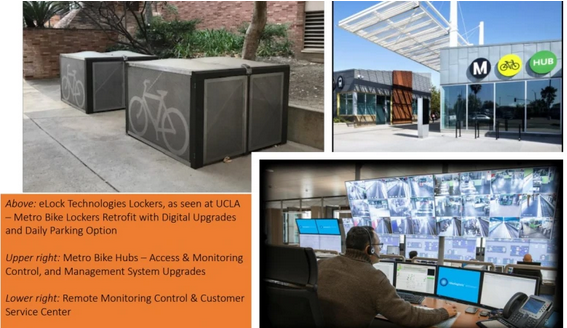
This morning, the Metro Planning and Programming Committee approved modernizing and expanding bicycle parking at transit stations. The $6.1 million five-year contract is for installing, operating, and maintaining new digital bike lockers at many busy Metro stations. The new keyless lockers will replace inadequate existing keyed-lockers, which have experienced problems with an inability to meet locker demand (resulting in long wait lists) and some bicycle theft.
In 2018, Streetsblog reported on Metro station bike theft issues. At the time, SBLA encouraged e-lockers as a needed upgrade for Metro station bike lockers. Metro Boardmember Mike Bonin spearheaded a 2018 motion directing the agency to evaluate upgrading station bike parking. In 2019, Metro produced a 12-page report on the station bike parking situation. Metro began the process of converting to e-lockers, advertising an RFP for a ten station, hundred e-locker pilot. That contract was never awarded as its costs were deemed too great. Metro’s nascent half-hearted bike locker upgrade process then basically ground to a halt, likely in part due to COVID uncertainty, until it resurfaced this week.
This morning’s staff report and presentation detail Metro’s bike locker solution. The contract is with eLock Technologies, which operates e-lockers in the Bay Area and San Diego. Metro parking chief Frank Ching announced today that the program will increase supply, expanding Metro’s existing 850 lockers to a total of 1,000 new e-lockers, including many at equity focus community stations that do not currently have bike lockers.
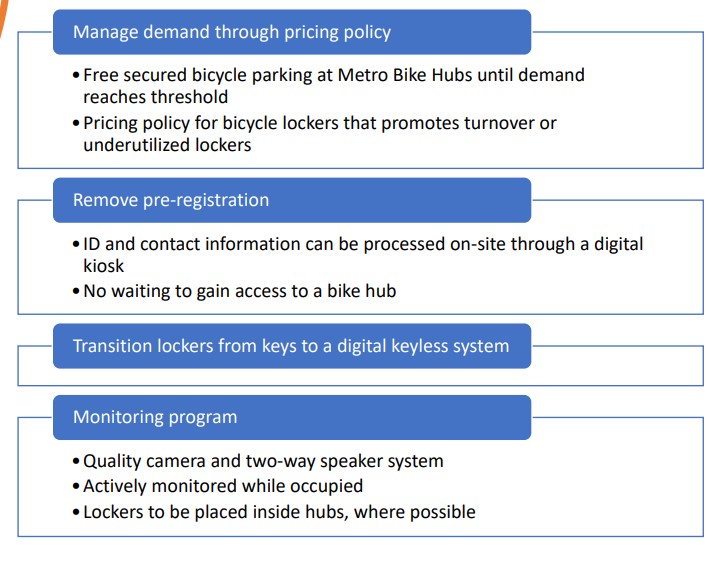
Metro plans to initially make the new e-lockers available for free, then to price them to promote turnover. Access to e-lockers will be easier than the current system, which includes preregistration to obtain a physical key (often after many months on a wait list). The new system will accommodate walk-up registration.
The new digital bike locker contract is a welcome, but years overdue, step forward for Metro to encourage bicycling as a healthy, environmentally-friendly first/last mile connection to Metro transit. Metro has invested hundreds of millions of dollars in building and maintaining huge under-utilized mostly free park-and-ride lots for drivers. Those lots are bad for equity and the environment, and a poor return on investment for encouraging transit ridership. It’s about time that the agency is moving forward with worthwhile bike parking upgrades. Hopefully, Metro will manage new e-lockers well, including promoting them heavily, and will expand them if the first thousand prove successful and popular.
The bike locker item still needs to be approved by the full Metro board next week.
Streetsblog has migrated to a new comment system. New commenters can register directly in the comments section of any article. Returning commenters: your previous comments and display name have been preserved, but you'll need to reclaim your account by clicking "Forgot your password?" on the sign-in form, entering your email, and following the verification link to set a new password — this is required because passwords could not be carried over during the migration. For questions, contact tips@streetsblog.org.