Why There’s No Such Thing as a ‘Car Accident’

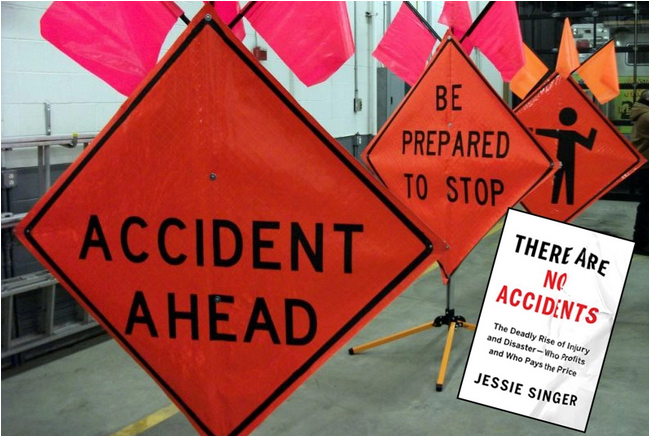
The phrase “car accident” has become so ubiquitous in American life that most people don’t blink when they hear it, at least if they’re not a street safety advocate who understands just how much damage that term has done. But not even the most diehard Streetsblog readers may realize just how recent the concept of a traffic “accident” is — or how deeply it impacts our ability to prevent future crashes.
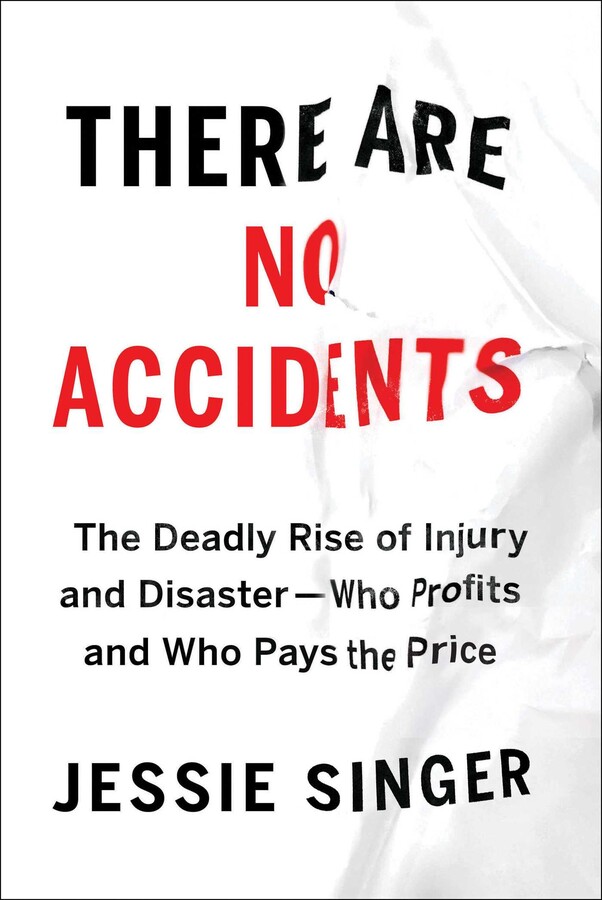
In her new book, There Are No Accidents: The Deadly Rise of Injury and Disaster — Who Profits and Who Pays the Price (Simon & Schuster, Feb. 15, 2022), veteran journalist and sustainable transportation advocate Jessie Singer digs into the disturbing history of “accidents” in America — and not just on our roads. And in the process, she offers a glimpse of a world where everyday tragedies are treated as urgent problems we can and must solve, where powerful interests are held to account, and where our desire for blame and retribution doesn’t get in the way of lasting, systemic change.
Today, we’re launching our new podcast, The Brake, with this extended interview between Singer and host Kea Wilson. (To read an excerpt from the book, click here.)
Here’s a glimpse of some of the highlights, which have been edited for clarity and length — or you can listen to it in full here, by clicking the player below, or heading to wherever you get your podcasts. (Editor’s note: we’re still awaiting approval on Apple Podcasts, but look out for it there soon.)
Kea Wilson: You have a fascinating chapter on blame in your book, and I think this is where a lot of street safety advocacy folks are going to be challenged. Namely, you have this provocative sentence: “Fixing a problem means there is a problem; blaming someone means that there is no problem at all.” Later, you even say that “punishment has nothing to do with prevention.”
There are whole organizations devoted to the idea that we’re going to prevent traffic violence with the threat of punishment — and to some extent, I think a lot of us, often, do want punishment, do want someone to blame…When you talk about the difference between fixing a problem and blaming an individual person for that problem — what does that distinction really look like, when it comes to traffic safety?

Jessie Singer: I think an important thing for this movement is to learn the difference between consequences and punishment. Consequences are the direct effect of an action; They’re guaranteed, and they teach a lesson. In New York City, it’s a $50 automated enforcement ticket for speeding. That’s a consequence. Narrowing a street until it feels unsafe to go fast, that’s another guaranteed effect of an action.
Punishment is not that. Punishment is retributive. The goal of punishment is to inflict suffering and pain. It’s to get even. … Consequences are for the offender. They teach the offender a lesson. But punishments are for the offended. It makes the offended feel better. Consequences teach you responsibility for your action. Punishments make you feel shame.
And I think this is really important for us to understand: our streets need to have consequences. For traffic to be safe, there need to be consequences. But punishment arises out of anger and fear; consequences arise out of a desire for prevention. That’s why consequences work; that’s why they’re effective.
Dangerous streets make me angry. They make me afraid. When someone comes too close to me, I imagine punishing them. I understand the urge. But if the only outlet for our anger is interpersonal, we need to stop leading with our anger. Because shame is ineffective. Punishment is ineffective.
There’s one study I mentioned in my book looking at highway stops in 33 states that could find zero correlation between traffic death reductions and police stops. Police enforcement doesn’t work. There’s no evidence that it works. It doesn’t save lives. It’s wildly ineffective, and it’s also wildly harmful to the most-policed communities. That’s why, in the book, I advocate for the need to move beyond punishment towards harm reduction.
Sue Baker is an epidemiologist who worked with NHTSA, and she said, “you need to make the world safe for drunks.” And I say this as someone who lost her best friend to a drunk driver. The answer is that people make mistakes, people make bad decisions, but we still need to keep them safe. In deciding to make the world safe, to make our built environment safe for the lowest common denominator — people who are drunk and distracted and sleepy — we make us all safer.
Kea Wilson: In the book, you talk about the need to act with “love and rage,” to quote something that your best friend said often before he was killed. What role should “love and rage” play in our work, and how is it different than blame and anger?
Jessie Singer: Something that surprised me in writing this book, as someone who, in their day job, is a transportation advocate, is how important blame and villainy and punishment were in the transportation safety movement at points, especially because those ideas are so ineffective.
For example, in the same breath that people fight the word “accident,” and the right to fight the word “accident” there’s a lot of people who fight non-agentive language that’s common in news coverage, like when a reporter says “the car ran over the woman.” And I hate to be the bearer of bad news, but this is very similar to what the NRA says when they say “guns don’t kill people, people kill people.” The NRA’s point is that gun violence isn’t systemic, it’s interpersonal, and thus guns are not the problem. I think when we challenge non-agentive language, and when we do it in an off-handed way — it’s not our intention, but we’re inadvertently advancing a similar point: that traffic safety isn’t a matter of dangerous cars and dangerous, car-centric street designs, but bad drivers and bad people.
The power of blame and punishment is strong. I get why we love it, and I understand the underlying psychology. My greatest hope is that I was gentle enough in the book in explaining this to bring powerful people along, and to help people understand their desire for blame and punishment. But when we make traffic crashes interpersonal, when we blame a bad guy, we lose the thread of prevention.
Streetsblog has migrated to a new comment system. New commenters can register directly in the comments section of any article. Returning commenters: your previous comments and display name have been preserved, but you'll need to reclaim your account by clicking "Forgot your password?" on the sign-in form, entering your email, and following the verification link to set a new password — this is required because passwords could not be carried over during the migration. For questions, contact tips@streetsblog.org.