What if Attending a Game Were as Dangerous as Driving?

From plenaries and workshops to Lobby Day on Capitol Hill, plus a special live taping of “The War on Cars” podcast, you won’t want to miss the 2020 National Bike Summit, hosted by the League of American Bicyclists, March 15-17. Explore the Summit here.
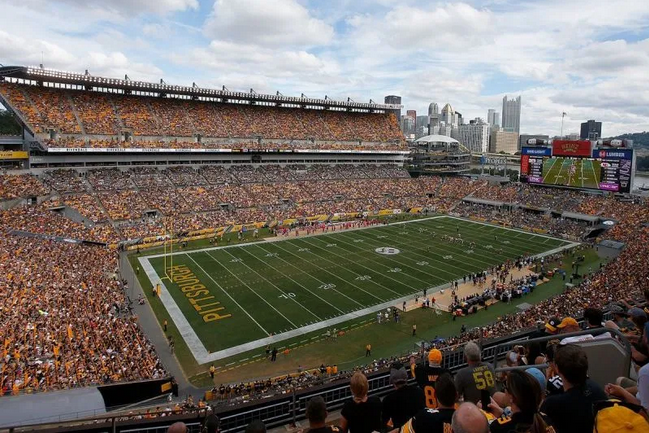
Imagine you’re at a Steelers game at Heinz Field, and all 68,400 seats in the stadium are full. Partway through the game, part of the stadium collapses: 8 people are killed, and 578 people are injured. Imagine the level of shock, inquiry and general reaction there would be that this type of incident is unacceptable.
Now imagine if the engineers shrugged and said these types of accidents are inevitable, there’s nothing that can be done, and similar stadium collapses start happening at each stadium in the country on an annual basis around the country. Would you feel safe enough to attend a game or event at Heinz Field? Would you consider it acceptable for stadiums to be designed to such safety standards?
I didn’t pick the fatality and injury numbers randomly. Based on the national rate of motor vehicle fatality and injury, this is the average number of people who will be killed or injured in a motor vehicle crash in a given year out of a randomly selected sample of 68,400 Americans.
Most people who would avoid a stadium with a history of collapsing don’t hesitate to get into a car that has the same safety risk. Government officials who would find a collapsing stadium unacceptable continue to build and maintain roads to designs that are just as dangerous.
Driving doesn’t have to be so dangerous. In 2019, Oslo, a city with more than twice the population size of Pittsburgh, had only one motor vehicle fatality, with no cyclists or pedestrians killed. In 2017, the latest year data is available Pittsburgh had 16 fatalities including three pedestrians. Oslo principally achieved this safety record through safer road design. This study found that a deficient street design was the main cause of 63% of motor vehicle deaths. Pittsburgh should do more to implement traffic calming on its streets. Additional safety improvements can result from supporting public transit, which is safer than passenger car transportation.
Next time you watch a Steelers game, take a moment and realize that eight of the people in the audience are likely to die in a car crash next year, and 578 of them to be injured. Let that reflection motivate us to make our roads safer.
Appendix: Sources and Calculations
There are 68,400 seats in Heinz Field. In 2017 there were 37,133 motor vehicle fatalities and 2.75 million injuries according to the US Department of Transportation. The U.S. population was 325.7 million in 2017.
So for deaths:

For injuries:

Jonathan Salmans is an engineer who blogs about Pittsburgh at Connect PGH, where this piece was originally published.
Streetsblog has migrated to a new comment system. New commenters can register directly in the comments section of any article. Returning commenters: your previous comments and display name have been preserved, but you'll need to reclaim your account by clicking "Forgot your password?" on the sign-in form, entering your email, and following the verification link to set a new password — this is required because passwords could not be carried over during the migration. For questions, contact tips@streetsblog.org.