Cyclist Killed at Messed-Up S.F. Intersection
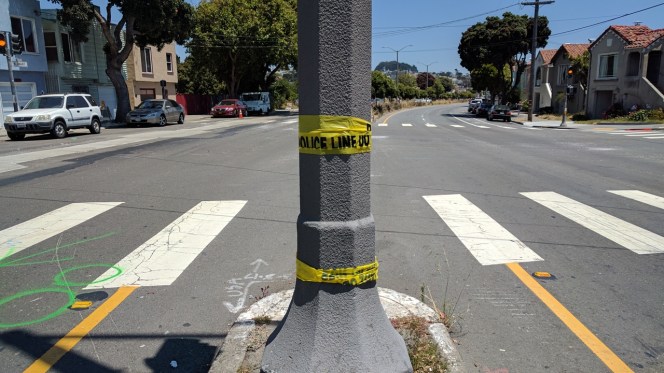
Hoodline is reporting that a cyclist was killed yesterday at around 5:30 p.m. in a collision with a car at the intersection of Silver and Alemany Boulevard. The San Francisco Bicycle Coalition says the victim’s name was Moises Chavez, a 51-year-old man. “Our hearts are heavy this morning and our thoughts are with family and friends of the victim,” they wrote on their Twitter feed.
“Alemany is a high-injury corridor–one of the 12 percent of city streets that account for 70 percent of severe and fatal crashes. So this tragic death is not an ‘accident’–it’s a predictable result of a dangerous transportation system,” said Cathy DeLuca, Interim Executive Director of Walk San Francisco. “To prevent future tragedies like this one, the City must build streets that protect everyone–especially people biking and walking, who are the most vulnerable in crashes.”
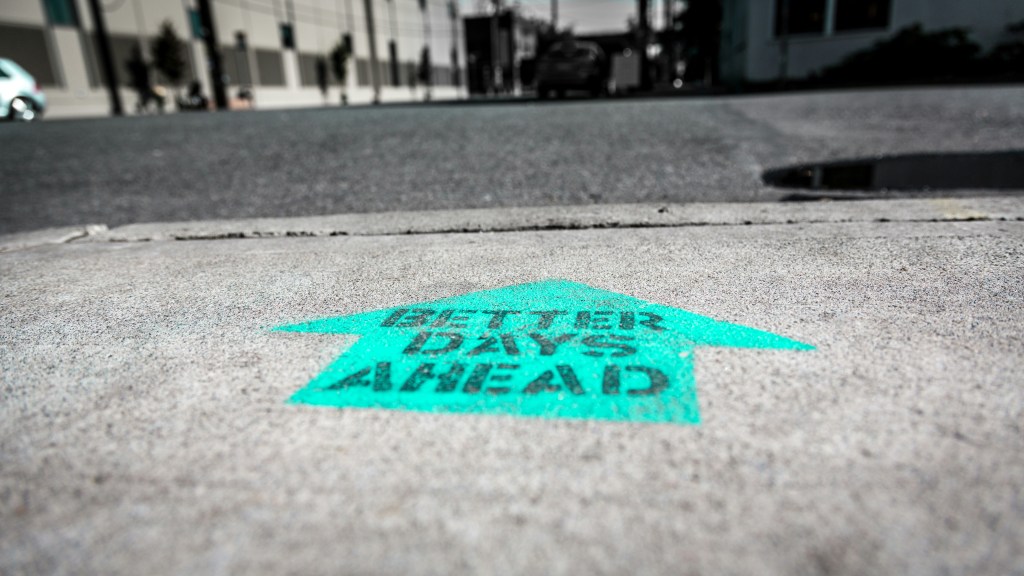
Streetsblog went to the intersection to survey it. There’s construction going on. The bike lanes are pretty much scraped away, covered, discontinuous; there’s gravel all about. But at this ‘black spot,’ as the Dutch call an intersection where someone is killed, there’s no sign of an investigation. In fact, there’s no sign of what happened at all, except perhaps for some leftover police tape (as seen in the lead image), a few surgical gloves blowing around that may be from the first responders, and just south of the intersection, there are some spots of what looks like dried blood.
Unfortunately, the work crews’ shift ended yesterday about an hour before the crash occurred. It’s a quiet residential area, without much pedestrian activity; no sign of security cameras or anyone who might have seen what happened. The driver of the car, it’s reported, remained at the scene.
But Russell Ibrahim Blank summed it up perfectly when he posted on the San Francisco Bike Ride Crew Facebook page “Damn, look at that intersection. It was designed for cars to speed through, not with pedestrian safety (or, in this case, a person on a bike) in mind.” Or as Nathan Woody posted: “Terrifying looking intersection. How many is that this year?”
It’s the second cyclist killed this year. The first was Gashaw Clark, 25, killed on April 28 in Mission Bay.
Streetsblog is familiar with this intersection and it’s an absolute travesty that this is what passes for bicycle infrastructure. There’s the aforementioned striped door-zone lane on a street designed for high speeds. But even that bike striping ends as cyclists enter the intersection–where they are most vulnerable. This publication could call on SFMTA again to fix these intersections with planters and safe hit posts or old railway ties or even toilet plungers or whatever they can find as soon as humanly possible, but what would be the point? Let’s just study it some more.
It’s worth noting that this death took place almost exactly a year from the deaths of Heather Miller and Kate Slattery. Their deaths on the same night in June of last year galvanized a city, albeit briefly. But the danger on our streets didn’t start and end that night. It’s about a broader problem–it’s about attitudes that prioritize parking, car throughput, and personal convenience over life and limb. That attitude is displayed by the actions of the very people charged with keeping us safe. And by the managers and politicians who maintain a culture where safety, despite the rhetoric, is very definitely not the highest concern. Otherwise, why isn’t the city doing what the Dutch would do–declare that intersection a black spot, close it, and get all the relevant city agencies there to investigate it. And then fix it.
“The City has the tools to save lives. They just need the guts to put them in the ground quickly, no matter the obstacles,” said DeLuca.
Maybe the guerrilla safety group SFMTrA can help on Alemany?
Streetsblog will aggregate more details on yesterday’s death as they become available.
Streetsblog has migrated to a new comment system. New commenters can register directly in the comments section of any article. Returning commenters: your previous comments and display name have been preserved, but you'll need to reclaim your account by clicking "Forgot your password?" on the sign-in form, entering your email, and following the verification link to set a new password — this is required because passwords could not be carried over during the migration. For questions, contact tips@streetsblog.org.